PS Shaukat wants Kenya to Double Investment in Research to Achieve First-World Status
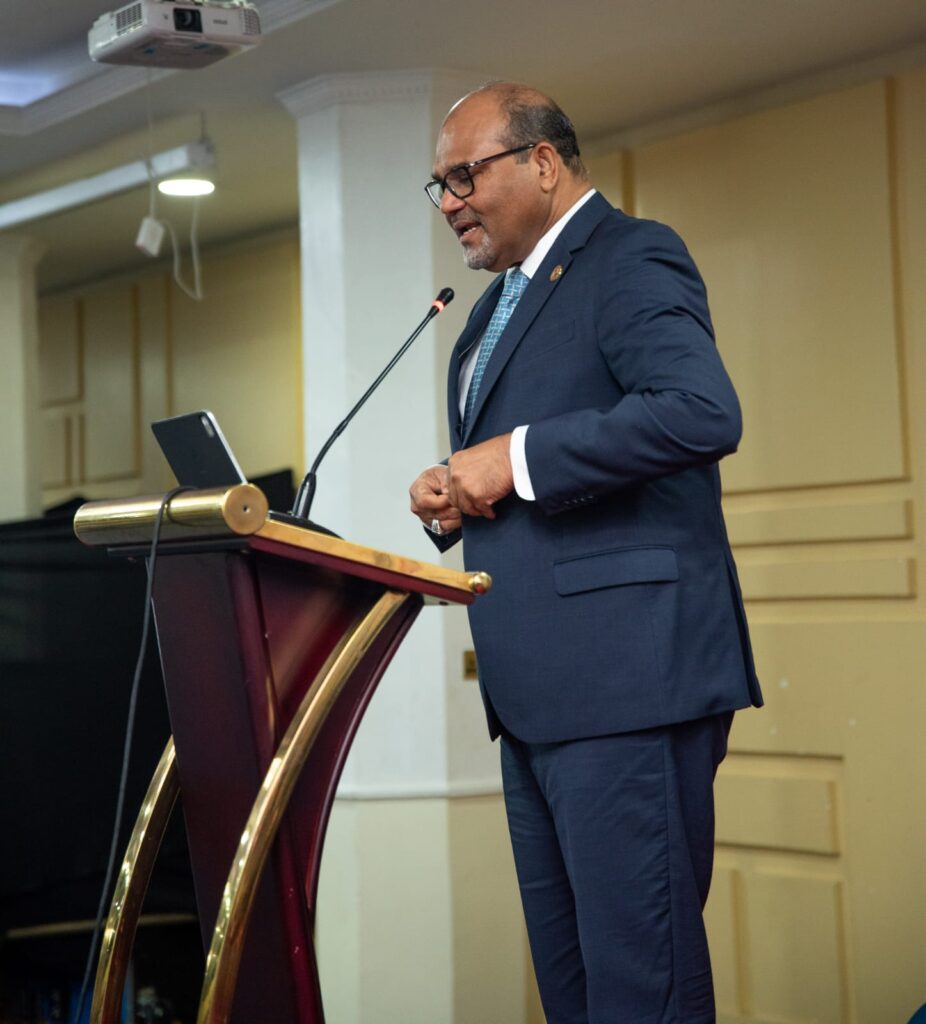
Principal Secretary for Science, Research and Innovation Prof. Shaukat Abdulrazak addressing delegates at the ongoing STRI4Society week 2026 conference in Nairobi. (Photo/ Courtesy)
By Mwakwaya Raymond
Email, thecoastnewspaper@gmail.com
Kenya must double its investment in science, technology, research and innovation (STRI) if it hopes to achieve its goal of becoming a globally competitive first class economy by 2055, Principal Secretary for Science, Research and Innovation Prof. Shaukat Abdulrazak has said.
The PS says that experience from many countries in the world has demonstrated that science and innovation remain critical drivers of economic growth.
He said this when speaking during the opening of a mega international conference of the Science, Technology, Research and Innovation for Society, dubbed STRI4Society Week 2026, at the Kenyatta International Convention Centre in Nairobi. About 5,000 people from all over the world are attending the conference.
Prof. Abdulrazak said Kenya needs to move from being a consumer of imported technologies to becoming a producer and exporter of innovation-driven solutions.
“If Kenya is to leapfrog into a First World economy by 2055, then research and innovation must become national priorities and strategic investments, not optional expenditures,” said Prof. Abdulrazak.
He noted that countries such as Singapore, South Korea, China and Finland achieved rapid economic transformation through deliberate investments in science, industrialization and technology-driven economies.
“History has shown us that no nation has attained First World status without investing strategically in science, technology and innovation,” he said.
The PS revealed that Kenya currently invests about 0.8 per cent of its Gross Domestic Product in research and development, which is below the African Union target of 2 per cent.
“To compete effectively with leading innovation economies, we must progressively move toward the African Union target of 2 per cent of GDP investment in Science, Technology and Innovation,” he said.
Such increase would strengthen Kenya’s industrial productivity, innovation ecosystem and economic resilience.
However, Prof. Abdulrazak assured that the government aims to position Kenya among Africa’s leading innovation-driven economies by 2030 and transform the country into a regional hub for Artificial Intelligence, biotechnology, nuclear science, advanced manufacturing and digital transformation.
“Our ambition should be clear to create millions of decent jobs for our youth through knowledge-driven industries,” he said.
Core sectors
The PS identified agriculture, health, the digital economy, manufacturing and the blue economy as sectors where science and innovation can accelerate growth and improve livelihoods.
In agriculture, he said climate-smart technologies, biotechnology and AI-driven systems can boost productivity and enhance food security.
“Agriculture contributes approximately one-third of Kenya’s GDP and supports over 70 per cent of rural livelihoods,” he noted.
On healthcare, Prof. Abdulrazak called for greater investment in biotechnology, pharmaceuticals, genomics and digital health systems to reduce dependence on imported medical products.
“When science improves healthcare, science saves lives and strengthens national productivity,” he said.
Universities role
He also challenged universities, industry leaders and county governments to work closely in commercializing research and supporting innovation ecosystems.
“To our youth, dream boldly, innovate fearlessly and become architects of Africa’s future,” he urged
Prof. Abdulrazak said the country’s future competitiveness will depend on its ability to develop strong innovation ecosystems, generate intellectual property and transform ideas into enterprises and jobs.
“The future economy will belong to nations that control data, computing power, innovation and knowledge systems,” he said.
He further emphasized the need to align science and innovation with Kenya Vision 2030, the Bottom-Up Economic Transformation Agenda, Agenda 2063 and the Sustainable Development Goals.
“As we officially open STRI4Society Week 2026, let us renew our collective determination to place science, research and innovation at the centre of Kenya’s transformation agenda,” he said.
The week-long forum has brought together more than 5,000 researchers, innovators, students, policymakers and development partners from Kenya and across the world under the theme “Igniting Innovation, Bridging Science and Society for Sustainable Development.”
About The Author