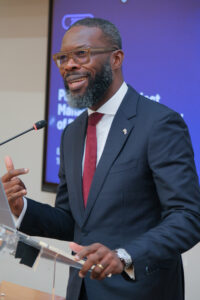
African Leaders Push for Debt, Climate Financing Reforms at Africa Forward Summit
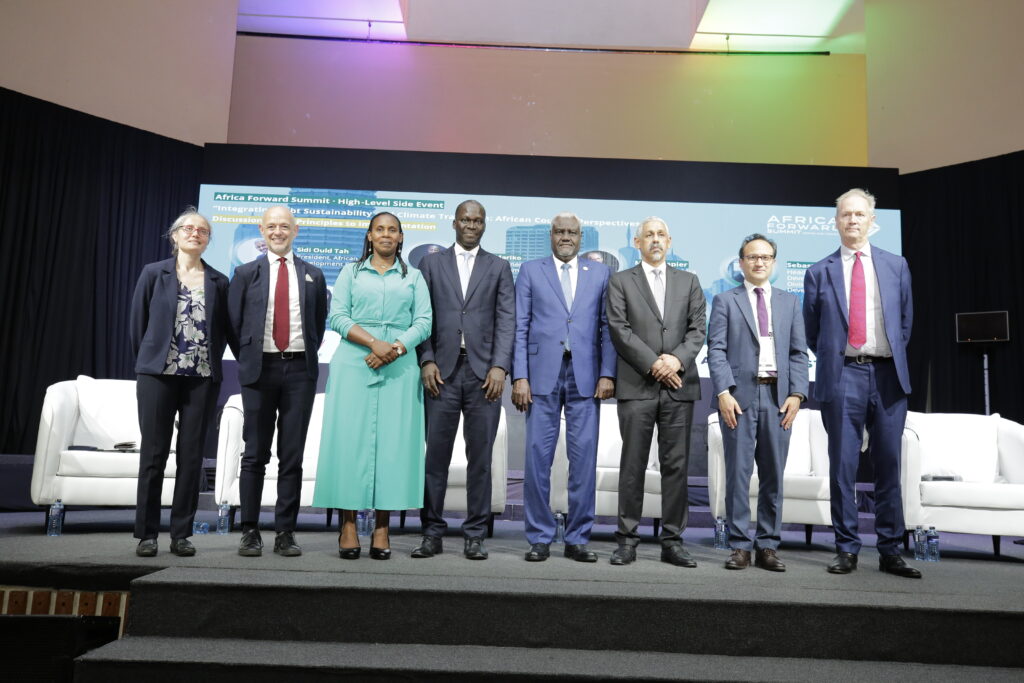
African policymakers and development finance leaders meeting in Nairobi. (Photo/ Courtesy)
By Mbungu Harrison
Email, thecoastnewspaper@gmail.com
African policymakers and development finance leaders meeting in Nairobi have called for urgent reforms to align debt sustainability, climate transition and development financing.
This is amid the rising costs of borrowing and shrinking fiscal space across the continent.
The leaders spoke during a high-level side event held on the margins of the Africa Forward Summit in Nairobi where governments, financial institutions and development partners explored ways of protecting public finances while sustaining investments in climate resilience and economic growth.
The session, convened by AfriCatalyst in partnership with the Pact for Prosperity, People and the Planet (4P), focused on practical reforms including climate-sensitive fiscal planning, climate-resilient debt clauses and new financing mechanisms to unlock sustainable investment.
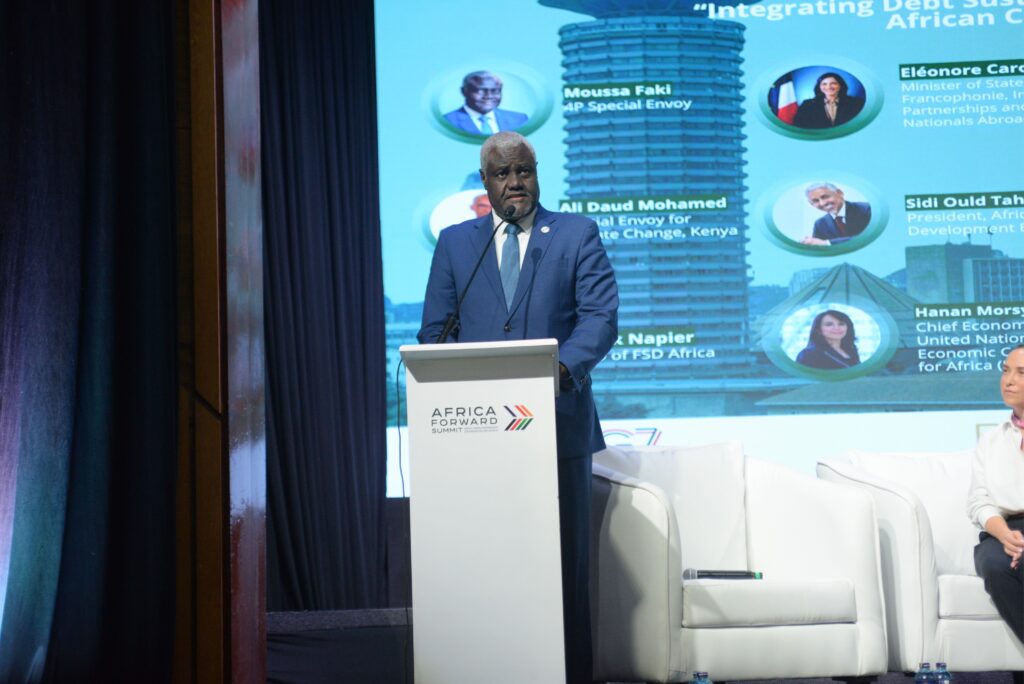
Opening the session, Moussa Faki said African countries must remain at the centre of decisions shaping debt, climate and development policies.
“The 4P is designed to put countries in the driver’s seat, valuing their solutions and accelerating collective learning across the debt, climate, and development agenda,” he said.
Sidi Ould Tah said African countries continue to face significantly higher borrowing costs than countries with similar economic fundamentals in other regions.
“African countries continue to face borrowing costs that are significantly higher than peers with similar fundamentals in other regions, often by at least 200 basis points. This points to structural challenges that go beyond risk perception alone,” he said.
He called for the establishment of a stronger African financial architecture to reduce borrowing costs, improve investor confidence and unlock domestic savings for development.
“Africa needs its own financial stability mechanism, aligned with global best practices, to strengthen resilience, reduce borrowing costs, and unlock the continent’s own savings for development,” he added.
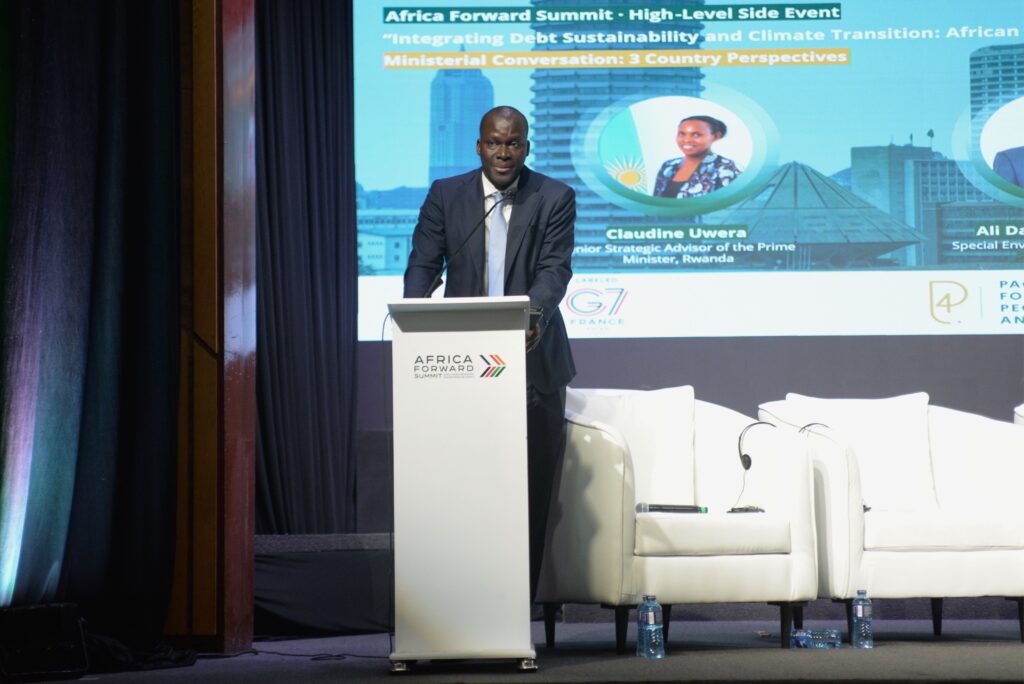
Daouda Sembene said many African countries are already integrating climate transition into debt sustainability frameworks despite increasing exposure to climate shocks and limited fiscal space.
“This conversation is not just about policy frameworks, but about how countries, partners, and the private sector can work together to support more integrated and sustainable approaches to financing,” he said.
Country representatives highlighted the difficult balance governments face between maintaining macroeconomic stability and financing climate resilience projects.
Claudine Uwera said African governments must view climate resilience as a long-term economic investment rather than an additional cost.
“For many African countries, this debate comes down to one central question: how do we continue to grow, protect macroeconomic stability, and invest in resilience at the same time?” she posed.
Drawing from Rwanda’s experience, she said major investments are assessed based on economic returns as well as resilience and sustainability impact.
The discussions also centred on Africa’s high cost of capital and weak domestic financial systems, which continue to limit access to affordable financing.
Adama Mariko said African countries often pay between 50 and 60 percent more for the same financing in international markets.
“Strengthening domestic capital markets is critical, not just through taxation, but by mobilising savings and creating more dynamic local financial systems,” he said.
Mark Napier warned that Africa’s growing debt burden remains a major obstacle to mobilising both public and private capital.
“We cannot address capital mobilisation without addressing the debt overhang, both challenges must be tackled in parallel,” he said.
Speakers also called for stronger debt management systems, improved financial data and wider use of innovative financing instruments such as green and sustainability bonds.
Shanti Bobin said climate and development financing must be treated as interconnected priorities.
“Every investment, and indeed every new debt, should be assessed both for its growth impact and its contribution to resilience,” she said.
Sebastián Nieto Parra called for stronger debt management strategies and improved data quality to help lower Africa’s cost of capital and improve investor confidence.
The meeting concluded with calls for closer coordination between African governments, international financial institutions and the private sector to strengthen Africa’s voice in global financial reforms and accelerate sustainable investment across the continent.
About The Author