Let’s use Science to Diversify and Sustain our Economy, says PS Shaukat
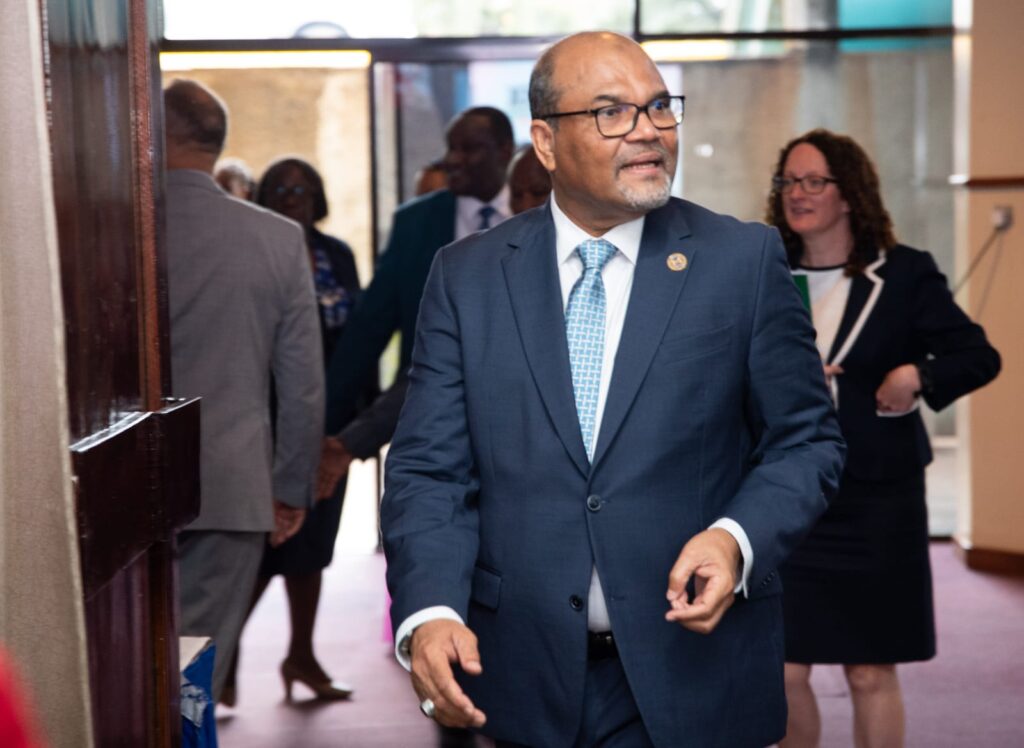
Prof Shaukat Abdulrazak Principal Secretary for Science, Research and Innovation arrives at the conference. (Photo/ Courtesy)
By Mwakwaya Raymond
Email, thecoastnewspaper@gmail.con
As the mega STRI4Society conference entered its second day on Tuesday of May 19, 2026, calls for Kenya to translate research and science into solutions gained momentum.
Prof Shaukat Abdulrazak Principal Secretary for Science, Research and Innovation captured the feelings of many when he said that Kenya can no longer rely on traditional economic sectors and export of raw commodities, if it hopes to achieve sustainable prosperity.
Kenya’s economic transformation will depend on building industries powered by innovation, digital systems and scientific knowledge, said Prof Shaukat, who is the PS for Science, Research and Innovation and the force brainchild behind STRI4Society.
STRI4Society forum is designed to enable Kenyans to push for science and research for innovation. Diverse stakeholders including youth are given unfettered opportunity to moot and pursue practical ideas and innovations that Kenya badly needs to attain its development policy goals, such as the Vision 2030 and Strategy 2055.
The STRIP4Society initiative is a deliberate national effort to literally break down the silos between the lab and the living room. The initiative strives to translate research into tangible societal impact and to drive sustainable development by connecting policy with industry.
Prof. Shaukat Abdulrazak has repeatedly challenged academicians, researchers, and scientists in Kenya to turn their theories into practical solutions for the needs of Kenyan economy including jobs creation and industrialization.
Theory to practice
The current week-long conference in Nairobi, which officially started May 18 and scheduled to end on May 22, has brought over 5,000 delegates, including investors and innovators to scale solutions for pressing challenges in the country.
It specifically aims to bridge the gap between academic research and economic reality
In his candid presentation on Day 2 of the conference, the professor said Kenya risks falling behind in the global economy unless it makes bold and sustained investments in science, technology and innovation
The PS painted a picture of a rapidly changing world where economic power is increasingly shifting towards nations investing heavily in research, artificial intelligence, and biotechnology and advanced manufacturing.
A growing reality confronting developing economies is that “countries that dominate technology are also shaping global trade, healthcare systems, industrial production and even geopolitical influence”, he quipped.
“The future competitiveness of nations will increasingly depend on their ability to invest in research and development,” Prof Abdulrazak added.
The conference is themed “Igniting Innovation: Bridging Science and Society for Sustainable Development,” and has brought together diplomats, scientists, university leaders, innovators and private sector players.
Whereas, the country has tended to rely on traditional economic sectors and export of raw commodities in the past, to achieve sustainable prosperity is a different ball game.
He said economic transformation will depend on building industries powered by innovation, digital systems and scientific knowledge.
His remarks mirror global economic trends where technology-driven economies are recording faster growth, creating high-value jobs and attracting major investments.
Budgeting for research
Countries such as South Korea and Israel, which invest more than four per cent of their Gross Domestic Product (GDP) in research and development, have transformed themselves into global technology and manufacturing giants despite limited natural resources.
Kenya, by comparison, currently spends approximately 0.8 per cent of GDP on research and development, far below the African Union target of two per cent.
Analysts say increasing investment in science and innovation could unlock major benefits for the country, including industrial growth, increased exports, food security and improved healthcare systems.
One of the biggest gains from investing in technology is employment creation, particularly for young people entering the labour market each year.
Technology-driven sectors such as software engineering, digital services, artificial intelligence, renewable energy and biotechnology are among the fastest-growing employers globally.
Prof Abdulrazak noted that innovation must create jobs and improve livelihoods rather than remain confined to research laboratories.
“Science must support manufacturing and value addition. Science must create jobs for young people,” he said.
Incubation hubs
Experts argue that investment in innovation hubs, startup financing and technology incubation centres could help Kenya produce globally competitive enterprises capable of absorbing thousands of graduates.
Kenya’s thriving digital ecosystem, mobile money success and expanding fibre optic infrastructure already position the country as one of Africa’s leading technology destinations.
However, the PS said the country must move from fragmented innovation efforts to coordinated national systems linking universities, industries and government.
Investment in science and research could also help Kenya address persistent challenges such as food insecurity, climate change and rising healthcare costs.
Modern agricultural technologies, climate-smart farming and biotechnology innovations are increasingly helping countries improve food production despite changing weather patterns.
Similarly, research in healthcare can strengthen disease surveillance, vaccine development and access to affordable treatment.
Harnessing AI
Prof Abdulrazak said science must directly improve the quality of life of wananchi by supporting healthcare access and climate resilience.
“Science must reduce poverty and inequality. Science must strengthen environmental sustainability and resilience,” he said.
The PS identified artificial intelligence (AI) as one of the next major economic frontiers, noting that the technology is projected to contribute trillions of dollars to the global economy over the next decade.
He said Kenya has the potential to emerge as a continental hub for AI, biotechnology and climate technologies if adequate investments are made now.
Already, initiatives such as the launch of GPU computing infrastructure through KENET and implementation of the Kenya AI Strategy are expected to accelerate the country’s digital transformation.
Experts say AI could revolutionise sectors such as healthcare, agriculture, education, finance and public service delivery by increasing efficiency and reducing operational costs.
The PS challenged the private sector to play a bigger role in financing research and innovation, noting that globally, industries fund the majority of research and development activities because innovation drives profitability and competitiveness.
He called for stronger public-private partnerships, venture capital investments and support for startups.
“Our universities and research institutions must become centres of enterprise creation, commercialisation and industrial partnerships,” he said.
Intellectual property
The PS also stressed the need to protect intellectual property and commercialise locally developed innovations to ensure Kenya benefits economically from its research outputs.
As global economies rapidly transition towards knowledge-based industries, experts warn that countries failing to invest in science and technology could face deeper unemployment, weak industrial growth and reduced competitiveness.
Prof Abdulrazak said history would favour nations that prepared for the future early enough.
“The destiny of modern nations will be determined by the strength of their laboratories, the creativity of their youth, the courage of their innovators and the wisdom of their investments in knowledge,” he said.
Meanwhile ambassador of Italy to Kenya Miss Vincenzo Del Monaco has called on Scientists in Kenya to apply for grants in the European Union EU to actualize their dreams in the respective fields of science and technology.
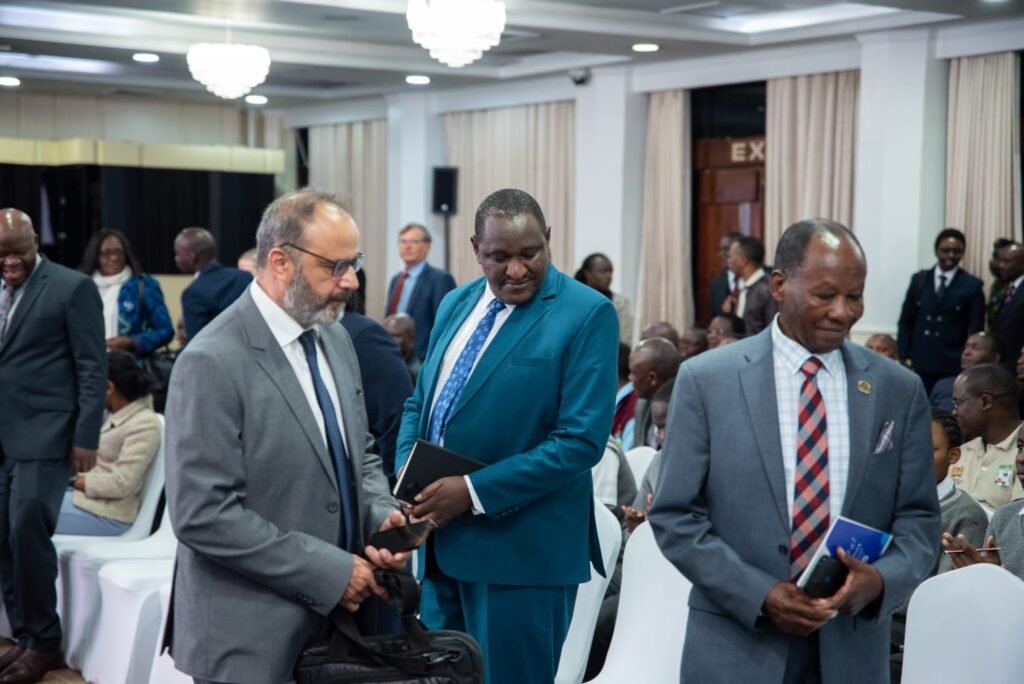
Speaking at the same venue the ambassador said European Union has enormous grants though very few Kenyans do apply for them.
“You qualify for these grants in the European Union so just apply for because they’re meant for you to assist facilitate conduct the research you intend to undertake”
About The Author