Plastic Odyssey: Beacon of Hope for Mombasa and the Fight Against Plastic Pollution

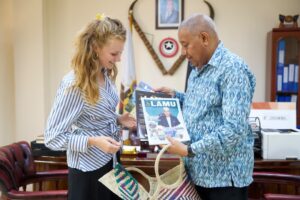
Plastic Odyssey docked in Mombasa Kenya. (Photo/ Courtesy)
By Andrew Mwangura
Email, thecoastnewspaper@gmail.com
The arrival of the Plastic Odyssey at the Port of Mombasa on a quiet evening marks a pivotal moment in the global battle against plastic pollution.
This 40-meter converted research vessel, operated by a French NGO of the same name, is no ordinary ship.
It is a floating testament to human ingenuity and determination, equipped with laboratories and workshops that transform plastic waste into fuel, tiles, pipes, and other reusable materials.
As it docked in Mombasa after its recent stop in Dar es Salaam, the vessel brought with it not just innovative technology but a powerful message: the fight against plastic pollution is winnable, and local communities, like those in Kenya, can lead the charge.
The Plastic Odyssey’s mission is as ambitious as it is inspiring. Since setting sail in 2022, the vessel has crisscrossed the Mediterranean, West Africa, South America, and Asia, serving as a mobile laboratory and a catalyst for change. Its onboard pyrolysis unit, capable of converting non-recyclable plastics into up to 40 liters of fuel per hour, is a game-changer.Meanwhile, extruders and shredders churn out construction materials from waste that would otherwise choke landfills, rivers, and oceans. These technologies are not just theoretical—they are practical, scalable solutions that empower communities to rethink waste.
In Mombasa, the ship’s stopover offers a unique opportunity to showcase these innovations, engage local stakeholders, and spark conversations about reducing single-use plastics.
The Kenya Ports Authority (KPA), which welcomed the vessel, sees the visit as a natural extension of its Green Port Policy, launched in 2015. This policy has positioned Mombasa as a regional leader in sustainable port operations, with initiatives like waste management, hybrid yard cranes, e-mobility forklifts, dust suppression systems, and mangrove restoration projects.
The KPA’s commitment to environmental stewardship aligns seamlessly with the Plastic Odyssey’s mission, making Mombasa an ideal host. By partnering with the NGO, the port is not only reinforcing its role as a trade hub but also asserting its leadership in conservation. This collaboration sends a clear signal: economic progress and environmental responsibility can, and must, go hand in hand.
The significance of the Plastic Odyssey’s visit extends beyond the port’s boundaries. Mombasa, like many coastal cities, grapples with the scourge of plastic pollution.
Beaches littered with discarded bottles, bags, and wrappers are a stark reminder of the global crisis. Kenya has taken bold steps to address this, including a 2017 ban on single-use plastic bags, one of the strictest in the world. Yet, challenges remain. Plastic waste continues to infiltrate waterways, harm marine life, and undermine tourism, a vital economic driver for the region.
The Plastic Odyssey’s workshops and community outreach programs, scheduled during its multi-day stay in Mombasa, offer a chance to build on these efforts. By engaging local entrepreneurs, students, and policymakers, the initiative can inspire grassroots solutions tailored to Kenya’s unique context.

The vessel’s technology is particularly relevant for a country like Kenya, where waste management infrastructure is often strained. The pyrolysis unit, for instance, turns non-recyclable plastics—items that would otherwise be burned or dumped—into fuel that can power generators or vehicles.
This not only reduces waste but also provides an alternative energy source, a critical need in a region where energy access remains uneven. Similarly, the production of construction materials from plastic waste could support affordable housing and infrastructure development, addressing both environmental and social challenges.
These solutions are not just high-tech showpieces; they are practical tools that can be adapted for small-scale recycling enterprises, creating jobs and fostering economic resilience.
The Plastic Odyssey’s global journey also highlights the interconnectedness of the plastic pollution crisis. The waste that washes up on Mombasa’s shores may originate from distant continents, carried by ocean currents. Likewise, the solutions developed in one port can ripple outward, influencing others.
The vessel’s stopovers in places like Dar es Salaam and now Mombasa underscore the importance of regional cooperation in East Africa.
By sharing knowledge and technology, countries can amplify their impact, turning individual efforts into a collective movement.
Mombasa’s role as a regional hub makes it an ideal platform for this exchange, positioning the city as a leader in the fight against plastic pollution.
Yet, for all its promise, the Plastic Odyssey’s mission also serves as a sobering reminder of the scale of the challenge.
The world produces over 300 million tons of plastic annually, much of it single-use, and a significant portion ends up in the environment.
In Kenya, where rapid urbanization and population growth drive consumption, managing plastic waste is a growing concern. While the Plastic Odyssey’s technologies offer hope, they are not a panacea. Real progress requires systemic change—stronger policies, better waste management infrastructure, and a cultural shift away from disposable plastics.
The vessel’s visit can catalyze these changes, but it is up to governments, businesses, and communities to sustain the momentum.
The partnership between the Plastic Odyssey and the KPA is a step in the right direction. By hosting workshops and demonstrations, the initiative can inspire local innovation and entrepreneurship.
Africa Global Logistics (AGL) Kenya, which is facilitating the vessel’s stay, has noted the enthusiasm for these events, which will engage schools, community groups, and industry players.
This hands-on approach is critical. It demystifies recycling, showing that waste is not an endpoint but a resource. For young Kenyans, in particular, the Plastic Odyssey offers a vision of a future where environmental challenges are met with creativity and opportunity.

As the Plastic Odyssey prepares to depart Mombasa for the next leg of its East African tour, its visit leaves a lasting impression. It challenges us to rethink our relationship with plastic, to see waste not as a burden but as a resource, and to recognize that solutions are within reach. For Mombasa, the visit reinforces the city’s dual role as a trade gateway and a champion of sustainability. For Kenya, it is a call to action—to build on existing policies, invest in innovation, and foster a culture of environmental responsibility.
The Plastic Odyssey is more than a ship; it is a symbol of what is possible when vision, technology, and collaboration converge.
As it sails away, it leaves behind a challenge: to turn inspiration into action and make Mombasa a model for a cleaner, greener future.
The author is a policy analyst specializing in maritime governance and blue economy development.
About The Author