Bandari Maritime Academy: Bold Leap Forward In Global Maritime Excellence

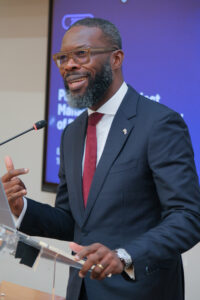
BMA’s chief executive officer Dr Eric Katana.(Photo/Courtesy)
By Andrew Mwangura
Email, thecoastnewspaper@gmail.com
In a world where the maritime industry is rapidly evolving, Bandari Maritime Academy (BMA) in Mombasa is positioning itself as a cornerstone of Kenya’s Blue Economy and a global leader in maritime education.
The Academy’s recent collaboration with AISECT International, a renowned organisation specialising in skill development and digital education, marks a transformative step toward enhancing its training capabilities.
By upgrading its bridge simulator software, introducing diesel engine repair courses, and integrating software development modules across its curriculum, BMA is not only elevating its training standards but also ensuring that Kenyan seafarers are equipped to meet the demands of the modern maritime industry.
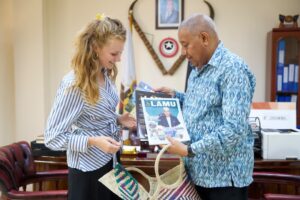
This initiative, discussed during a meeting hosted by BMA’s chief executive officer (CEO), Dr Eric Katana, with AISECT’s delegation, underscores the academy’s commitment to forging strategic partnerships that drive innovation and excellence in maritime education.
The significance of these developments cannot be overstated for both BMA’s students and the broader community of Kenyan seafarers.
The upgraded bridge simulator software will provide students with cutting-edge, hands-on training in navigation and ship handling, replicating real-world scenarios in a controlled environment.
This ensures that graduates are not only theoretically proficient but also practically adept, ready to navigate complex maritime challenges with confidence.
The introduction of diesel engine repair courses addresses a critical skill gap in the industry, equipping students with the technical expertise to maintain and repair the engines that power global shipping.
By integrating software development modules, BMA is preparing its students for a maritime sector increasingly driven by digitalisation, from automated cargo systems to data-driven logistics.
These advancements directly benefit students by enhancing their employability, ensuring they possess the skills demanded by international shipping lines.
For Kenyan seafarers, this initiative opens doors to global job markets, where over 1.89 million professionals operate more than 74,000 vessels, according to the International Chamber of Shipping.
With Memorandums of Understanding (MoUs) with countries like Singapore ,Liberia, Panama, and Japan, BMA is paving the way for its graduates to secure sea time and employment, addressing the global shortage of 89,510 officers projected by 2026.
This collaboration with AISECT International is a testament to BMA’s vision of aligning with global maritime standards while fostering digital competencies.
During the meeting in Mombasa, AISECT’s Vice President, Mukesh Sharma, emphasized the importance of equipping learners with skills that meet the demands of a technology-driven maritime industry.

A tour of BMA’s state-of-the-art facilities, led by Deputy Directors Chief Engineer Titus Kilonzi and Enock Okemwa, showcased the Academy’s modern infrastructure, including simulators and training boats, which provide competency-based training.
Principal Nautical Science, Maj. (Rtd) Franklyn Toniok, further highlighted BMA’s diverse programs in nautical science, marine engineering, maritime logistics, and survival training, all designed to produce well-rounded professionals.
By integrating AISECT’s expertise in digital education, BMA is ensuring its curriculum remains relevant in an industry where precision, innovation, and adaptability are paramount.
BMA’s forward-thinking approach draws inspiration from leading maritime training institutions in both the global North and South, as well as OECD countries, offering valuable lessons for its ambitions.
In the global North, the Netherlands’ STC Group stands out as a model of excellence. STC Group integrates advanced simulation technologies and digital learning tools to train seafarers, offering courses in navigation, engineering, and maritime cybersecurity.
Its partnerships with industry stakeholders ensure that training aligns with global standards, much like BMA’s collaboration with AISECT.
Similarly, the Australian Maritime College (AMC) in Tasmania emphasizes practical training through state-of-the-art simulators and industry-aligned curricula, preparing students for roles in a digitalised maritime sector.
These institutions demonstrate the power of combining cutting-edge technology with strategic partnerships to produce globally competitive seafarers.
In the global South, the Dar es Salaam Maritime Institute (DMI) in Tanzania provides a compelling example.
DMI has invested heavily in advanced equipment, including simulators and workshops, to deliver training that meets International Maritime Organisation (IMO) standards. Its focus on practical skills and regional collaboration, as noted by Dr. Katana, complements BMA’s efforts to work with institutions like the Kisumu Maritime Centre and Kenya Utalii College.
Further afield, India’s Indian Maritime University (IMU) integrates digital technologies and industry partnerships to offer courses in marine engineering and maritime logistics, mirroring BMA’s goals of blending technical and digital skills.
These examples underscore the importance of aligning training with global standards while addressing local and regional needs, a balance BMA is striving to achieve.
The collaboration with AISECT is more than a technical upgrade; it is a strategic move to position Kenya as a hub for maritime excellence in the East African region and beyond. By enhancing its infrastructure and curriculum, BMA is not only preparing students for immediate employment but also contributing to the sustainable growth of Kenya’s Blue Economy, estimated to have a potential economic impact of $4.8 billion.
The academy’s focus on digital competencies and hands-on training ensures that its graduates are versatile, capable of navigating both the technical and technological demands of the maritime industry.
For Kenyan seafarers, this means greater access to international opportunities, supported by BMA’s partnerships and its status as Kenya’s only IMO-certified maritime training institution.
As BMA embarks on this transformative journey, it sets a precedent for maritime education in the region.

The collaboration with AISECT International is a bold step toward bridging the gap between traditional maritime skills and the digital future, ensuring that Kenyan seafarers are not just participants but leaders in the global maritime industry.
By drawing on global best practices and tailoring them to local needs, BMA is not only shaping the careers of its students but also steering Kenya toward a prosperous maritime future.
The writer is a policy analyst specialising in maritime governance and blue economy development.
About The Author