Bandari Maritime Academy: Anchoring Kenya’s Sustainable Blue Economy

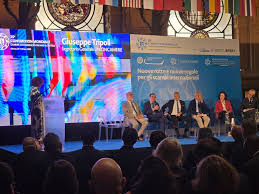
Bandari Maritime Academy. (Photo/ Courtesy)
By Andrew Mwangura
Email, thecoastnewspaper@gmail.com
As a policy analyst specialising in maritime governance and Blue Economy development, I extend my deepest gratitude to Bandari Maritime Academy (BMA) and chief engineer Titus Kilonzi, deputy director of Maritime Education and Training, for their instrumental role in the successful soft launch of the Kenya Maritime and Shipping Dialogue.
Having hosted the past two editions at the BMA amphitheatre, the academy stands as a cornerstone institution shaping Kenya’s maritime policy landscape and nurturing the next generation of maritime professionals.
Eng Kilonzi’s remarks powerfully reaffirmed BMA’s unwavering commitment to its 2018 Presidential mandate of training skilled professionals who will drive Kenya’s Blue Economy forward as a vital engine for national prosperity through sustainable shipping, fisheries, marine tourism, and offshore energy development.
As the Dialogue prepares to scale nationally, this strategic partnership becomes essential to advancing Kenya’s maritime governance capabilities in the face of mounting climate change challenges.
The Kenya maritime and shipping dialogue serves as a critical platform uniting diverse stakeholders to advance comprehensive blue economy strategies that balance economic growth with environmental stewardship.
Kenya’s forward-thinking policies focus on expanding the Port of Mombasa’s capacity, modernizing fisheries operations, and promoting sustainable eco-tourism while integrating marine conservation measures such as coral reef protection and sustainable fishing regulations to combat the impacts of climate change, including ocean warming and acidification.
Globally, green ships and green ports are transforming maritime industries, offering Kenya valuable blueprints for sustainable development.
Norway exemplifies green shipping leadership through electric ferries and hydrogen-powered vessels that have achieved emissions reductions of up to 40% in select fleets, while the Port of Oslo utilizes shore power systems to dramatically cut vessel emissions.
Indonesia’s comprehensive mangrove restoration programs protect coastal ecosystems, simultaneously mitigating climate change through carbon sequestration while supporting local fisheries.
OECD countries like Canada deploy sophisticated artificial intelligence (AI)-powered underwater robots for detailed ocean mapping, advancing marine conservation efforts against climate-driven biodiversity loss.
These innovations inspire Kenya’s push toward green ships utilizing low-carbon fuels and green ports equipped with solar-powered cranes and digital logistics systems designed to enhance efficiency while reducing carbon footprints.

For students at BMA and other maritime education and training institutions across Kenya, the dialogue represents a transformative bridge to unprecedented opportunities.
It connects emerging professionals with industry leaders and policymakers, exposing them to diverse career paths in navigation, marine engineering, and port logistics—all rooted in sustainability principles.
Students from Kenya’s coastal and inland communities are being inspired to become dedicated stewards of the blue economy; drawing lessons from proven global models where Norway’s green shipping innovations and motivate vessel electrification developments.
Again, Indonesia’s community-led mangrove projects highlight grassroots climate resilience, and Canada’s ocean mapping technologies encourage adoption of digital port systems and ecosystem monitoring tools.
The dialogue strategically aligns academic training with evolving industry demands, fostering essential skills needed to implement green shipping and sustainable port solutions.
BMA’s state-of-the-art programs and facilities prepare students to lead in a global maritime sector that increasingly prioritizes climate-conscious sustainability.
The platform amplifies students’ potential by showcasing their capabilities to prospective employers and policymakers, opening doors to valuable internships and meaningful roles in green shipping and marine conservation projects.
As Kenya leverages its maritime resources from Mombasa’s bustling port to Lake Victoria’s vast expanse, students are being equipped to drive innovations in green port infrastructure and marine habitat preservation, ensuring the blue economy effectively mitigates climate change while fostering economic growth.
This strategic partnership between the Kenya maritime & shipping dialogue and BMA stands as a beacon for Kenya’s maritime governance ambitions and blue economy aspirations.

It empowers students with practical skills, aligns educational outcomes with sustainable policy priorities, and positions Kenya as an emerging regional leader in environmentally conscious maritime development.
By embracing green ships, developing green ports, and implementing comprehensive marine conservation strategies inspired by successful global examples, Kenya can build a resilient maritime ecosystem driven by a new generation of maritime professionals committed to combating climate change while advancing sustainable prosperity for all Kenyans.
About The Author