Coast Region’s Performance, Root Causes, and a Shared Vision for the Future.

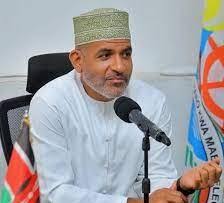
State department for science, research and innovation principal secretary Prof Abdulrazak Shaukat.(Photo/ Courtrsy)
By Prof Shaukat Abdulrazak
Email, thecoastnewspaper@gmail.com
The 2025 KCSE results show improvement nationwide with 27.18% of candidates qualifying for university—up from 25.53% in 2024.
While 1,932 students achieved an A (plain), the real issue is persistent regional disparities, especially in the Coast region, where performance remains uneven.
Congratulatory messages are tempered by the need to address these gaps.
The coast region’s story is not one of uniform failure but of progress hampered by deep inequities. While some schools—like Shimo la Tewa, Kwale High, and Mpeketoni Boys—have made significant gains, overall regional improvement lags.
These successes demonstrate what targeted effort can achieve amid wider underperformance.
At the same time, the Coast still lags behind regions such as Mt Kenya and Rift Valley, where elite schools continue to dominate national rank lists.
These contrasts point to internal regional inequities that extend beyond simple measures of success or failure.
The performance gap in parts of the Coast results from several factors, including complex, interrelated challenges: Socio-economic Barriers – Pervasive poverty and limited access to learning materials, especially in rural areas, disrupt consistent study.
Many students juggle schoolwork with household duties, which undermines focused academic preparation.
Secondly, Inconsistent Academic Culture and Motivation. Some learners lack a stable learning environment — both at school and at home — resulting in patchy attendance, shallow engagement with coursework, and lower achievement in national exams.
Thirdly, resource gaps in key subjects – science and mathematics often demand practical facilities and additional support. Resource limitations in laboratories and instructional materials hinder deep conceptual learning, especially in public and day schools. We need to invest.
Fourthly, Limited Guidance and Mentorship – The absence of sustained academic mentorship reduces learners’ ability to navigate exam pressure, set goals, and maintain resilience — factors often cited by higher-performing schools.
Combined with this is variation in teacher capacity and workload, which can affect delivery quality.
Turning around performance does not require a single magic bullet, but a comprehensive and empathetic strategy that mobilises all stakeholders firstly – Students must adopt disciplined study habits, prioritise regular revision, and take ownership of their learning journeys.
Self-motivation and goal setting, including participation in study groups and seeking help early — are crucial.

Secondly, teachers have a dual mandate: transmit knowledge and nurture learners’ confidence.
Beyond covering the syllabus, teachers should employ inclusive, interactive teaching methods, provide continuous assessment feedback, and support learners emotionally during high-stress periods such as exam preparation.
Thirdly, Parents and Parents–Teachers Associations (PTAs) play an essential role in reinforcing education at home. Beyond paying school fees, parents should engage in their children’s academic progress, monitor study routines, and work with PTAs to mobilise resources for learning materials and remedial programmes.
When PTAs focus on academic culture — not just infrastructure — they become partners in learning outcomes.
Fourthly – School and County leaders must prioritise equitable resourcing of schools — including laboratories, libraries, and teacher training.
County-level interventions, such as mentorship and revision initiatives, have shown that when regional leadership commits to education through funding and structured support, performance can improve significantly.
Additionally, a powerful but underleveraged asset is the role of successful alumni and local role models.
Former students who have excelled academically or professionally should provide mentorship, encouragement, and a tangible link between education and future opportunities.
Alumni associations should organize more career talks, holiday bootcamps, and scholarship funds that inspire current learners and broaden their aspirations.
Embedding role models into school systems fosters a culture where learners see success not as abstract but as achievable.
This collective responsibility, where the community invests time, expertise, and resources, strengthens both motivation and accountability.
The late Prof Ali Mazrui used to tell us “First to School, last to Graduate”. This was before 2007, when I spearheaded the setting up of Pwani University College, now Pwani University.
With three public universities in the region, we have a great opportunity for academic giants to play a pivotal role at the societal level to enhance academic excellence.
I have always advocated that education should go beyond rote learning to connect students with innovation, critical thinking, and real-world impact. And generally, Kenya’s youth, including those from marginalised regions like the Coast, must be equipped with both academic and creative problem-solving skills to thrive in the 21st century.
I believe that this approach reframes education not merely as an examination hurdle but as a launchpad for innovation, societal contribution, and personal fulfilment.
Despite the challenges, there is cause for optimism. Broader trends — such as increased gender parity in access and the rising number of students qualifying for university — show that systemic improvement is possible.
National performance gains and standout schools within the Coast region, such as Sheikh Khalifa, both demonstrate that academic excellence is achievable with focus, resources, and community commitment.
As stakeholders commit to empathy in teaching and learning, invest in collective support structures, and role models and alumni involvement, the Coast region can steadily close performance gaps.

Education is more than an exam; it is a shared journey – one that requires unity, resilience, and a belief in every learner’s potential.
With sustained collective effort, the Coast can transform educational hopes into measurable achievement and brighter futures for its youth.
Visionary leadership coupled with a strong drive to change (Ghera in Kiswahili) should leapfrog to a better ranking position.
About The Author