Building Tomorrow’s Maritime Safety: BMA’s Strategic Investment in Excellence
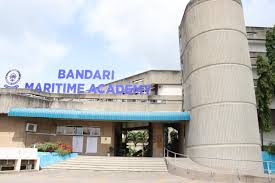
Bandari Maritime Academy. (photo/ Curtesy)
By Andrew Mwangura
Email,thecoastnewspaper@gmail.com
The recent inspection tour of Bandari Maritime Academy’s maritime survival training and certification center by the board of directors, led by chairman Eng Lung’anzi Chai Mangale, represents far more than a routine oversight visit.
It signals a transformative moment in Kenya’s maritime training landscape and underscores a commitment to excellence that extends well beyond our national borders.
As the construction progresses under the watchful eyes of chief executive officer Dr Eric Katana and his management team what emerges is not merely a building project, but a strategic statement about Kenya’s place in the global maritime industry and our determination to contribute meaningfully to the blue economy.
The significance of this development cannot be overstated in an era where maritime safety has become increasingly sophisticated and internationally regulated.
The Standards of Training, Certification and Watchkeeping for Seafarers, commonly known as STCW, sets rigorous benchmarks that seafarers worldwide must meet to operate in international waters.
By constructing a facility specifically designed to meet these exacting standards, Bandari Maritime Academy (BMA) is positioning itself not as a follower in maritime education but as a leader capable of producing professionals who can compete on the global stage.
The installation of specialized infrastructure including survival training pools, fire-fighting simulation units, and rescue boat operations areas demonstrates a serious commitment to providing practical, hands-on training that mirrors real-world maritime emergencies.
This is not theoretical learning confined to classrooms; this is experiential education that could one day mean the difference between life and death at sea.
What makes this project particularly noteworthy is its timing and strategic vision. The global maritime industry faces a persistent challenge in finding adequately trained personnel, particularly in specialized areas of safety and emergency response.
As shipping volumes continue to grow and vessels become increasingly complex, the demand for highly skilled seafarers who can manage crisis situations with competence and confidence has never been greater.
Kenya, with its strategic location along major shipping routes and its growing port infrastructure, has a unique opportunity to become a center of excellence for maritime training in the East African region.

The Maritime Survival Training and Certification Center positions BMA to capture this opportunity and transform it into tangible benefits for Kenyan youth seeking careers at sea and for the broader economy that depends on maritime trade.
The emphasis on international standards, as highlighted by Eng Mangale during the inspection, speaks to a mature understanding of how global industries operate. Maritime training cannot be parochial or isolated from international best practices.
Ships cross borders continuously, and crews must be able to work together regardless of their nationality or training origin.
By ensuring that BMA’s new facility meets and potentially exceeds international requirements, the academy is ensuring that its graduates will be welcomed aboard vessels flying any flag and operating in any waters.
This opens up enormous employment opportunities for Kenyan seafarers and establishes the country’s reputation as a source of quality maritime professionals.
Moreover, it creates possibilities for regional students to seek training in Kenya rather than traveling to Europe, Asia, or other distant locations, thereby positioning the academy as a valuable foreign exchange earner and a regional educational hub.
The involvement of the board of directors in this hands-on inspection tour also reflects good governance and accountability in the execution of major capital projects.
Infrastructure projects of this magnitude require not just financial investment but sustained oversight to ensure that quality standards are maintained, timelines are respected, and the final product serves its intended purpose effectively.
The briefing provided by project manager and architect Jared Momanyi on the technical components and progress milestones demonstrates transparency and professionalism in project management.
This level of engagement from leadership sends a powerful message to stakeholders, students, and the maritime industry that BMA takes its responsibilities seriously and is committed to delivering value for the substantial investment being made.
Dr Katana’s reaffirmation of BMA’s commitment to modernization within the context of the blue economy agenda connects this infrastructure project to Kenya’s broader economic vision.
The blue economy represents an enormous untapped potential for coastal nations, encompassing not just shipping and ports but also fisheries, marine tourism, offshore energy, and maritime security.
All of these sectors require trained personnel who understand maritime safety, emergency response, and survival techniques.
By creating a world-class training center, BMA is essentially building human capital infrastructure that will support multiple sectors of Kenya’s economy for decades to come.
This is strategic thinking that looks beyond immediate needs to long-term national development goals.
As the Maritime Survival Training and Certification Center moves toward completion, it stands as a testament to what focused vision, proper planning, and committed execution can achieve.

This is an investment not just in buildings and equipment but in people, in safety, in professional excellence, and in Kenya’s maritime future.
The facility will produce seafarers who can save lives, manage emergencies, and uphold the highest standards of maritime professionalism anywhere in the world.
The writer is a policy analyst specializing in maritime governance and blue economy development.
About The Author