Kenya’s Maritime Future at the Helm of One Man’s Voyage

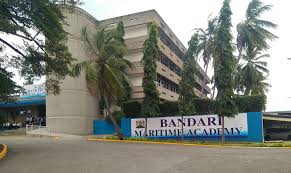
Major (Rtd) Franklyne Toniok, senior principal trainer at the Bandari Maritime Academy School of Nautical Science ascends to higher office. (Photo/ Courtesy)
By Andrew Mwangura
On the shimmering waters of the East Africa–Middle East route, one Kenyan mariner is quietly charting a new course not only for himself, but for the future of maritime training in Kenya.
Major (Rtd) Franklyne Toniok, senior principal trainer at the Bandari Maritime Academy School of Nautical Science, has left the lecture halls behind and taken his place on the bridge of a cargo ship.
Serving as Chief Mate (CM) aboard one of Farus Shipping’s vessels, he is on the path toward earning the coveted Master Mariner’s license—the highest professional credential a ship captain can hold.
His voyage is not just a personal milestone; it is a story of vision, resilience, and national ambition.
For Toniok, this sea service is more than a formality. It is a calling.
“As Chief Mate, my role is demanding, but rewarding. I am responsible for ensuring operational safety, preparing cargo plans, maintaining ship stability, implementing the Safety Management System, and overseeing navigation and watchkeeping,” he explains.
These duties may sound routine, but they are anything the CM stands for as the captain’s right hand – holding responsibility for lives, cargo, and ship alike. It is a role that demands both technical mastery and calm leadership under pressure.
Under the Standards of Training, Certification and Watchkeeping (STCW) convention, which governs global maritime competence, such practical experience is mandatory.
It ensures that senior officers acquire real-world exposure to the challenges of navigation, the discipline of crew leadership, and the readiness required in emergencies before they can assume full command as Master.
It is one thing to know maritime law, charts, and checklists; it is another to stand on deck in rough waters, make split-second decisions, and shoulder the responsibility of an entire vessel.
Yet what makes Toniok’s journey remarkable is not only its rigor but its broader meaning.
Behind this achievement lies the foresight of BMA, under the leadership of its chief executive officer Dr. Eric Katana.
By enabling its trainers to gain sea time and build professional credentials, the academy is investing in the most critical resource of all—its people.
No simulator, however advanced, can fully replace lived experience at sea. By sending its trainers back to the decks, BMA ensures that when they return, they bring with them not only technical knowledge, but the kind of wisdom forged through lived encounters with wind, waves, and responsibility.
When Toniok returns to Mombasa, his value will be far greater than any textbook or PowerPoint slide. His presence in the classroom will carry the weight of authenticity.
His stories of night watches, cargo operations, and the human dynamics of shipboard life will inspire cadets to see beyond certificates and examinations.
They will see a teacher who has walked the path they aspire to tread, a Kenyan who is proving that the highest rungs of maritime professionalism are within reach. That kind of mentorship cannot be bought; it must be earned, and then shared.
This is why his journey should be celebrated as more than an individual pursuit. It reflects Kenya’s broader ambition to become a maritime nation that supplies not just seafarers but world-class professionals.
For too long, Kenya’s maritime potential has been spoken of in terms of ports and logistics. But as any seasoned mariner will tell you, ships are only as strong as the people who sail them.
By cultivating trainers who are themselves active professionals, BMA is seeding a culture of excellence, one that will multiply across generations of seafarers.
Toniok’s story is a reminder that the future of Kenya’s maritime sector will not be secured by infrastructure alone, but by human investment.
His sea service is not just a box to tick on the way to a license. It is the bridge between aspiration and reality, between the academy’s classrooms and the global maritime stage.
Each voyage he undertakes adds credibility to the academy he represents, and each lesson he learns at sea will one day become a lesson that empowers the next Kenyan to rise through the ranks.
In celebrating this milestone, Kenya must also recognize the quiet revolution it represents: trainers becoming practitioners, educators becoming leaders at sea, and institutions daring to invest in lived experience.
That is the compass by which BMA is steering, and Toniok is the proof that the course is true.
In his voyage lies a message of hope for the nation’s youth. The seas are vast, the challenges real, but the horizon is wide open.
Kenya’s maritime story is still being written, and with leaders like him at the helm, its next chapters will be bold.
About The Author