Steering Toward Excellence: The New Dawn for Bandari Maritime Academy

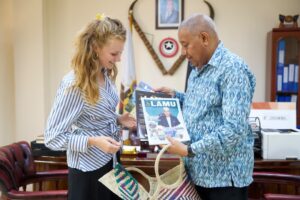
Cabinet Secretary for Mining, Blue Economy, and Maritime Affairs Hassan Joho.(Photo/ Courtesy)
By Andrew Mwangura
Email, thecoastnewspaper@gmail.com
The recent appointment of four distinguished professionals to the Board of Bandari Maritime Academy (BMA) by Cabinet Secretary for Mining, Blue Economy, and Maritime Affairs Hassan Joho represents a pivotal moment for Kenya’s maritime education landscape.
Dr. Fridah Simba, Joab Tumbo, Steve Biko Luseno, and Ahmed Abdirahman Elyass have been entrusted with the responsibility of steering the academy, recognized as Kenya’s Center of Excellence in Shipping, Maritime, and Blue Economy education and training, toward a future of greater prominence and impact.
Effective from August 29, 2025, these appointments signal a deliberate effort to bolster the institution’s governance and strategic direction, aligning it with the nation’s broader ambitions in the global maritime sector.
BMA stands at the heart of Kenya’s aspirations to harness the potential of its blue economy, a sector increasingly vital for economic diversification and job creation.
The academy’s role in producing highly skilled maritime professionals is not just a domestic priority but a strategic move to position Kenya as a competitive player on the international stage.
The appointment of this new board reflects a recognition of the need for experienced leadership to navigate the complex challenges and opportunities within this dynamic industry.
Each member brings a unique blend of expertise—spanning academia, maritime operations, policy formulation, and international relations—that promises to enrich the academy’s strategic vision and operational effectiveness.
Dr. Fridah Simba, with her academic background, brings a scholarly perspective that could elevate the quality of training programs at BMA. Her expertise likely encompasses research and innovation, areas critical for keeping the academy’s curriculum aligned with global standards and emerging industry trends.
Joab Tumbo, presumably with hands-on experience in maritime operations, offers practical insights that can bridge the gap between theoretical education and real-world application, ensuring graduates are job-ready.
Steve Biko Luseno’s involvement suggests a policy-oriented approach, potentially drawing from his understanding of regulatory frameworks to strengthen BMA’s compliance and influence within Kenya’s maritime governance structure.
Meanwhile, Ahmed Abdirahman Elyass’s international relations expertise could open doors to global partnerships, enhancing BMA’s reputation and opportunities for student and faculty exchanges.
This diversity of experience is a strategic asset, particularly as Kenya seeks to expand its maritime workforce and compete with nations like the Philippines, which have successfully exported significant numbers of seafarers.
The academy’s mission to produce skilled professionals is ambitious, aiming to meet both local demands and international recruitment targets.
The new board’s leadership will be instrumental in refining this mission, ensuring that BMA not only trains individuals but also fosters a culture of excellence and innovation.
This is especially crucial as the blue economy—encompassing shipping, fisheries, and maritime infrastructure—becomes a cornerstone of Kenya’s economic transformation under Vision 2030.
The warm welcome from the academy community, led by chief executive officer Dr Eric Katana, underscores a collective optimism about the future. This endorsement reflects confidence that the new board members’ vision will propel BMA to new heights, building on its existing reputation as a premier training institution.
The academy has already made strides, partnering with international entities and training thousands of seafarers, but the challenges ahead—such as funding, infrastructure development, and global certification—require robust leadership.
The board’s stewardship could address these issues by advocating for increased investment, such as the proposed Sh25 billion expansion plan, and by fostering collaborations that enhance the institution’s facilities and global standing.

However, the success of these appointments hinges on more than just the credentials of the board members. It demands a supportive ecosystem that includes government commitment, private sector engagement, and community involvement.
The blue economy’s potential to create wealth and jobs is immense, but it requires coordinated efforts to overcome barriers like high training costs and limited international recognition of certificates.
The new board must prioritize affordability and accessibility, ensuring that maritime education reaches beyond elite circles to benefit Kenya’s youth from diverse backgrounds.
This inclusivity is essential for maximizing the sector’s socio-economic impact and aligning with the government’s equity goals. Critically, the appointment process itself warrants scrutiny.
While the chosen individuals appear highly qualified, the transparency and inclusivity of the selection process are worth examining.
Public trust in such appointments is vital, especially for an institution like BMA, which serves as a public good with national significance.
CS Joho’s decision to appoint these professionals should be seen as a starting point, with ongoing accountability mechanisms to ensure the board delivers on its mandate.
The academy community’s enthusiasm is a positive sign, but it must be matched by measurable outcomes—such as increased graduate employment rates, enhanced international partnerships, and improved training facilities.
Looking ahead, the new board has an opportunity to redefine BMA’s role in Kenya’s blue economy narrative. By leveraging their collective expertise, they can drive innovation in training methodologies, secure funding for infrastructure upgrades, and advocate for policies that enhance the global employability of BMA graduates.
The BMA’s potential to become a regional leader in maritime education depends on this leadership’s ability to navigate political, economic, and logistical challenges.
Joho’s bold move to appoint this team sets a foundation, but the real test lies in the board’s ability to translate vision into action.
In conclusion, the appointment of Dr Simba, Tumbo, Luseno, and Elyass to the BMA board is a promising step toward strengthening Kenya’s maritime education and competitiveness.
Their diverse backgrounds offer a wealth of potential to guide BMA through its next phase of growth, supported by a welcoming academy community and a committed leadership under Dr. Eric Katana.

As Kenya strives to unlock the blue economy’s vast opportunities, this board’s success will be a barometer of the nation’s progress.
With strategic focus and collaborative effort, BMA can indeed rise to greater heights, cementing its status as a beacon of excellence in the maritime world.
The author is a policy analyst specializing in maritime governance and blue economy development.
About The Author