East African Trade Gets Boost as Ministers Address Key Trade Stalemates

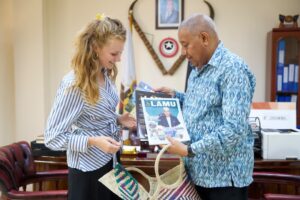
trade, investment and industry cabinet secretary Lee Kinyanjui. (Photo/ Courtesy)
By Harrison Kivisu
Email, thecoastnewspaper@gmil.com
The Shippers Council of East Africa has welcomed recent high-level meetings between Kenyan and Ugandan trade ministers with resolute resolutions and interventions aimed at boosting trade and reducing barriers across East African borders.
Kenya’s trade, investment and industry cabinet secretary Lee Kinyanjui and his counterpart Wilson Mbadi (Uganda)’s initiatives are expected to enhance region’s logistics infrastructure and streamline goods movement will boost intra-regional trade.
Shippers Council of East Africa (SCEA) chief executive officer Agayo Ogambi, in a statement, praised the commitment to complete the construction works at key border points, particularly Suam One Stop Border Post (OSBP) as well as critical road upgrades at Lwakhakha.
According to him these developments are expected to offer additional options and reduce congestion at heavily trafficked border posts such as Malaba and Busia.
“The completion of construction works at Suam and road upgrades at Lwakhakha will improve border crossing times, and decongest Malaba and Busia borders.”
He commended efforts made to address long-standing challenges at weighbridges across the region and recommended adoption of weigh-in-motion technology to eliminate unnecessary delays at weighing stations: a major cause of transit snarl-ups in the past.
In addition to infrastructure developments, he emphasized the importance of ensuring seamless operations at all border points.
The CEO urged the operationalisation of the Border Crossing Committee and stressed the need for implementing 24/7 working hours for all government agencies at every major crossing point within the East African Community (EAC).

“Addressing nontariff barriers (NTBs) will result in increased intra-regional trade, currently standing at a poor 10.8 per cent,” he added, underlining the urgency of removing them (barriers) to unlock the region’s trade potential.”
He highlighted the impact of the interventions on transit times along key trade corridors noting that the Northern Corridor that connects Port of Mombasa to inland countries such as Uganda, Rwanda, and the Democratic Republic of Congo is expected to see significant efficiency and economic gains once the ministers implement their resolutions.
He also applauded the decision to involve the private sector and institute a monitoring team to oversee implementation.
“Transit time Mombasa–Malaba, which is currently oscillating between 73 hours and 80 hours, will improve.”
In another major development, the CEO welcomed the resolution to address the controversial excise duty on transit goods, including tea, terming it a bold and positive change.
The tax, which was introduced in July, had been widely criticized as a non-tariff barrier that threatened to undermine trade competitiveness.
According to the SCEA, its resolution is now seen as a key milestone in easing cross-border commerce.
“The Excise Duty on transit goods, tea included, implemented from July has been addressed too in the document as NTB,” he noted.
These strategic actions are expected to revitalize intra-regional trade and contribute to economic growth and integration across the EAC.
The interventions come at a time when countries in the region are actively seeking ways to boost trade volumes and attract investment.
The recent developments followed a formal agreement signed by Kinyanjui and Mbadi with their commitment to tackle infrastructure gaps and dismantling trade barriers marks a significant step forward in the region’s economic cooperation.
The SCEA and other stakeholders in the logistics sector have expressed optimism that the ongoing reforms will lead to a more predictable, efficient, and business-friendly trading environment throughout East Africa.

About The Author