Bandari Maritime Academy: Steering Kenya Toward a Sustainable Blue Economy

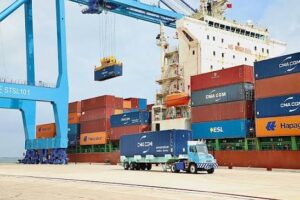
Bandari Maritime Academy. (Photo/ Courtesy)
By Andrew Mwangura
Email, thecoastnewspaper@gmail.com
In an era where global trade and sustainable resource utilisation are pivotal to economic growth, Bandari Maritime Academy (BMA) stands as a beacon of opportunity for Kenya’s youth and professionals.
Under the dynamic leadership of chief executive officer Dr Eric Katana, the academy is carving a niche as a transformative institution, equipping individuals with the skills needed to thrive in the maritime and blue economy sectors.
The academy’s innovative approach to education and its commitment to fostering sustainable economic growth were on full display at this year’s Agricultural Society of Kenya (ASK) Mombasa International Show being held at Mkomani Showground in Nyali Subcounty.
As Kenya seeks to harness the vast potential of its coastal resources and position itself as a key player in global maritime trade, BMA’s efforts are not just timely but essential.
The theme of this year’s ASK show, “Promoting Climate Smart Agriculture and Trade Initiatives for Sustainable Economic Growth,” resonates deeply with BMA’s mission.
The maritime and blue economy sectors are intrinsically linked to sustainable trade and marine resource utilisation. Shipping and port operations facilitate the movement of goods, while sustainable practices in the blue economy ensure the responsible use of oceanic resources.
The academy’s presence at the show is a powerful statement of its role in preparing Kenya to meet these demands.
The BMA’s exhibition stand buzzed with activity as officials and students engaged visitors, showcasing a diverse array of courses designed to open doors to careers in seafaring, shipping, port operations, logistics, and blue economy training.
This public engagement underscores BMA’s commitment to raising awareness about the opportunities within these sectors, which are often overlooked in favour of more conventional career paths.
At the heart of BMA’s transformative vision is its innovative approach to training. Dr Katana has championed a strategy that focuses on “marinating” existing professionals—such as mechanical engineers, electricians, and ICT specialists—into mariners through short, modular, and internationally recognised courses.
This approach is a game-changer and rather than requiring individuals to start from scratch, BMA leverages their existing expertise, providing targeted training that equips them to transition seamlessly into maritime careers.
For instance, a mechanical engineer with years of experience can enroll in a modular course at BMA and emerge as a qualified marine engineer, ready to serve on vessels or in port operations.
This flexibility not only addresses the growing demand for skilled maritime personnel but also makes the sector accessible to professionals from diverse backgrounds.
By shortening the pathway to maritime careers, BMA is democratising access to opportunities in a field that is critical to Kenya’s economic future.

The global maritime industry is vast, with an ever-increasing need for qualified professionals.
As international trade grows and ports like Mombasa continue to serve as vital hubs in global supply chains, the demand for skilled workers in seafaring, logistics, and port management is surging.
Kenya, with its strategic location along the Indian Ocean, is well-positioned to capitalize on this demand. However, the country has historically faced a shortage of trained maritime professionals, a gap that BMA is working tirelessly to fill.
By offering courses that meet international standards, the Academy ensures that its graduates are competitive not only in Kenya but also on the global stage.
This focus on quality and relevance is evident in the enthusiasm of BMA’s students at the ASK international show, where they demonstrated their skills and shared their aspirations with visitors.
Their presence is a testament to the academy’s success in nurturing talent and fostering a passion for maritime careers. BMA’s role extends beyond training young people entering the workforce.
Dr Katana has emphasized that the Academy is equally committed to re-skilling and up-skilling professionals across Kenya.
This dual focus is critical in a rapidly evolving industry where technological advancements and sustainability practices are reshaping the skills required. For example, as the maritime sector adopts greener technologies to reduce carbon emissions, professionals need training in new systems and practices.
BMA’s modular courses are designed to keep pace with these changes, ensuring that both new entrants and seasoned professionals remain competitive.
This adaptability is particularly important in the context of the blue economy, which encompasses not only shipping and port operations but also fisheries, aquaculture, and marine tourism.
By preparing professionals to navigate these diverse areas, BMA is helping Kenya unlock the full potential of its marine resources while promoting sustainable economic growth.
The alignment between BMA’s mission and the theme of the ASK International show highlights the broader significance of maritime education.
Climate-smart practices are essential for sustainable trade and resource management, and the maritime sector plays a pivotal role in both. Efficient port operations reduce delays and emissions, while sustainable fishing and aquaculture practices ensure the long-term health of marine ecosystems.
By training professionals who understand these principles, BMA is contributing to Kenya’s economic resilience and environmental stewardship. The academy’s efforts are a reminder that education is a powerful tool for addressing global challenges, from climate change to economic inequality.
Dr Katana’s leadership has been instrumental in positioning BMA as a leader in maritime education. His vision of a Kenya where young people and professionals alike can seize opportunities in the global maritime and blue economy value chain is both inspiring and achievable.
The enthusiasm at BMA’s exhibition stand during the ASK international show reflects the growing recognition of the academy’s impact.
Visitors left with a deeper understanding of the maritime sector’s potential and the pathways available to enter it. For many, it was a moment of revelation—a realisation that careers in seafaring, logistics, or marine resource management are not only viable but also rewarding.

As Kenya looks to the future, institutions like BMA will be critical in driving sustainable economic growth.
The academy’s commitment to excellence, accessibility, and sustainability is paving the way for a new generation of maritime professionals. By “marinating” talent and aligning its programs with global standards, BMA is not only meeting the demands of today’s maritime industry but also preparing Kenya to lead in the blue economy of tomorrow.
The ripples of its impact will be felt far beyond the shores of Mombasa, as its graduates steer the nation toward a brighter, more prosperous future.
The author is a policy analyst specializing in maritime governance and blue economy development.
About The Author