Tanzania’s Bold Leap with Kwala Logistics Hub –Lesson for Kenya

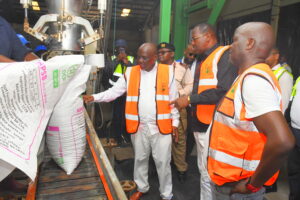
Freight wagons to boost cargo transportation via SGR. (Photo/ Courtesy)
By Andrew Mwangura
Email, thecoastnewspaper@gmail.com
President Samia Suluhu Hassan’s inauguration of the Kwala International Logistics Hub, alongside the Standard Gauge Railway (SGR) freight services and the Kwala Industrial Park, marks a transformative step for Tanzania’s ambition to become a regional trade and transport powerhouse.
By directing the relocation of all port-related services from Dar es Salaam Port to Kwala by August 4, 2025, President Samia has demonstrated decisive leadership aimed at decongesting Dar es Salaam, slashing logistics costs, and positioning Tanzania as a central hub for East and Central Africa.
This bold move, underpinned by a 330.2 billion Tanzanian shilling investment in 1,430 SGR freight wagons, signals a new era of efficiency, with cargo transit times reduced from 30–35 hours by truck to just 45 minutes to Kwala and 4–5 hours to Dodoma.
The integration of rail, road, and future maritime links to Bagamoyo and Tanga ports further strengthens Tanzania’s competitive edge, evidenced by a 17.2% surge in cargo volume at Dar es Salaam Port from 2023 to 2024.
The allocation of land to neighboring countries like the DRC, Rwanda, and Burundi at Kwala underscores Tanzania’s commitment to regional trade facilitation, promising to cut delivery times to Kampala from 15–16 days to 5–6 days.
However, this ambitious shift is not without risks. The directive to relocate all port activities within days raises concerns about operational readiness and stakeholder coordination.
While the Kwala Dry Port can handle 820 containers daily—30% of Dar es Salaam’s current volume—the rapid transition could strain infrastructure, workforce capacity, and regulatory frameworks.
The absence of detailed contingency plans for potential disruptions, such as delays in cargo clearance or inadequate facilities for hazardous materials, could undermine the hub’s immediate effectiveness.
Moreover, the reliance on rail, while environmentally and economically sound, demands robust maintenance and skilled personnel, areas where Tanzania must sustain momentum.

Former President Jakaya Kikwete’s praise for continuity is apt, but the government must ensure transparency and professionalism, as President Samia emphasized, to maintain investor confidence and regional trust.
For Kenya, Tanzania’s Kwala initiative offers a compelling blueprint and a wake-up call. Kenya’s Mombasa Port, a critical gateway for East Africa, faces similar challenges of congestion, high logistics costs, and inefficiencies that hinder regional competitiveness.
The Kenyan government should take note of Tanzania’s integrated approach, which combines rail, port, and industrial development to create a seamless logistics ecosystem.
To emulate this, Kenya must prioritize upgrading its own SGR to enhance freight capacity, particularly for landlocked neighbors like Uganda, South Sudan, and Rwanda, who are already engaging with Kwala.
Investing in a modern inland dry port, strategically located near Mombasa or Voi, could alleviate port congestion and reduce truck traffic, mirroring Tanzania’s success in cutting road damage and environmental impact.
Kenya should also adopt Tanzania’s regional collaboration model by allocating dedicated spaces for neighboring countries at its ports or logistics hubs, fostering trust and boosting trade volumes.
However, Kenya must avoid Tanzania’s risk of over-ambition by ensuring phased transitions, robust stakeholder engagement, and comprehensive training programs for port and rail staff.
Establishing a dedicated task force to oversee infrastructure integration, as Tanzania has done with its transport ministry, could streamline operations.
Additionally, Kenya should accelerate public-private partnerships, as seen in Tanzania’s ‘Open Access’ model, to attract investment and operational expertise.
Strengthening security around logistics hubs, as President Samia directed for Kwala, is equally critical to ensure investor confidence in Kenya’s volatile coastal region.
Tanzania’s Kwala hub sets a high bar, but Kenya has the opportunity to learn from its neighbor’s bold vision while avoiding potential pitfalls.

By investing in integrated infrastructure, prioritizing regional cooperation, and ensuring meticulous planning, Kenya can reclaim its position as East Africa’s logistics leader, transforming Mombasa into a hub that rivals Kwala’s promise.
The clock is ticking—Kenya must act swiftly to keep pace in this regional race for trade supremacy.
The author is a policy analyst specializing in maritime governance and blue economy development.
About The Author