Kenya Advances Regulatory Framework for Digital Assets Amidst Record Budget Plans

Hon. Francis Kuria Kimani Chairperson, Departmental Committee on Finance and National Planning and Molo MP. (Photo By Caroline Katana)
By Caroline Katana
Email, thecoastnespaper@gmail.com
Kenya is poised to become a trailblazer in Africa’s digital economy if the Virtual Assets Service Providers (VASP) Bill is enacted.
This legislation aims to regulate the burgeoning cryptocurrency and blockchain sectors, bringing them under the oversight of the Central Bank of Kenya (CBK).
The move follows revelations that over $31 billion was transacted through virtual asset platforms in the past year highlighting the urgent need for a regulatory framework to mitigate risks such as inflation, illicit activities, and terrorism financing.
If passed, Kenya will join South Africa and Nigeria as the third African nation to implement comprehensive digital asset regulations.
The VASP Bill is anticipated to attract foreign investment by providing legal clarity and fostering a secure environment for digital asset operations across the continent.
Public Engagement and Financial Inclusion
National Assembly’s finance and national planning committee chair Francis Kuria Kimani (Molo MP) says they will acti vely engage citizens to gather feedback on the proposed legislations that includes both the finance bill 2025/2026 and the Virtual Assets service providers bill.
In a recent session held at the Kwale Cultural Centre, residents expressed concerns about predatory lending practices by companies offering motorcycle and tuk-tuk loans.
Rama Hamadi, a resident of Lungalunga, highlighted the exorbitant interest rates charged by firms like Mogo and Watu Credit, which often exceed the principal loan amounts.
In response, Mr Kimani assured citizens that new interest rate regulations, effective from June 1, would cap repayments to not exceed the original loan amount.
According to him such companies violating these terms would be held accountable under international commercial laws.
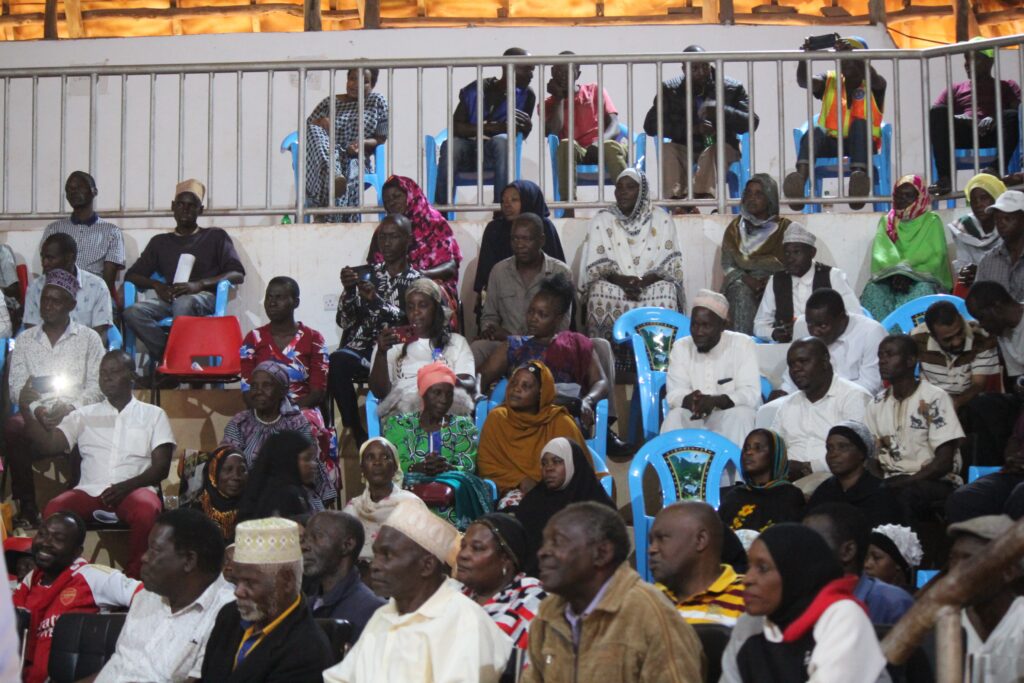
The resident, Hamadi, called for the national government, through the Ministry of Youth, to establish a legal framework to facilitate affordable loans for young entrepreneurs in the transport sector saying such initiatives should be aimed at empowering the youth and protecting them from exploitative lending practices.
Fiscal Budget 2025/2026
Concurrently, Kenya’s Cabinet has approved a historic Ksh4.2 trillion ($32.65 billion) budget for the 2025/2026 fiscal year making it the largest in the Kenya’s history.
The budget outlines allocations aimed at stimulating economic growth and improving public services.
For instance, education is allocated Ksh701 billion to enhance educational infrastructure and access while infrastructure takes Ksh501 billion for roads, ICT, and energy projects to bolster connectivity and industrialization.
Healthcare services takes home Ksh136 billion to improve healthcare services and systems while agriculture and rural development gets only Ksh78 billion aimed at boosting food security and rural livelihoods.
The finance bill also includes measures to eliminate taxes on retirement benefits and introduces strategies to attract further industrial investment.
An estimated Ksh1.1 trillion is earmarked for debt repayment, reflecting the government’s commitment to fiscal responsibility.
Matuga MP Kassim Sawa Tandaza has backed the proposed finance bill 2025/2026 asserting that it does not aim to burden Kenyans with additional taxes, but rather sought to safeguard their interests.
“This Bill should not only focus on tax reliefs for crops like coffee, tea, and sugarcane but also consider our indigenous crops such as cashew nuts, bixa, and coconut. That way, local farmers can also benefit meaningfully,” he said.
According to the finance bill the government projects to collect Ksh 2.7 trillion in revenue from taxpayers.

Acknowledging the potential impact on development projects, the MP maintained that the bill outlines alternative strategies for increasing national revenue without overburdening wananchi with excessive taxes.
Future Outlook
Kenya’s proactive approach to regulating digital assets and its ambitious fiscal plans position it as a leader in Africa’s digital and economic transformation.
By establishing a clear legal framework for virtual assets, Kenya aims to foster innovation while safeguarding its financial system.
The substantial budget allocations underscore the government’s dedication to addressing key sectors that drive economic growth and social development.
As global economies increasingly embrace digital currencies and blockchain technologies, Kenya’s initiatives may serve as a model for other nations seeking to balance innovation with regulation/
About The Author