Diani Traders Applaud Government for Giving their Businesses a Permanent Home
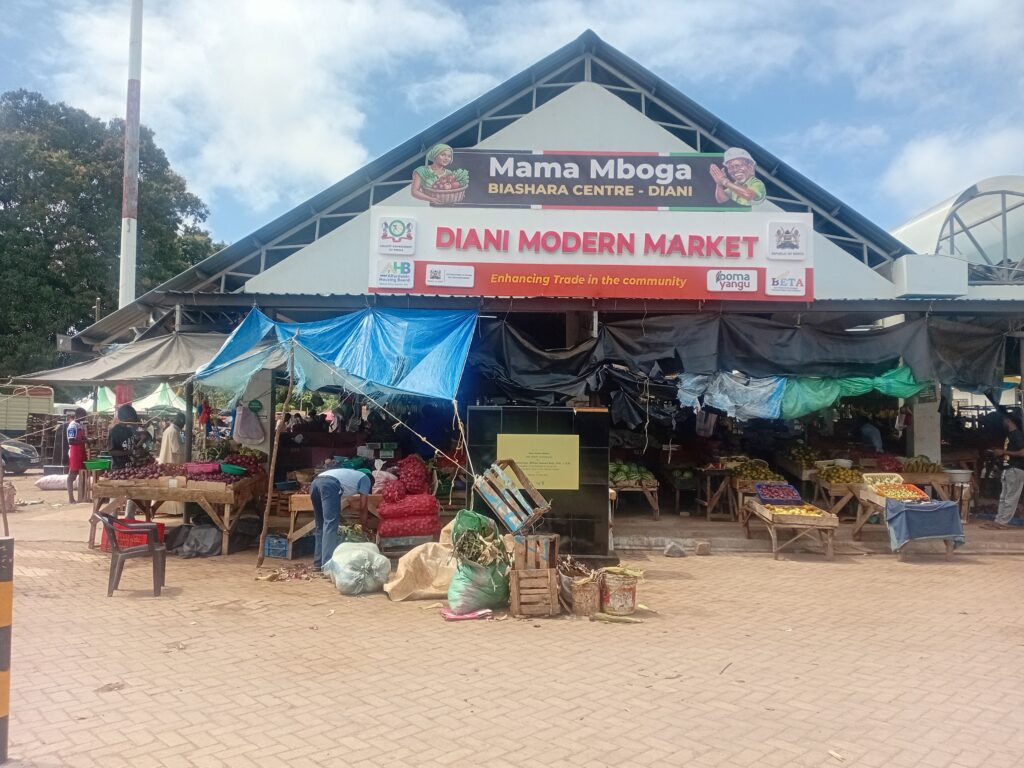
Diani Modern Market. (Photo By Caroline Katana)
By Caroline Katana
Email, thecoastnewspaper@gmail.com
For years, traders in Diani moved from one temporary trading point to another, operating along roadsides and in makeshift structures with little certainty about where their businesses would be the next day, but today they say that chapter is changing.
Traders at the newly established Diani Modern Market have applauded President William Ruto and Kwale County government for constructing a permanent and modern trading facility.
They say it is the first time in years that their contribution to the local economy has been formally recognised through infrastructure designed specifically for their businesses.
The traders say previous governments came and went while they continued operating under difficult conditions, including exposure to rain and sunshine, repeated relocations and poor access to customers.
The construction of the new market, they say, has given hundreds of small-scale traders a permanent place to do business, store their goods, and serve customers in a more dignified environment.
Esther Kitsao, a trader in the new modern, said the new market had already changed the way traders conduct business.
She thanked President Ruto and Governor Fatuma Achani for providing the facility, saying traders who once worked in uncertain conditions now have a more secure environment from which to grow their enterprises.
“We thank the president for this modern market. We call it a home for our businesses. We promise to support his bid for re-election come 2027,” she said.
According to her business is gradually picking up despite concerns over limited working capital with some traders who had initially doubted whether the market would attract customers now see improved activity there.
Her immediate appeal, however, is for affordable financing that traders can repay gradually to enable them to increase their stock and expand their businesses.
“We need money that we can repay little by little so that we can boost our businesses.”
For Chester Mutuku Musyoka, the significance of the project goes beyond the physical structure.
Musyoka, a trader at Diani Market, said traders had endured years of displacement after operating around Ibiza before being moved to Showground during the COVID-19 period.
Other traders were scattered in places including Calypso as authorities searched for suitable spaces for them.
He said the repeated movement disrupted businesses and left traders constantly uncertain about where they would operate.
According to him the new market has finally provided the stability they had been asking for.
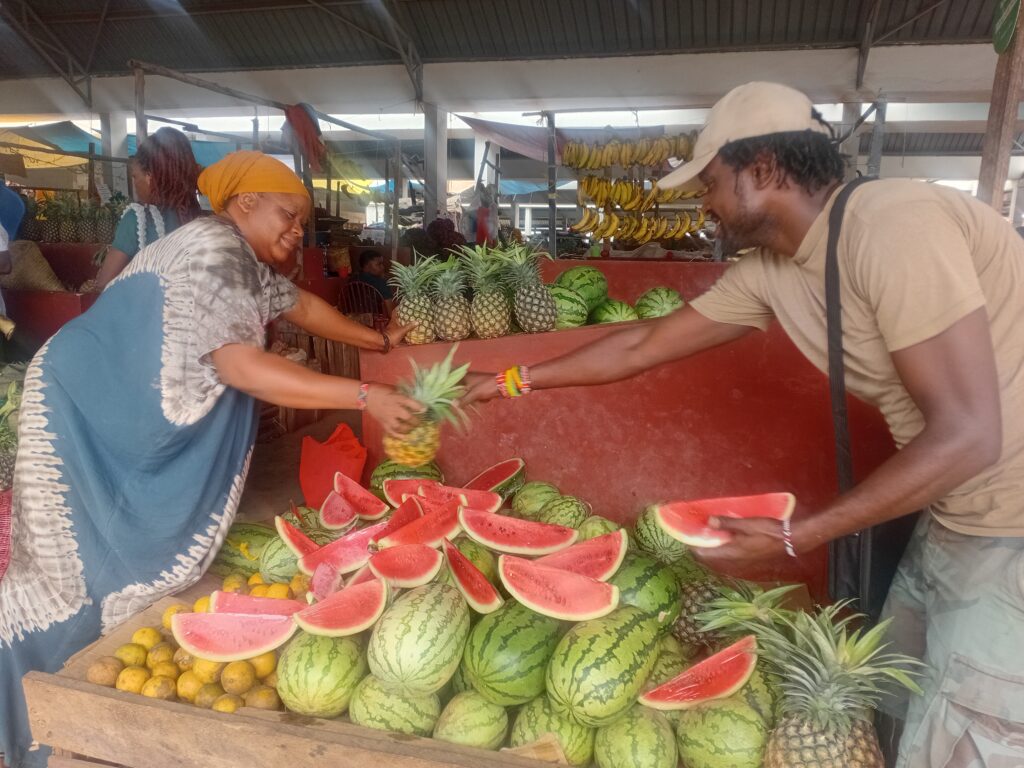
The trader said the facility has brought together different categories of traders, including women, youth, and older people while creating opportunities for people involved in transporting and handling goods.
He also praised the design of the market, noting that traders now have permanent stores instead of the temporary structures they previously relied on.
“This is a modern market. We have stores that have been built for us; it is not like the small structures we used in the other markets.”
However, he said the full economic potential of the facility would only be realised if traders who remain outside the market are also brought in.
Some traders are still operating along the roadside and around the old trading areas, he said, leaving the new market with fewer traders and customers than it could accommodate.
He also wants authorities to improve the connection between the market and the nearby transport stage.
He said the stage serves passengers travelling to Nairobi, Kikuyu, Ukambani and other destinations, and bringing more of those transport services closer to the market would increase customer traffic.
The trader called for reliable internet connectivity saying modern traders increasingly depend on digital platforms to communicate with customers and market their products.
Musyoka has installed a television at his business premises which he uses as a landmark for customers trying to locate his shop, including customers arriving from outside the Coast region.
Reliable Wi-Fi, he said, would make it easier for traders to conduct online marketing and communicate with customers without repeatedly purchasing mobile data.
David Nzioki said the transformation was particularly significant for traders who remember the conditions under which they previously operated.
He said traders moved from Calypso to Ibiza and later to Showground where business remained difficult because of poor facilities and reduced customer traffic.
According to him traders had previously operated in makeshift structures and were exposed to rain, making it difficult to protect their goods and maintain steady business.
He credited the national and county governments for working together to construct the modern facility saying the intervention had provided traders with a better environment in which to operate.
Nzioki said the market was now attracting more traders and described the new facility as a major improvement from the informal trading spaces they previously occupied.
But like other traders, he said the growing population of businesses meant additional space would eventually be required.
“We are asking the President to add more space because the number of traders is increasing and we cannot all fit here,” he said.
Kioko Wambua said the greatest difference was the dignity and security that came with having a permanent place of business.
Before the market was constructed, he said traders worked in the open, where their goods were exposed to sunshine and rain and customers were often discouraged by the poor environment.
The new facility, he said, has changed that situation by providing traders with proper working spaces and stores where unsold goods can be kept safely.
“Now we are doing business well. We are not rained on and our goods do not get damaged because we have stores where we can keep what remains.”
He said the number of traders had grown significantly since the market opened with some businesses still operating outside because the available space is insufficient.
He urged the government to consider expanding the facility so that traders still working in exposed areas can also benefit from the improved trading environment.
He also appealed for free or affordable Wi-Fi to support traders who increasingly rely on digital services.
For the traders, however, the demands for more space, affordable credit and better connectivity are not a rejection of the new facility, but an indication of their desire to build on what they describe as a major government investment in their livelihoods.
They say the market has moved them from an era of temporary and roadside trading to a more organised commercial environment.
The traders also say the facility has demonstrated that small-scale businesses, which provide livelihoods for thousands of families and contribute to county revenues, can no longer be treated as an afterthought in urban development.
Their praise for the Ruto administration is therefore rooted in what they describe as a long-awaited recognition of their economic role.
They say governments have come and gone while they continued to trade from temporary spaces, but the new market has given them something they had lacked for years a permanent home for their businesses.
As business activity grows, traders now want the next phase of the investment to focus on making the market fully functional.
Expanding the available space, improving access to working capital, strengthening digital connectivity and linking the facility more effectively to public transport.
For the traders, the new Diani Modern Market is not simply a building, it is, in their views, a recognition that the small businesses operating inside it are an important part of Kwale’s economy.
President William Ruto Government aim to build 400 modern markets across the country with 200 markets already operational.
About The Author