Mass School Dropouts in Tana River as Capitation, Hardship Crisis Bites CBE Progress
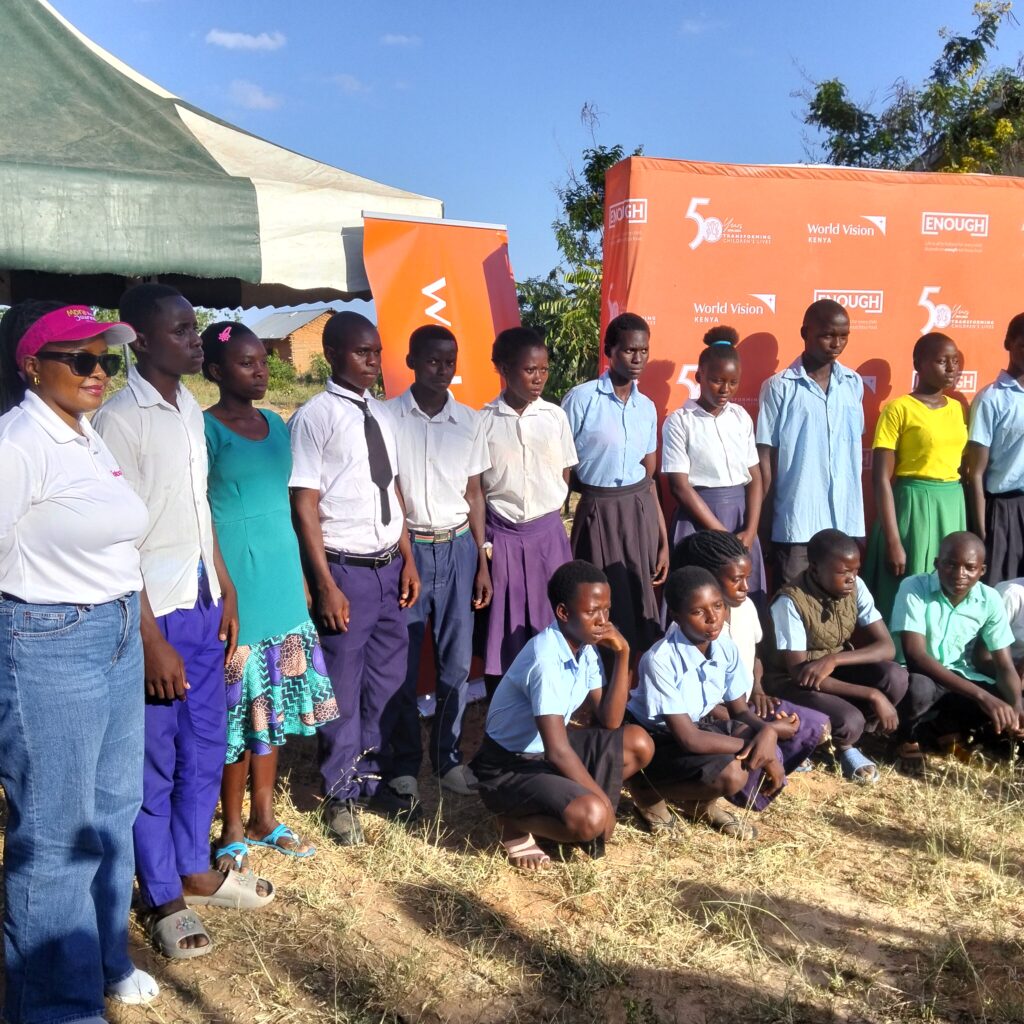
JamboJet official (Left in White) pose for a photo with the scholarship beneficiaries at Mrima wa Ndege chiefs office. (Photo by Mwakwaya Raymond)
By Mwakwaya Raymond
Email, thecoastnewspaper@gmail.com
Five primary school pupils walk swiftly along a dusty, unpaved road cutting through dry grassland and thorny bushes in Tana River County.
The early morning humidity is slowly lifting as the sun rises over the arid landscape, casting light on battered patches of vegetation and a rough, winding road.
The children carry small bags on their backs and wear yellow shirts with green shorts or skirts. Only one of them has shoes—a simple plastic pair stained with dust. The other four, including two girls, walk barefoot.
They have already trekked two kilometres from their homes. To reach their school, they still have another one and a half kilometres to cover in about 25 minutes.
For millions of Kenyan learners, the daily journey to school may involve walking, commuting, or being escorted by parents.
But for children in Ganze and Garsen in Kilifi and Tana River County respectively, the long distances and harsh conditions have increasingly pushed many to the brink of dropping out.
In these arid communities, school represents more than education. For many children, it is the only place where they are guaranteed a meal.
Before lunch break, pupils gather to sing a familiar song that has become a signal for the most anticipated moment of the day.
Kadonje kanahola,
kadonje kanahola,
hindeni malo fukarye.
(The food is getting cold,
let’s run and eat it.)
At the end of the song, the children scatter in excitement, rushing towards the kitchen area. For many of them, the meal served at school is the only food they will eat that day.
The school feeding programme gained momentum alongside the rollout of the Competency-Based Education (CBE) system, which sought to sustain 100 per cent transition from primary to junior secondary school.
In many parts of the country, particularly in arid and semi-arid areas, the meals became a powerful incentive that kept children in school. When CBE was rolled out nationwide, enrolment surged in many rural schools. Classrooms overflowed as more children joined the system.
Some pupils who had previously dropped out returned to school, attracted not only by the promise of education but also by access to food.
Schools quickly became crowded. In some cases, pupils studied under trees as administrators struggled to accommodate the growing numbers.
“We were told to go to school at 11am because our classroom was being used by other students,” recalled a Grade Three pupil at Golbant Primary School as he spoke to a friend while preparing to cross a seasonal river on the way to class.
Local administrators from the National Government Administration Office (NGAO) even used school feeding programmes to mobilise children back into classrooms.
The strategy worked. Enrolment rose sharply.
Teachers say schools became vibrant centres of learning where children received porridge during the morning break and a hot meal in the afternoon.
“Schools for young children became like heaven on earth. Children received care, food and time to rest. Learning was enjoyable,” Grace Kafadzi not her real name, a teacher in Vitengeni, Ganze Constituency, said.
Government capitation funding helped sustain the system.
Schools used the funds to hire additional teachers, buy learning materials, pay non-teaching staff and maintain school facilities.
Watchmen, cooks, secretaries and groundskeepers were paid regularly. School compounds remained well-maintained, and co-curricular activities flourished.
For many schools in remote areas, capitation funding kept the entire system running.
But that has changed dramatically as persistent delays in the release of capitation funds have disrupted school operations, particularly in poor and remote regions where communities cannot supplement school budgets.
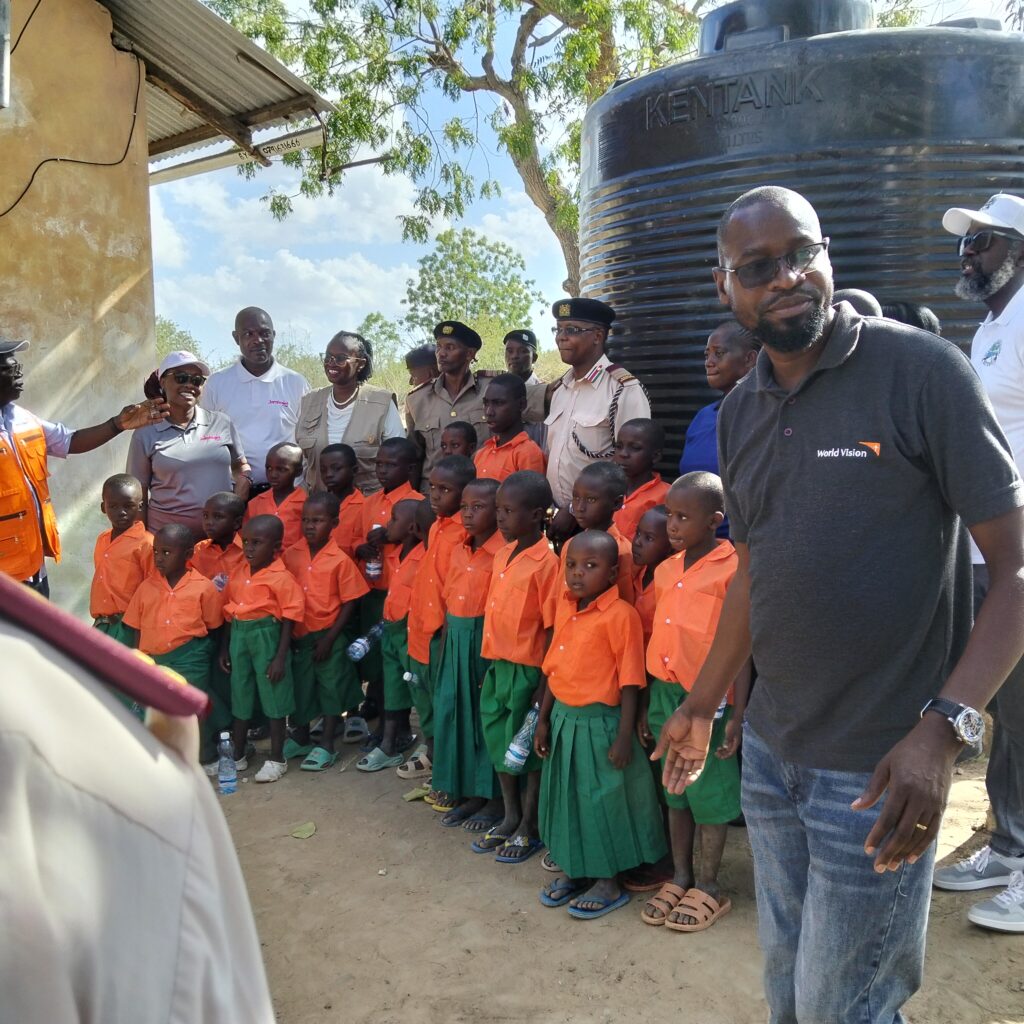
At Mrima wa Ndege Primary School, located near the forests bordering Tsavo National Park, the consequences have been severe.
The school has 700 pupils but only eight teachers employed by the Teachers Service Commission (TSC).
Deputy head teacher Rachael Karisa says the school depends heavily on capitation funding to hire additional teachers and run feeding programs.
“When capitation delays occur, the entire system collapses,” she said.
The surrounding community is extremely poor and cannot afford to support the school financially.
Other schools facing the same predicaments are Dulukiza, Mrya Chakwe, Makonje Mare, Zabina and Milore.
About 100 students out of the total 700 at Mrima wa Ndege school fail to show up whenever meals are not served while at Dulukiza a sources close to the school have confirmed that the number was at 450 but dropped to 350 when delays of capitation occurred.
‘We have a very interesting scenario here students of very high ages also flock to this school whenever meals are served and disappear immediately once there are no meals” the source said
A neighboring school Kadzandani Primary which is not under any donor funding program recorded a total of 370 students but dropped to 270 once meals are not served.
According to a 2024 report by World Vision, poverty levels in the area stand at 71.7 per cent, while literacy levels remain relatively low at 68 per cent.
The same report shows that some pupils walk up to five kilometers to reach the nearest school.
Without capitation funds, schools struggle to provide meals or learning materials.
For families already grappling with poverty, sending children to school without the guarantee of food becomes difficult.
“Children cannot walk several kilometres to school hungry and come back home hungry. If there is no food at school, why risk the lives of our children for nothing?” One parent who requested anonymity said.
When meals disappear, attendance drops. Teachers interviewed said some pupils stop reporting to school altogether, while others accompany their parents to search for food or casual work.
Older children often leave school to help their families survive.
The long journeys to school also expose children to danger.
In Ganze, pupils trek through forests inhabited by elephants, snakes, monkeys and other wildlife.
Omar Mohammed, a children’s officer in Ganze sub county, says the long distances also expose girls to exploitation.
“Some girls are ambushed along the way and coerced into relationships that lead to early pregnancies,” he says.
The risks of attacks by wildlife such as elephants and hippopotamuses are also common.
The effects of poverty are also evident at higher levels of education.
Karisa says most pupils who completed Grade Nine in 2025 at Mrima wa Ndege Primary School have not transitioned to Grade Ten due to lack of fees.
Out of a class of about 80 learners, only a handful have progressed to senior secondary school.
Some organizations have stepped in to help.
A joint initiative involving Jambojet, Jacaranda Hotel, World Vision and other well-wishers has sponsored about 20 students to join Grade Ten.
But many more remain stranded.
Nationally, the Ministry of Education says transition to Grade Ten stands at 99 per cent, while the Coast region records about 95 per cent.
Yet the situation in remote communities like Ganze and Garsen paints a different picture.
Without reliable capitation funding, the gains made under CBE risk slipping away.
For many children in these arid areas, school remains the only lifeline, providing not just learning, but food, safety and hope for a better future.
Many started to dropping out with a simple reason, no meals at school we can’t walk hungry and come back hungry.
A large number could not walk the talk as the hunger kept biting harder.
Older boys and girls joined their parents to go search for something to put on the table.
The young ones were left behind to wait at home as they’re too weak to walk to school hungry.
Ganze sub county children’s officer Omar Mohammed say such long distances exposes young girls to exploitation as they walk through thick forests, raising chances of being ambushed and coerced into premature relationships leading to early pregnancies.
The officer says the students also face the risk of being attacked by wild animals such as elephants, hippopotamus and many more.
The report further indicates that learning institutions in that area have since recorded high levels of school dropouts and are yet to be traced back in class.
Recently, the cabinet secretary for Education Migos Ogamba while launching a building at Kenya Coast Polytechnic Mombasa said the transition rate to grade ten is at 99% country wide while Coast region is at 95%.
World Vision says several students do not go for further education ending up being married off at tender age.
Ms Rachael Karisa says majority from a class of about 80 students that did grade 9 in 2025 at Mrima wa Ndege are yet to join Grade 10 (senior school) due to lack of fees.
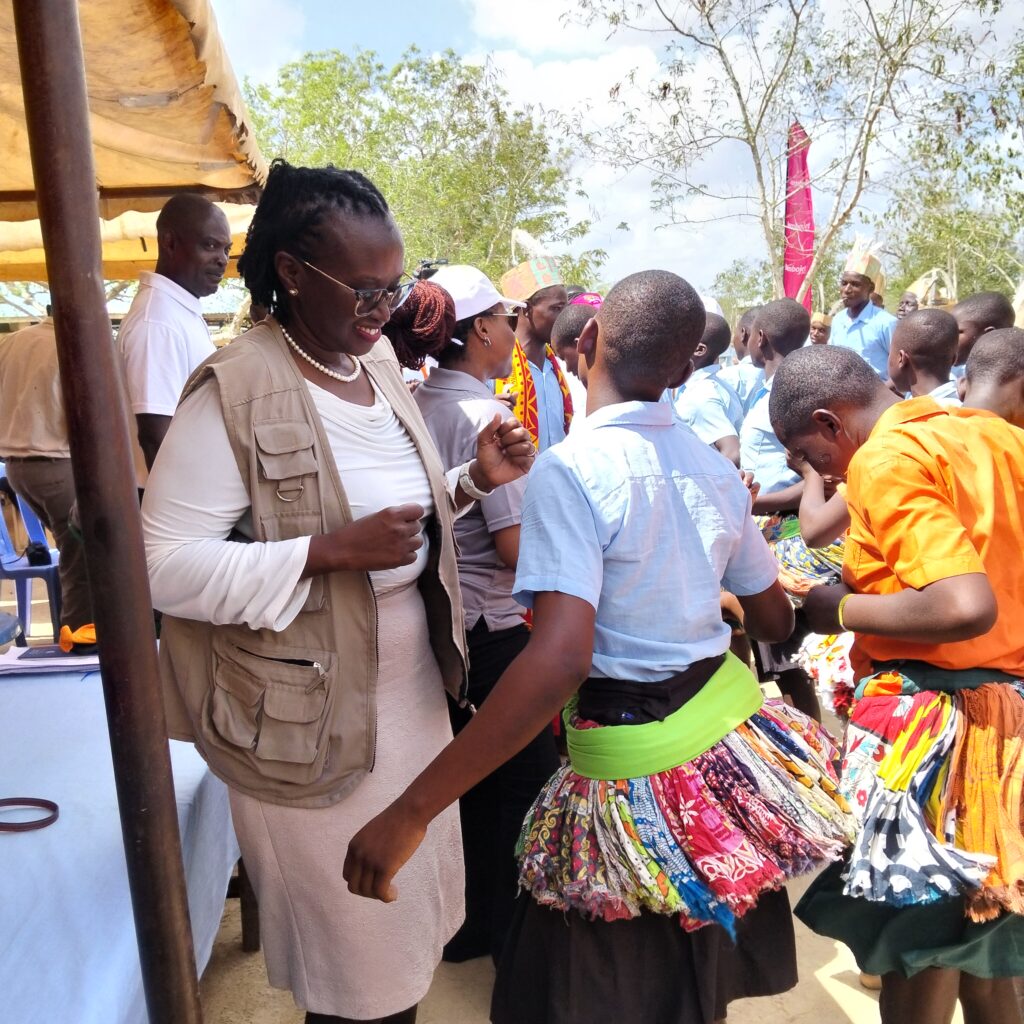
Joint efforts of the Jambojet, Jacaranda hotel as well as World Vision and other well-wishers have managed to sponsor up to 20 students to Grade 10.
However, to keep pupils and students in school in these arid regions clearly needs much more action from the government and other organizations of goodwill.
About The Author