A Port Call of Consequence: Le Malin’s Mombasa Visit Signals Strategic Shifts
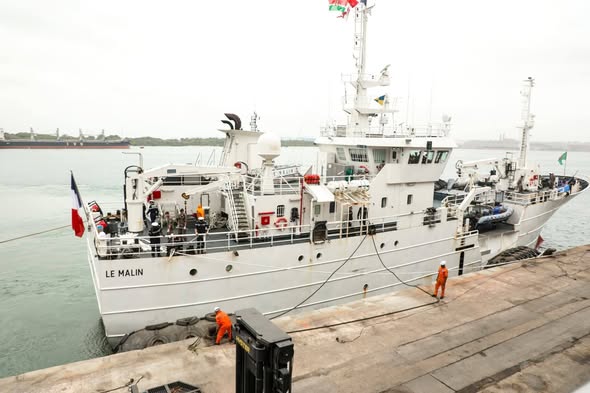
e Malin’s Mombasa Visit (Photo/Courtesy)
By Andrew Mwangura
Email, thecoastnewspaper@gmail.com
The arrival of the French naval patrol vessel Le Malin at the Port of Mombasa was more than a ceremonial event; it was a quiet, yet firm, statement on the evolving significance of maritime security in the Western Indian Ocean and Kenya’s growing role within it.
As global trade, regional geopolitics, and non-traditional threats converge at sea, Mombasa is reasserting itself not merely as a commercial hub, but as a strategic maritime node whose relevance extends far beyond cargo statistics and logistics.
The formal reception by senior Kenya Ports Authority officials, including Harbour Master Captain Patrick Onyango representing Managing Director Captain William Ruto, reflects an institutional recognition: modern ports cannot function if their surrounding waters are insecure.
Maritime cooperation has become an indispensable extension of port governance. The presence of senior diplomats—notably the French Ambassador, H.E. Arnaud Sucquet, and the German Ambassador, H.E. Sebastian Groth—elevated the occasion from routine naval courtesy to one of clear diplomatic and strategic weight.
Ambassador Sucquet’s emphasis on France’s commitment to deepening cooperation through joint naval exercises warrants attention. France is no distant partner dabbling in symbolism; it is a resident Indian Ocean power with territories, assets, and long-standing security responsibilities.
Its engagement acknowledges Nairobi’s increasingly central position along the Ocean’s rim, where piracy, illegal fishing, trafficking, and the safeguarding of vital sea lanes intersect.
While Kenya’s coastline may be modest compared to some neighbors, its geostrategic importance is magnified by Mombasa’s role as an economic lifeline for landlocked nations and a cornerstone of the Northern Corridor.
The participation of the German Ambassador, framed within the 60th anniversary of the historic Élysée Treaty, added profound symbolism.
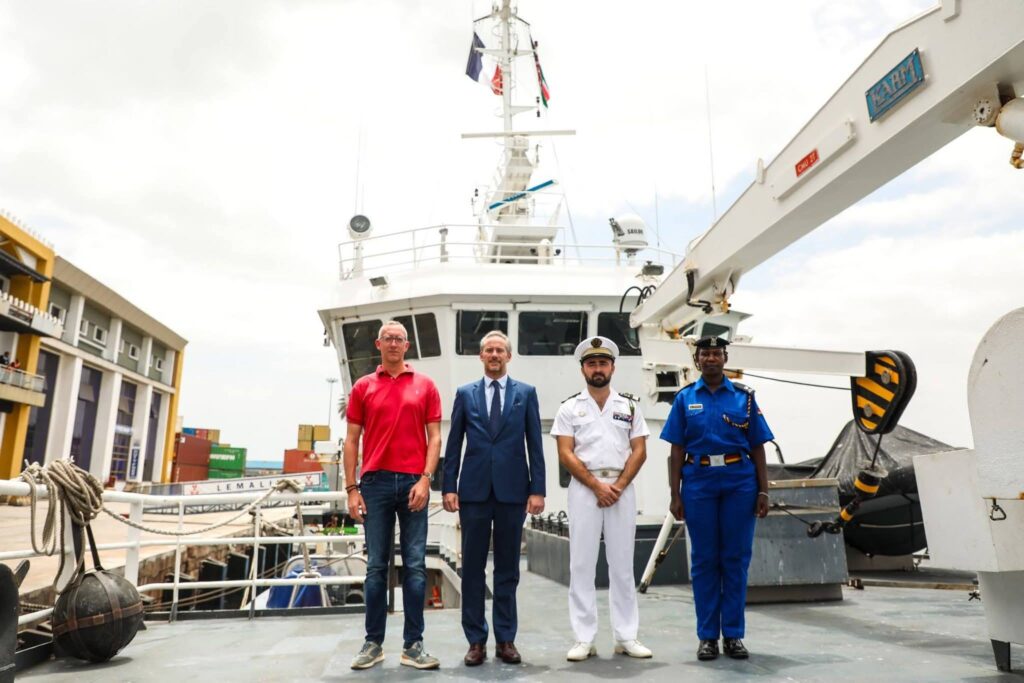
That pact transformed European rivalry into partnership. Its echo in Mombasa, thousands of kilometers from Europe, underscores that contemporary maritime security is inherently multilateral and values-driven.
The Indian Ocean is no peripheral theater; it is central to global trade and stability. European partners are signaling that cooperation with African coastal states is essential, not optional.
The history of Le Malin itself reinforces this narrative. Initially a longline fishing vessel, its seizure by France in 2004 for illegal fishing in the Southern Ocean highlights the scale of maritime lawlessness that persists. Its conversion into a naval patrol vessel demonstrates how states are repurposing assets to meet evolving threats.
Today, operating across the southern Indian Ocean, Le Malin monitors fisheries and enforces maritime law—tasks that resonate deeply with East African concerns over illegal, unreported, and unregulated fishing, which devastates livelihoods and coastal economies.
For Kenya, Le Malin’s visit should prompt reflection, not complacency. While international partnerships are valuable, their effectiveness hinges on robust domestic capacity, coherent policy, and sustained investment in maritime institutions.
The Port of Mombasa sits at the crossroads of security, trade, and diplomacy. Its waters host commercial shipping, naval vessels, cruise liners, and artisanal fishers—all operating within a constrained space.
Seamless coordination among port authorities, the Kenya Navy, maritime agencies, and regional partners is therefore not a luxury, but an urgent necessity.
A subtler message from this visit concerns the future of port diplomacy. Ports are no longer passive infrastructure; they are dynamic stages where international relationships are performed and reinforced.
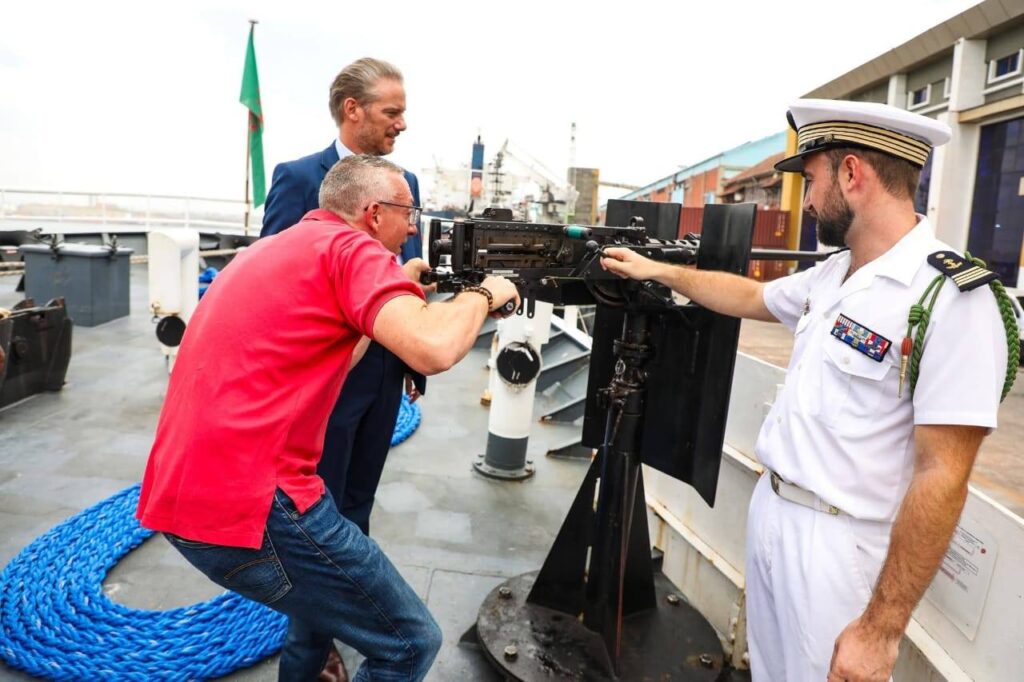
The guided tour of Le Malin was more than a technical display—it was an act of transparency and trust-building. Such engagements demystify naval operations, normalize cooperation, and lay groundwork for joint exercises, intelligence sharing, and coordinated responses to maritime incidents.
Ultimately, the docking of Le Malin at Mombasa affirms Kenya’s maritime relevance at a time when the Indian Ocean commands unprecedented strategic attention. It underscores the inextricable link between maritime security, economic resilience, environmental stewardship, and regional stability.
For the Port of Mombasa, this moment is a reminder: its future will be shaped not only by cranes and cargo volumes, but also by the strength of the partnerships forged at its quayside and the safety of the waters it serves.
Mr. Mwangura is an independent maritime consultant and former Secretary General of the Seafarers Union of Kenya.
About The Author