Cleaner Wake at Kilindini: What Höegh Australis Signals for Kenya’s Maritime Future
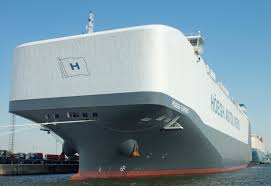
Höegh Australis at Kilindini Port Mombasa Kenya. (Photo/ Courtesy)
By Andrew Mwangura
Email, thecoastnewspaper@gmail.com
As the tides carried a new generation of global shipping into Kilindini Harbour, the Port of Mombasa marked a quiet but historic milestone.
The maiden call of Höegh Australis, a pure liquefied natural gas–powered vessel, was more than a ceremonial first visit. It was a statement that Kenya’s principal seaport is steadily aligning itself with the changing currents of international maritime trade, where environmental performance is no longer optional but central to competitiveness.
Piloted into port by Kenya Ports Authority (KPA) pilot Captain Suleiman Bakari, on behalf of managing director Captain William Ruto, the arrival symbolized professional confidence as much as technical readiness.
The issuance of a traditional first-call plaque and certificate to the ship’s master, Captain Edgar Paul P. Buhia, reflected a long-standing maritime tradition, but the context was unmistakably modern.
This was the first LNG-fuelled vessel to berth in Mombasa, and its presence signaled that global shipping lines increasingly view the port as capable of handling next-generation ships designed to meet stricter environmental standards.
What makes Höegh Australis significant is not simply its size or its role as a car and truck carrier, but the way it moves.
Operating on 98 percent liquefied natural gas, with only a minimal reliance on conventional bunker fuel during engine start-up and specific operational needs, the vessel represents a tangible shift away from the heavy fuel oils that have long dominated maritime propulsion.
LNG dramatically reduces sulfur oxide and particulate

By emissions, cuts nitrogen oxides, and lowers carbon dioxide output compared with traditional marine fuels.
For a port city like Mombasa, where shipping activity and urban life intersect closely, these reductions matter.
The ship’s technical profile also reflects the broader evolution of maritime design. With 16 decks and a capacity of about 9,000 units, Höegh Australis belongs to a new class of high-efficiency carriers that move large volumes while consuming less fuel per unit of cargo.
Efficiency, once measured almost exclusively in turnaround time and cost, is now inseparable from environmental performance. Shipping lines face growing pressure from regulators, cargo owners, financiers, and the public to demonstrate credible pathways toward decarbonization.
That pressure is largely shaped by the International Maritime Organization’s tightening environmental rules, which are pushing the industry to rethink propulsion, fuels, and port interfaces. LNG has emerged as a widely accepted transition fuel in this journey.
While it is not a zero-carbon solution, it offers immediate and measurable emissions reductions using technology that is commercially available today.
Many LNG-powered vessels are also built to be ammonia-ready, allowing future conversion to fuels that promise near-zero carbon emissions once infrastructure, safety standards, and supply chains mature.
The experience of Höegh Australis at Mombasa further underlines the port’s operational readiness. Captain Buhia’s account of good access and a positive port call, following an 11-day voyage from Singapore, reinforces the importance of reliability in global shipping networks.
In an era of tight schedules and complex logistics chains, ports that combine efficiency with compliance to emerging environmental norms are better positioned to attract premium traffic.
Yet it is important to view this milestone with balanced realism. LNG is not without challenges. Fuel availability, the development of bunkering infrastructure, and concerns over methane emissions remain part of an ongoing global debate.
Moreover, the transition to even cleaner fuels such as ammonia or methanol will demand significant investment, new skills, and robust safety frameworks. Ports, shipping lines, regulators, and workers will all need to adapt together.
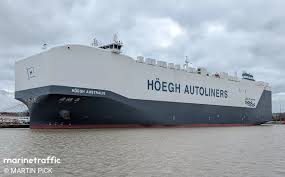
Still, milestones matter. The arrival of Höegh Australis confirms that the Port of Mombasa is not standing still as global shipping accelerates its shift toward sustainability. It shows a port capable of welcoming cleaner ships, supporting international standards, and signaling to the world that Kenya intends to remain a relevant maritime gateway in a decarbonizing global economy.
For a sector often measured in tonnage and throughput, this moment is better understood as a change in direction — a cleaner wake pointing toward the future of shipping on the East African coast.
Mr Mwangura an independent maritime consultant is former SUK Secretary General
About The Author