Strategic Appointment for Mombasa’s Maritime Future
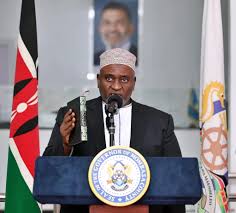
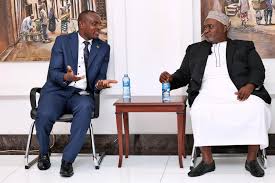
Ibrahim Mtwafi sworn in as the county executive committee member for Blue Economy. (Photo/ Courtesy)
By Andrew Mwangura
Email, thecoastnewspaper@gmail.com
The official confirmation of Ibrahim Mtwafi as the county executive committee member for Blue Economy in the Mombasa County Government represents a pivotal moment in the coastal region’s development trajectory.
This appointment comes at a time when Kenya’s maritime sector demands visionary leadership capable of transforming theoretical potential into tangible economic benefits for coastal communities.
Mtwafi’s confirmation signals a renewed commitment to harnessing the vast resources of our ocean economy, and the expectations riding on his shoulders are as vast as the Indian Ocean itself.
Mombasa County’s blue economy sector has long been characterized by untapped potential and missed opportunities.
Despite being Kenya’s premier coastal hub with direct access to critical maritime resources, the county has struggled to translate its geographical advantages into sustainable economic growth for its residents.
The fishing industry remains largely informal and undercapitalized, marine tourism infrastructure continues to lag behind international standards, and port-related economic activities have not sufficiently cascaded benefits to local communities.
Mtwafi inherits a portfolio that requires not just administrative competence but transformative thinking and the political will to challenge entrenched interests that have historically benefited from the status quo.
The blue economy encompasses far more than traditional fishing and maritime transport. It includes aquaculture, marine biotechnology, ocean energy, seabed mining, marine tourism, and the sustainable management of coastal ecosystems.
For Mombasa County, this diversity presents both opportunity and complexity. Mtwafi must navigate competing interests between conservation and exploitation, between traditional fishing communities and modern commercial operations, and between immediate economic needs and long-term sustainability.
His success will be measured not by the number of projects launched but by the degree to which coastal communities experience improved livelihoods while maintaining the ecological integrity of marine resources for future generations.
One of the most pressing challenges facing the new CECM is the formalization and modernization of the fishing sector.
Thousands of fishermen operate with rudimentary equipment, lacking cold storage facilities, market linkages, and value addition infrastructure. The beach management units that were meant to organize and empower fishing communities often lack the resources and institutional support to function effectively.
Mtwafi must prioritize investment in fishing harbors, ice plants, processing facilities, and cooperative structures that can help local fishermen capture more value from their catch.
Equally important is addressing the declining fish stocks through sustainable fishing practices and the enforcement of regulations that prevent destructive methods such as beach seining and the use of illegal nets.
Marine tourism represents another critical frontier. While Mombasa attracts visitors to its beaches, the county has not fully capitalized on the potential of activities such as diving, snorkeling, sport fishing, and marine wildlife observation.
The degradation of coral reefs, pollution from urban runoff, and inadequate waste management threaten the very assets that could drive tourism growth. Mtwafi must work across departments to ensure that environmental protection is integrated into tourism development strategies.
This requires collaboration with county planning, environment, and tourism departments to create a holistic approach that preserves marine ecosystems while developing them as economic assets.
The relationship between the port of Mombasa and the local economy remains paradoxically distant.
One of Africa’s busiest ports operates within the county, yet the economic spillover effects remain limited for many residents. Mtwafi has an opportunity to advocate for policies that increase local participation in port-related businesses, maritime services, and logistics operations.
This includes skills development programs that prepare young people for careers in maritime sectors and creating frameworks that favor local enterprises in supply chains connected to port operations.
Perhaps most fundamentally, Mtwafi must champion the often-overlooked connection between environmental health and economic prosperity.
Mangrove restoration, marine protected areas, and pollution control are not obstacles to development but foundations for sustainable blue economy growth.
The degradation of marine ecosystems ultimately undermines the very industries that depend on them. A robust blue economy in Mombasa must be built on the principle that ecological sustainability and economic growth are complementary rather than contradictory objectives.
The confirmation of Ibrahim Mtwafi as CECM for Blue Economy is not merely an administrative appointment but a statement of intent by the Mombasa County Government. The task ahead requires technical expertise, political courage, and a deep commitment to the welfare of coastal communities.
Success will demand partnerships with national government agencies, research institutions, private sector investors, and most importantly, the fishing communities and coastal residents whose lives depend on the ocean.
Mtwafi’s tenure will ultimately be judged by whether the promise of the blue economy finally translates into jobs, income, and improved living standards for the people of Mombasa County while securing the marine environment for generations to come.
Mr Mwangura,an independent maritime consultant , is former SUK Secretary General.
About The Author