Kenyan Officer’s Arctic Testament of Skill and Seamanship
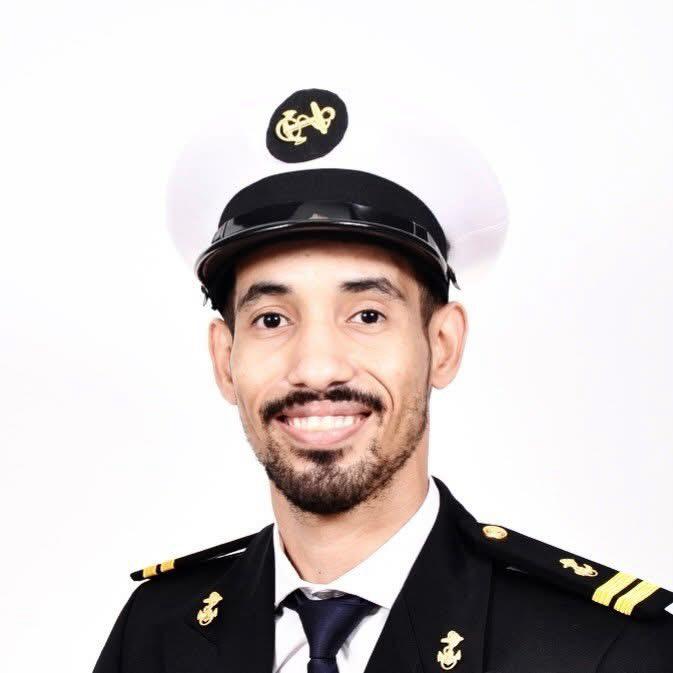
Kenyan marine deck officer Samir Alamin. (Photo/ Courtesy)
By Andrew Mwangura
Email, thecoastnewspaper@gmail.com
In an era when maritime narratives are too often dominated by stories from traditional seafaring nations, the remarkable voyage of Kenyan marine deck officer Samir Alamin to Sisimiut, Greenland, stands out as a powerful reminder of the global nature of modern seamanship and the rising profile of African professionals in some of the world’s most demanding maritime theatres.
His recent assignment as Chief Mate aboard a German-managed tanker, navigating the treacherous North Atlantic in November, offers not only a story of personal achievement but also a deeper reflection on the evolving standards, resilience, and professionalism defining today’s mariners.
The North Atlantic in early winter is not a stage for the faint-hearted. It is a place where weather systems move with brutal unpredictability, swelling from low-pressure zones into full gales within hours.
Waves rise like walls, winds scream across decks with icy ferocity, and the sea surface becomes a cold mosaic of drifting ice.
For a tanker officer, these are not poetic descriptions but real operational hazards that demand precision, vigilance, and unwavering adherence to safety discipline.
It is within this unforgiving environment that Samir completed his voyage—an experience that both tested and affirmed the depth of his training and the steadiness of his character.
Holding a Chief Mate Certificate of Competency from BSH Germany, Samir belongs to a select group of officers trained and certified under one of the world’s most rigorous maritime administrations.
This qualification alone speaks volumes about the expertise required to operate in complex tanker environments, but his professional journey extends further.
Over the years, he has served with German tanker operators whose vessels are routinely chartered by energy giants such as Shell, ExxonMobil, TotalEnergies, and BP.
Working under companies known for relentless safety standards and detailed operational protocols has shaped him into a disciplined and methodical officer—one who understands that excellence at sea is built on consistency, preparation, and respect for risk.
Samir’s experience spans the coasts of Northern Europe and the Mediterranean—regions with distinct navigational challenges, from the traffic-congested approaches of the English Channel to the unpredictable weather of the Baltic and the narrow, bustling ports of southern Europe.
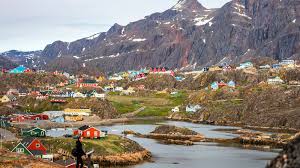
Exposure to these diverse environments has given him a versatility that is essential for a modern tanker officer. Yet perhaps what distinguishes him most is his Polar certification, a vital qualification for those venturing into Arctic waters.
The International Code for Ships Operating in Polar Waters (the Polar Code) introduced by the IMO demands a high level of preparedness, awareness, and ship-specific competence.
Navigating near Greenland, therefore, is not just a matter of plotting positions and monitoring ice—it is about understanding a fragile, dynamic ecosystem where decisions must anticipate the environment, not merely respond to it.
Throughout his career, Samir has handled a wide range of clean petroleum products and chemical cargoes, each requiring strict adherence to industry guidelines and precise operational procedures.
His successful participation in numerous SIRE 2.0 inspections further illustrates his commitment to quality.
These inspections, led by oil majors to assess tanker safety and operational reliability, are not mere checklists; they are intense, highly technical evaluations of a vessel’s readiness and an officer’s understanding of risk, compliance, and emergency preparedness.
Passing these inspections repeatedly is proof of a professional embedded deeply in the culture of continuous improvement.
Tanker operations, particularly within fast-turnaround ports, demand a unique blend of calmness and assertiveness. Short port stays place officers under significant pressure, balancing tight schedules with the unyielding requirement for error-free cargo operations.
In such environments, the margin for mistakes is razor-thin. Samir’s ability to thrive in these conditions reveals a temperament aligned with the highest standards of the maritime industry—a temperament built on discipline, teamwork, and situational awareness.
Yet his influence extends beyond the steel decks of tankers and into the classrooms and simulator suites of Bandari Maritime Academy.
As a lecturer in Nautical Science and a simulator instructor, Samir brings something that textbooks cannot supply: lived experience. Students under his guidance are exposed to the realities of ship handling, emergency scenarios, and bridge resource management as interpreted through the eyes of someone who has stood watch in storms, navigated through ice, and overseen high-stakes tanker operations.
His journey demonstrates that the most effective maritime educators are those who marry theoretical knowledge with practical insight.
Samir’s voyage to Greenland is therefore more than a personal milestone. It represents the maturation of Kenya’s maritime talent, the growing confidence of international shipping companies in African officers, and the shifting perception of who can excel in the world’s most demanding waters.
It challenges outdated assumptions and underscores that excellence is shaped not by geography but by training, exposure, and commitment.

In celebrating his achievement, we also acknowledge the broader narrative unfolding within the region: that East Africa can and does produce officers capable of operating at the highest global standards.
Samir’s Arctic voyage stands as a testament not only to individual skill, dedication, and professionalism but also to the potential of a new generation of Kenyan mariners ready to navigate oceans far beyond their shores.
The author is a policy analyst specializing in maritime governance and blue economy development.
About The Author