The Urgent Need to Fast-Track Kenya’s Maritime Transport Policy

By Andrew Mwangura
Email, thecoastnewspaper@gmail.com
Kenya stands at a maritime crossroads. For decades, the country has depended on the ocean as a lifeline of trade, transport, and sustenance. Yet despite this reality, the policy framework guiding maritime transport — a critical component of the Blue Economy — remains stuck in draft form, awaiting Cabinet approval.
The Ministry of Blue Economy and Maritime Affairs, working in collaboration with the Maritime Organization for Eastern, Southern, and Northern Africa (MOESNA), has already developed a comprehensive draft policy based on the harmonized framework of the East African Community (EAC). What now remains is the political will to move it from paper to action.
The Maritime Transport Policy is not just another government document; it is the cornerstone of a national vision that aligns with regional and global maritime standards.
Kenya’s maritime space — vast, rich, and strategic — holds immense potential for growth in shipping, logistics, fisheries, tourism, and offshore resources. Yet without an approved policy, coordination among institutions remains fragmented, investments stall in uncertainty, and opportunities for regional leadership slip through our fingers.
The absence of a coherent policy leaves Kenya’s maritime sector like a ship sailing without a compass — aware of its destination but unsure of its course.
The Ministry of Blue Economy and Maritime Affairs has done its part. In collaboration with MOESNA and other stakeholders across the sector, it has crafted a policy that provides a structured approach to maritime governance, safety, and sustainability.
Anchored in the EAC framework, the draft policy aligns Kenya’s ambitions with regional best practices, ensuring synergy with neighboring coastal and inland water states. It addresses pressing issues such as maritime safety and security, environmental protection, port development, inland waterways, and human resource capacity in maritime education and training.
The framework also proposes mechanisms for promoting local participation, empowering coastal communities, and strengthening Kenya’s position as a regional maritime hub.
However, despite its comprehensive nature and the urgency of its adoption, the policy remains in limbo. This delay is more than bureaucratic; it is costly.
Every day without an approved policy means lost opportunities — unregulated growth in some areas, policy conflicts in others, and a continued over-reliance on outdated legal instruments that do not reflect the current realities of global maritime trade.
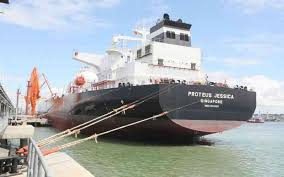
Kenya cannot claim leadership in the Blue Economy without first organizing its own maritime house.
Fast-tracking the approval of the Maritime Transport Policy is therefore a matter of national interest. It will give the maritime sector a legal and institutional framework that defines roles, responsibilities, and coordination mechanisms among key agencies such as the Kenya Maritime Authority, Kenya Ports Authority, Kenya Coast Guard Service, and other maritime actors.
With such a policy in place, the country can attract sustainable investments, modernize port infrastructure, enhance ship registry operations, and strengthen its maritime safety and environmental standards.
Furthermore, the policy will provide a foundation for building human capital. Kenya’s maritime education and training institutions, many of which operate below international recognition levels, will have a clear policy direction that supports accreditation, certification, and global competitiveness.
Seafarers, ship operators, and maritime professionals will finally have a guiding national document that aligns with international conventions such as SOLAS, STCW, and MARPOL.
The policy’s approval would also signal Kenya’s commitment to the International Maritime Organization’s (IMO) regulatory frameworks — an important step for maintaining credibility within the global maritime community.
Regionally, this policy would allow Kenya to harmonize its maritime development agenda with the rest of the EAC member states. As countries like Tanzania and Uganda move swiftly to modernize their maritime frameworks, Kenya cannot afford to lag behind.
The EAC framework upon which this policy is based offers an opportunity for collective growth — connecting the Indian Ocean to inland lakes, rivers, and regional trade corridors that serve millions of people.
Approving this policy would mean aligning Kenya with this shared regional vision and positioning Mombasa, Lamu, and Kisumu as integral nodes in East Africa’s maritime network.
At the heart of this matter lies the need for Cabinet leadership. Approving the Maritime Transport Policy is not simply an administrative act; it is a statement of intent — that Kenya is ready to fully embrace its identity as a maritime nation.
The ocean is not a peripheral asset; it is the backbone of trade, the frontier of opportunity, and the engine of sustainable growth. The cabinet must, therefore, rise to this moment with urgency and foresight.
Kenya has already laid the groundwork. The technical work is done. Stakeholders have been consulted. The draft is comprehensive and regionally harmonized. What remains is the final stroke of approval that will unlock the next chapter of Kenya’s maritime renaissance.
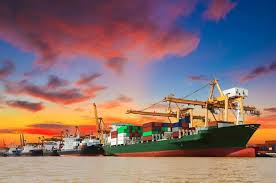
The cabinet must now steer this ship out of the harbor of hesitation and into the open sea of implementation.
The time to act is now — before the tides of opportunity change course. The Maritime Transport Policy must be fast-tracked, approved, and implemented without further delay.
Only then can Kenya truly chart its course as a maritime powerhouse and a beacon of Blue Economy leadership in the region.
The writer is a policy analyst specializing in maritime governance and blue economy development.
About The Author