Cruise Tourism Anchors at Shimoni: New Dawn for Coastal Blue Economy
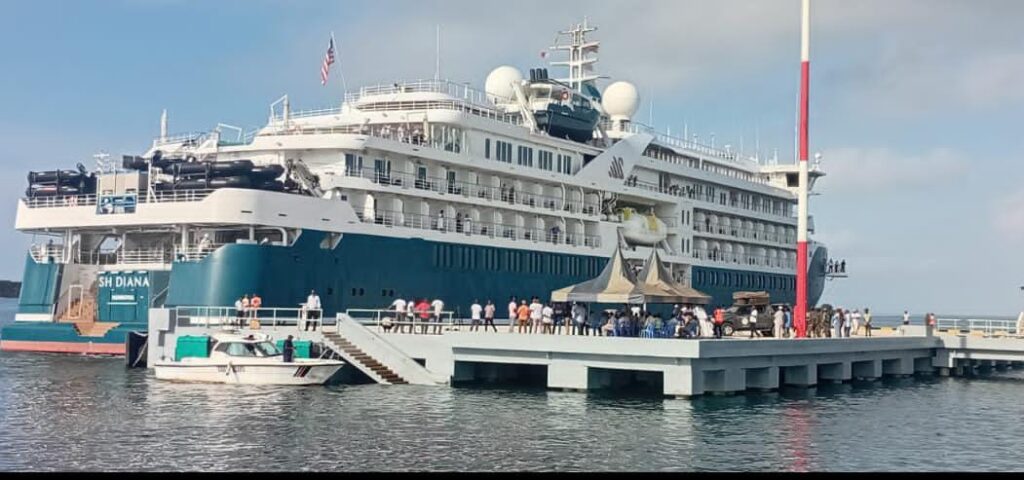
The Panama flagged cruise ship SH Diana moored at Shimoni Fish Port. (Photo/ Courtesy)
By Andrew Mwangura
Email, thecoastnewspaper@gmail.com
The arrival of the cruise ship SH Diana at the newly established fishing port of Shimoni in Kwale County marks a historic moment for Kenya’s coastal tourism and blue economy.
Operated by Swan Hellenic Expeditions and flying the Panamanian flag, the vessel brought with it 500 passengers and crew on a one-day stopover, heralding the beginning of a new chapter for Shimoni and the wider South Coast region.
This is not merely a port call—it is a strategic signal that the Kenyan coast is finally unlocking its potential as a world-class maritime and tourism destination.
For decades, Shimoni has been known as a quiet fishing village, famous for its caves, pristine marine ecosystems, and as a gateway to the Kisite-Mpunguti Marine Park.
The decision by a luxury cruise liner to berth here for the first time is, therefore, an encouraging step forward in integrating the South Coast into Kenya’s growing cruise tourism circuit.
It positions Shimoni not only as a port of call but also as a new focal point for cultural exchange, sustainable tourism, and economic empowerment for the local community.
The SH Diana’s visit symbolizes much more than a tourism milestone; it embodies the diversification of Kenya’s blue economy agenda. Traditionally, Kenya’s maritime economy has been anchored on fishing, shipping, and port logistics.
However, the expansion of cruise tourism infrastructure to Shimoni demonstrates foresight in developing coastal assets beyond Mombasa and Lamu. As the vessel continues its journey to Mombasa Port and later Lamu Port, it connects Kenya’s three key coastal gateways in a manner that strengthens the country’s position as a regional maritime hub.
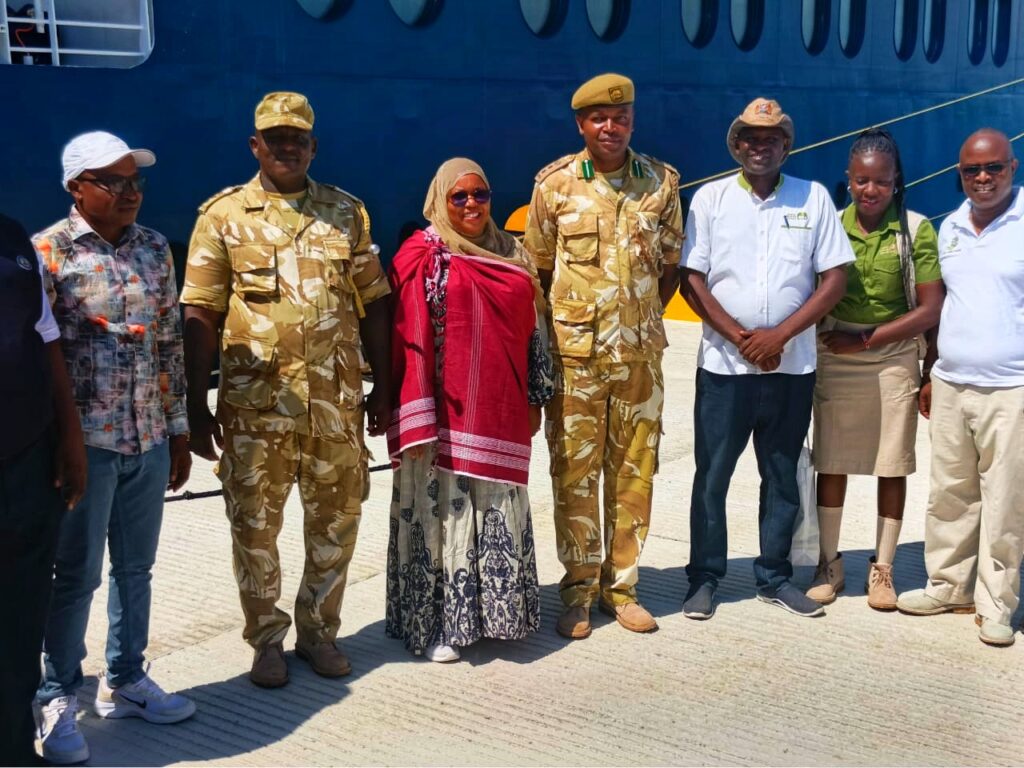
This development also highlights the importance of public-private partnerships in expanding cruise tourism infrastructure.
The modernization of Shimoni port, designed primarily as a fishing port, now doubles as a small but efficient cruise landing facility capable of handling medium-sized expedition vessels.
Such versatility is crucial in boosting visitor numbers to previously underdeveloped coastal areas while maintaining the integrity of marine ecosystems. For local fishermen and traders, this means new markets, better incomes, and increased demand for local crafts, cuisine, and cultural experiences.
Moreover, Shimoni’s proximity to Pemba and Zanzibar offers immense regional potential. With the right marketing and maritime coordination, the Shimoni–Pemba–Zanzibar triangle could evolve into a boutique cruise circuit within the Western Indian Ocean, complementing Kenya’s ambition to become a maritime tourism hub.
This regional link could also spur investments in marine transport, eco-lodges, cultural heritage tourism, and inter-island connectivity. It is precisely this kind of cross-border integration that can transform cruise tourism into a sustainable pillar of the blue economy.
However, this opportunity must be managed wisely. Cruise tourism, while profitable, also demands strong governance and environmental safeguards.
The charm of Shimoni lies in its natural beauty and unspoiled environment. Authorities and stakeholders must ensure that infrastructure expansion, waste management, and marine protection measures go hand in hand with tourism growth.
Community participation is equally essential—local residents must not only witness but also benefit directly from these developments through employment, entrepreneurship, and capacity building.
The SH Diana’s call should also inspire further investment in coastal tourism infrastructure—improved berthing facilities, reliable transport connections, cultural centers, and safety protocols. These are necessary to ensure that subsequent cruise vessels find Kenya’s coastal destinations well-prepared, efficient, and welcoming.
The Kenya Ports Authority (KPA), Kenya Tourism Board (KTB), and county governments must work in unison to sustain this momentum and position the South Coast as a permanent feature in international cruise itineraries.
In the grand scheme, Shimoni’s transformation from a traditional fishing landing site into a cruise destination reflects Kenya’s evolving maritime narrative—one that values inclusivity, sustainability, and innovation.
As global travelers increasingly seek authentic, less commercialized experiences, Shimoni stands out as a hidden gem waiting to be fully discovered.
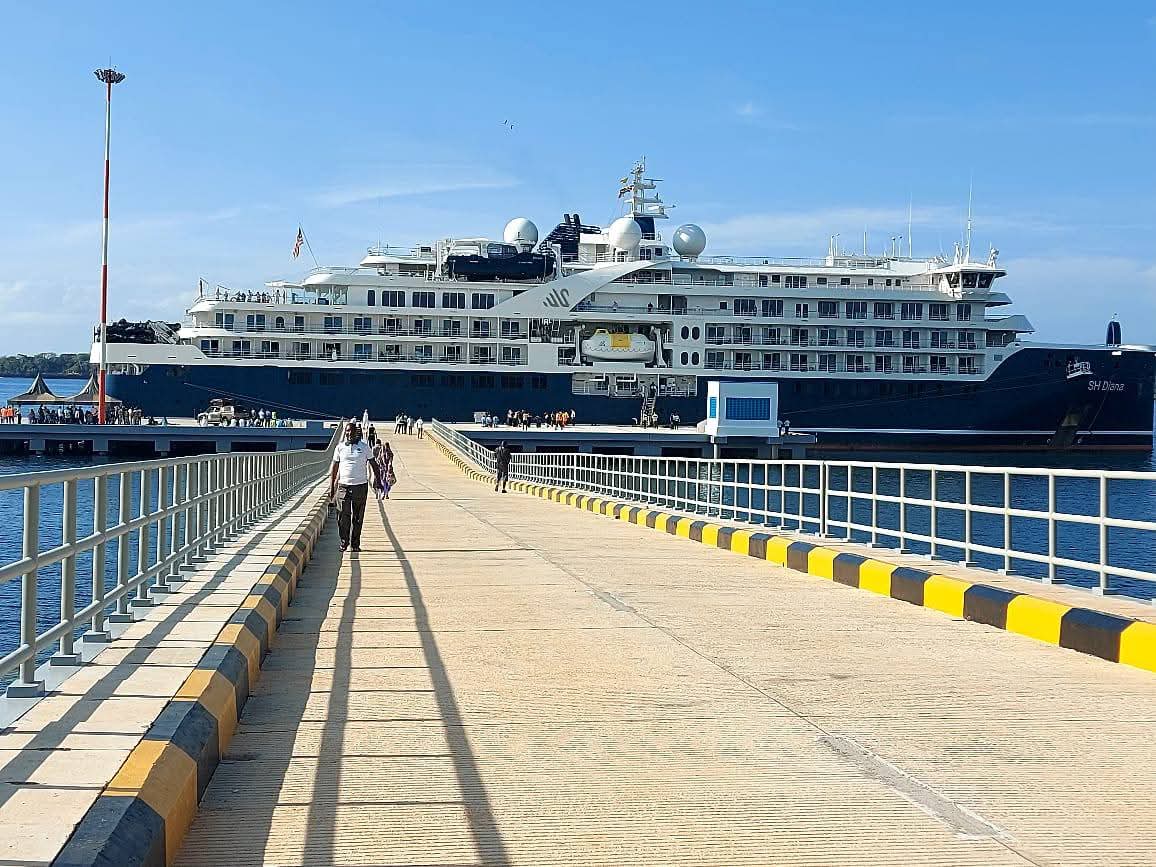
The docking of SH Diana is, therefore, more than a ceremonial first; it is a statement of confidence in Kenya’s blue economy and its people. If nurtured strategically, Shimoni’s cruise tourism could become the model for how small coastal towns can integrate tourism with conservation, fisheries, and maritime trade.
Indeed, this is a very good development and the way to go—a testament that with the right vision, Kenya’s coastal economy can sail confidently toward a more prosperous and sustainable future.
The writer is a policy analyst specializing in maritime governance and blue economy development.
About The Author