Lamu Port: Rising Star in East Africa’s Maritime Horizon
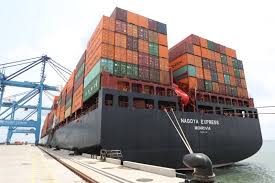
MV Lobivia docks in Lamu Kenya (Photo/ Courtesy)
By Andrew Mwangura
Email, thecoastnewspaper@gmail.com
On August 13, 2025, Kenya’s Lamu Port welcomed the MV Lobivia, a vessel that marked yet another milestone in the port’s rapid ascent as a vital transshipment hub in East Africa.
The arrival of this ship, set to discharge 592 TEUs destined for Zanzibar before loading cargo onto the MV Gulf Express, underscores a broader trend of growing confidence in Lamu Port’s capabilities.
Major international shipping lines, such as the CMA CGM Group, are increasingly making calls at this relatively new facility, signaling its potential to reshape the region’s maritime landscape.
This surge in vessel traffic, particularly evident in August 2025, reflects not only the port’s strategic advantages but also Kenya’s bold vision to position itself as a key player in global trade.
As Lamu Port continues to attract more cargo ships, it is poised to unlock unprecedented economic opportunities for Kenya and its neighbors, while also highlighting the challenges that must be addressed to sustain this momentum.
The significance of Lamu Port’s rise cannot be overstated. Strategically located along Kenya’s northern coast, the port benefits from its proximity to major shipping routes in the Indian Ocean, offering a gateway to East Africa and beyond.
Its deep-water berths, wide turning basin, and 400-meter berth provide a level of operational efficiency that is rare in the region. These features allow the port to accommodate larger vessels, such as the MV Lobivia, which are critical to handling the increasing volume of global trade.
Unlike older ports constrained by shallow waters or outdated infrastructure, Lamu’s modern facilities are designed to meet the demands of today’s mega-ships, making it an attractive option for international shipping lines.
The Kenya Ports Authority (KPA), under the leadership of general manager Captain Abdulaziz Mzee, has been quick to capitalize on these advantages, positioning Lamu as a viable alternative to established hubs like Dar es Salaam.
The recent surge in vessel traffic, with ten container ships scheduled to call at Lamu in a single fortnight, is a testament to the port’s growing appeal.
This flurry of activity, led by industry giants like CMA CGM, reflects a broader shift in the region’s maritime dynamics. Shipping lines are beginning to recognize Lamu’s potential to alleviate congestion at other East African ports while offering faster turnaround times and lower costs.
The port’s ability to handle transshipment cargo, as demonstrated by the transfer of goods from MV Lobivia to MV Gulf Express, further enhances its role as a regional hub.
For countries like Zanzibar, South Sudan, and Ethiopia, Lamu Port offers a critical link to global markets, reducing reliance on more distant or overburdened facilities.
This development aligns seamlessly with the ambitious Lamu Port South Sudan Ethiopia Transport (LAPSSET) Corridor project, which aims to connect Kenya’s coast to inland regions and neighboring countries through a network of roads, railways, and pipelines.
However, the port’s success is not solely a product of its geographic and infrastructural advantages.
The KPA’s proactive approach to enhancing operational capacity has been instrumental in driving this growth.
Capt. Mzee’s announcement that the authority is fast-tracking the acquisition of additional modern equipment signals a commitment to meeting the rising demand for Lamu’s services.
This investment is crucial, as the port’s current capacity, while impressive, represents only a fraction of its potential.
The ability to handle increased cargo volumes and larger vessels will depend on the timely deployment of state-of-the-art cranes, terminal tractors, and other equipment.
Moreover, the KPA’s focus on training and workforce development ensures that the port operates with the efficiency and professionalism required to compete on a global stage.
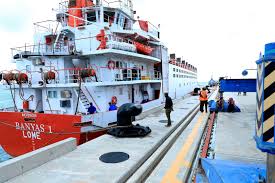
The warm reception given to MV Lobivia’s master, Capt. Victor Bushyn, by Capt. Mzee and Eng. Albert Awino, underscores the port’s emphasis on building strong relationships with shipping partners, fostering a sense of trust and reliability.
Yet, as Lamu Port basks in its newfound prominence, it faces challenges that could temper its trajectory if not addressed.
The LAPSSET Corridor, while visionary, remains a work in progress, with significant infrastructure gaps in road and rail connectivity to South Sudan and Ethiopia.
Without these links, the port’s ability to serve as a true regional hub will be limited, as cargo destined for inland markets may face delays or increased costs.
Additionally, the port must navigate environmental and social concerns, given its location in the ecologically sensitive Lamu Archipelago.
Local communities, many of whom rely on fishing and tourism, have expressed apprehensions about the port’s impact on their livelihoods and the region’s delicate ecosystem.
The KPA must balance economic ambitions with sustainable practices, ensuring that the port’s growth does not come at the expense of the environment or local stakeholders.
The broader implications of Lamu Port’s rise extend beyond Kenya’s borders. As the port attracts more cargo ships, it has the potential to reshape trade dynamics in East Africa, challenging the dominance of established ports like Mombasa and Dar es Salaam.
This competition could drive improvements in efficiency and service quality across the region, benefiting shippers and consumers alike.
For landlocked countries like South Sudan and Ethiopia, Lamu offers a shorter and more efficient route to global markets, potentially reducing trade costs and boosting economic growth.
The port’s success could also inspire further investment in the LAPSSET Corridor, unlocking the region’s vast economic potential and fostering greater integration among East African nations.
As Lamu Port continues to gain traction, it stands as a symbol of Kenya’s ambition to assert itself as a maritime powerhouse.
The increasing calls by major shipping lines like CMA CGM are not just a vote of confidence in the port’s infrastructure but also in Kenya’s broader economic vision.
The KPA’s efforts to enhance capacity and streamline operations are laying the foundation for sustained growth, while the port’s strategic location ensures its relevance in an increasingly interconnected world.
However, the path forward requires careful navigation of logistical, environmental, and social challenges to ensure that Lamu’s rise benefits all stakeholders.
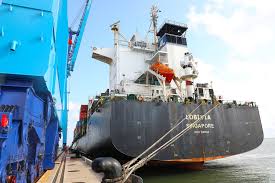
As the MV Lobivia and its successors dock at Lamu’s shores, they carry not just cargo but the promise of a brighter economic future for Kenya and East Africa.
With continued investment and strategic foresight, Lamu Port is well on its way to becoming a cornerstone of the region’s trade and prosperity.
The author is a policy analyst specializing in maritime governance and blue economy development.
About The Author