Lamu Port’s Historic Milestone: New Dawn for East African Maritime Trade

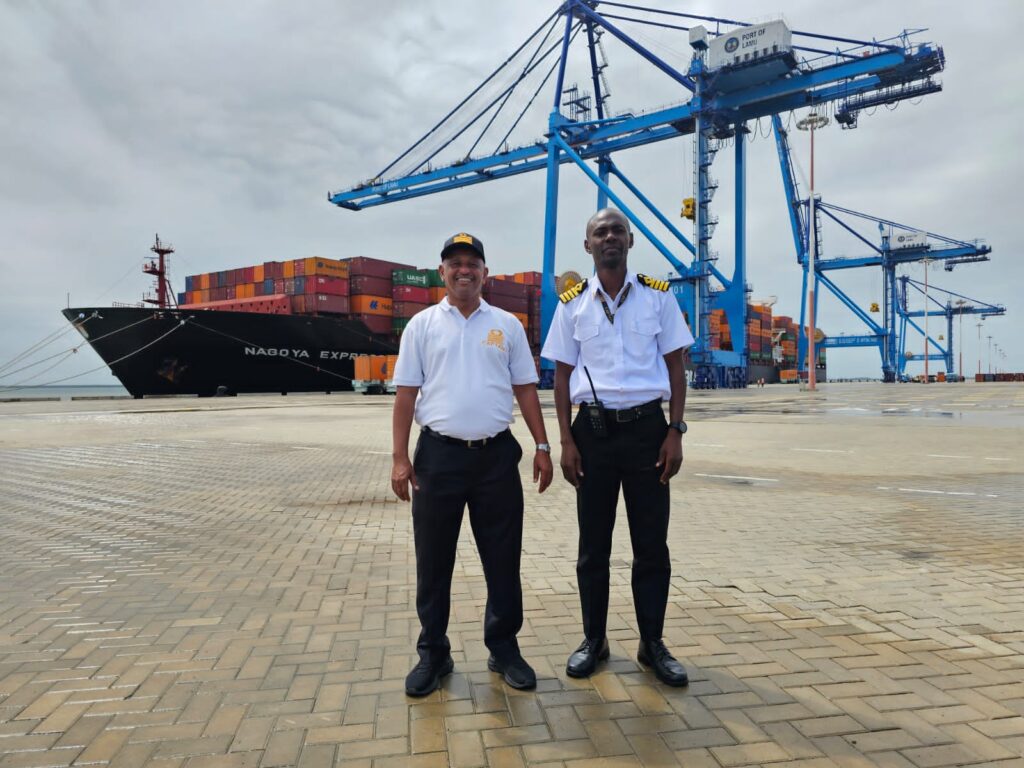
KPA's senior marine pilot Capt.Suleiman Bakari aboard the Liberian flagged MV Nagoya Express. (Photo/ Courtesy)
By Andrew Mwangura
Email, thecoastnewspaper@gmail.com
The Port of Lamu etched its name into the annals of East African maritime history when Captain Suleiman Bakari, a seasoned senior marine pilot with the Kenya Ports Authority (KPA), skillfully guided the MV Nagoya Express to its berth on August 7, 2025.
Measuring an impressive 335 meters in length overall (LOA), this Liberian-flagged container vessel shattered the regional record previously set by a 318-meter vessel at the Port of Mombasa.
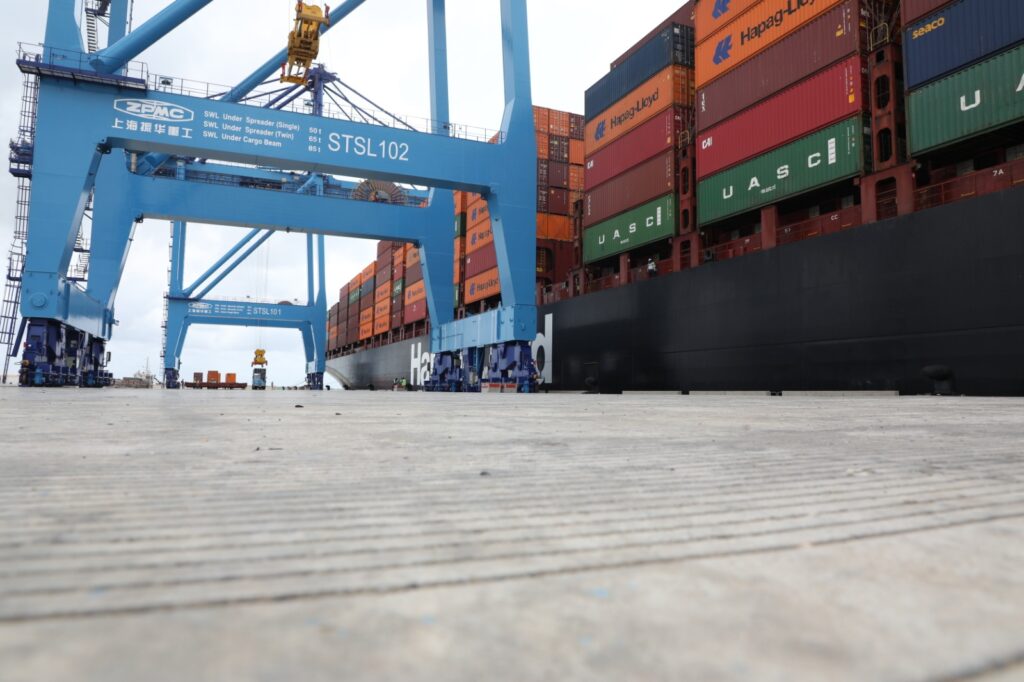
The arrival of the MV Nagoya Express, operated by German shipping giant Hapag-Lloyd, is not merely a record-breaking moment but a transformative milestone that signals Kenya’s bold ambition to establish Lamu as the premier transshipment hub in the West Indian Ocean (WIO) region.
By loading 140 twenty-foot equivalent units (TEUs) destined for New York, this event underscores Lamu’s readiness to compete on the global stage and redefines East Africa’s maritime landscape.
The significance of this achievement cannot be overstated. For decades, the Port of Mombasa has been the cornerstone of Kenya’s maritime trade, serving as the primary gateway for goods entering and exiting East Africa.
Its strategic location and established infrastructure have made it a vital link for landlocked countries like Uganda, Rwanda, and South Sudan. However, Mombasa’s limitations, particularly its 15-meter depth, have restricted its ability to accommodate the ultra-large container vessels that dominate modern global shipping.
Lamu, with its deeper 17.5-meter draft and capacity to handle post-Panamax vessels, fills this critical gap. The successful berthing of the MV Nagoya Express, a vessel too large for Mombasa, proves that Lamu is not just a complementary port but a game-changer poised to redefine regional trade dynamics.
The Port of Lamu’s rise is a key component of the ambitious Lamu Port-South Sudan-Ethiopia Transport (LAPSSET) Corridor program, a US$24 billion initiative aligned with Kenya’s Vision 2030 to transform the country into a middle-income economy.
Conceived nearly five decades ago, Lamu Port was envisioned as a second transport corridor to open up Kenya’s underdeveloped northern frontier and connect landlocked neighbors like Ethiopia and South Sudan to global markets.
With its first berth operational since May 2021 and plans for 32 berths along a 10-kilometer quay, Lamu is designed to handle a projected 23.9 million tons of cargo by 2030.
The port’s strategic location near the Somali border and its proximity to Indian Ocean shipping routes position it to compete directly with established hubs like Durban in South Africa and Djibouti in the Horn of Africa.
The MV Nagoya Express’s visit is a testament to Lamu’s growing appeal to international shipping lines.
The vessel’s transshipment operation—offloading cargo from another Hapag-Lloyd ship, the MV Tolten, for onward transport to New York—demonstrates the port’s operational efficiency and its potential as a regional transshipment hub.
Transshipment, the process of transferring cargo from one vessel to another for delivery to other destinations, is a cornerstone of modern maritime logistics, enabling shipping lines to optimize routes, reduce costs, and lower carbon emissions.
Lamu’s ability to handle such operations positions Kenya to capture a larger share of the transshipment market, particularly for goods destined for Indian Ocean islands like Seychelles, Comoros, and Zanzibar, as well as markets in northern Ethiopia and South Sudan.
However, the journey to this milestone has not been without challenges. When Lamu Port was commissioned in 2021, skeptics warned it risked becoming a “white elephant” due to security concerns, incomplete infrastructure, and competition with Mombasa.
The port’s proximity to Somalia, where al-Shabaab remains a threat, has raised valid concerns about maritime security. Incidents like the 2020 attack on the Manda Bay military base underscore the need for robust security measures.
Yet, Kenya has made strides in addressing these risks, with the KPA collaborating with the Kenya Coast Guard Service, Kenya Navy, and other agencies to bolster maritime safety.
The country’s removal from the International Maritime Organization’s piracy red list reflects these efforts, reducing insurance and security costs for vessels calling at Kenyan ports.
Another challenge lies in balancing the economic benefits of Lamu with the interests of Mombasa.
As Lamu attracts larger vessels and transshipment traffic, there is a risk of diverting business from Mombasa, which could impact revenues critical for servicing loans tied to Kenya’s Standard Gauge Railway.
The government faces a delicate balancing act to ensure both ports thrive as complementary hubs. Investments in road and rail networks under the LAPSSET program, such as the US$166 million contract awarded to China Communications Construction Company for key road projects, are critical to connecting Lamu to the hinterlands and ensuring its viability.
The environmental and social implications of Lamu Port also demand attention. The project has faced criticism for its potential impact on artisanal fishing, a livelihood for nearly 70% of Lamu’s population, and for concerns over land rights and environmental degradation.
The KPA’s commitment to community engagement, including direct employment opportunities and infrastructure development, is a step toward mitigating these concerns.
By prioritizing local needs and fostering economic opportunities in sectors like logistics, trade, and tourism, Lamu Port can become a catalyst for inclusive growth, not just for Kenya but for the broader East African region.
The arrival of the MV Nagoya Express is a clarion call for Kenya to seize this moment. It reflects a broader shift in global maritime logistics, where efficiency and scale are paramount.
By positioning Lamu as a hub for mega-ships, Kenya is not only enhancing its own economic prospects but also strengthening regional integration under initiatives like the African Continental Free Trade Area (AfCFTA).
The port’s success will depend on continued investment in infrastructure, security, and stakeholder engagement to ensure it meets the needs of shipping lines, local communities, and regional partners.
As Capt Bakari guided the MV Nagoya Express to its historic berth. He did more than navigate a ship. He steered Kenya toward a future of maritime prominence.
The Port of Lamu is no longer an ambitious vision—it is a reality, ready to anchor East Africa’s aspirations in the global trade network.
Kenya’s leadership in this space is undeniable, and with Lamu at the helm, the West Indian Ocean is set to witness a new era of connectivity, opportunity, and prosperity.
The author is a policy analyst specializing in maritime governance and blue economy development.
About The Author