Nigeria’s Maritime Milestone: A New Dawn for African Trade

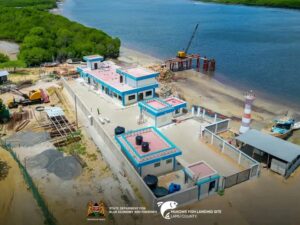
Nigeria Maritime infrastructure. (Photo/ Courtesy)
By Andrew Mwangura
Email, thecoastnewspaper@gmail.com
The launch of MV Ocean Dragon by Clarion Shipping West Africa Ltd represents far more than a single vessel entering Nigerian waters—it marks a transformative moment in Africa’s quest for maritime independence and regional integration.
This fully Nigerian-owned container vessel signals the beginning of a new chapter where African nations take control of their maritime destiny, moving beyond decades of reliance on foreign shipping lines that have historically dominated the continent’s seaborne trade.
The significance of this achievement extends well beyond Nigeria’s borders, positioning the country as a maritime leader within the African Continental Free Trade Area.
As AfCFTA seeks to boost intra-African trade from its current 15% to 25% by 2030, indigenous shipping capacity becomes crucial for realising this ambitious goal.
When African nations control their own vessels, they retain more value from trade transactions, reduce shipping costs, and create reliable maritime corridors that serve continental rather than external interests.
The MV Ocean Dragon represents a practical step toward this vision, connecting Nigerian ports with regional destinations while keeping trade revenues within the continent.
This maritime milestone follows successful precedents from both developed and emerging economies. Norway’s transformation from a shipping-dependent nation to a global maritime powerhouse demonstrates how indigenous ownership can drive economic prosperity.
Norwegian shipping companies like Maersk’s regional competitors built their success on strong domestic foundations before expanding globally.
Similarly, South Korea’s rise as a maritime nation through companies like HMM shows how strategic government support and private investment can create world-class shipping capabilities within a generation.
From the Global South, India’s Shipping Corporation of India provides an instructive parallel. Despite facing similar challenges of limited domestic financing and established foreign competition, India developed its merchant marine through strategic partnerships between government institutions and private capital.
Today, Indian-owned vessels carry a significant portion of the country’s trade, demonstrating that developing nations can successfully build indigenous maritime capacity when vision meets commitment.
The financial backing from Zenith Bank, Fidelity Bank, and Stanbic IBTC for this venture deserves particular recognition, especially given Nigeria’s challenging monetary policy environment.
These institutions have shown remarkable foresight in supporting maritime infrastructure at a time when many banks shy away from long-term industrial investments. Their involvement signals growing confidence in Nigeria’s maritime potential and provides a template for future indigenous shipping projects across West Africa.
The collaborative support from established players like Five Star Logistics, Comet Shipping, Sharaf Shipping Agency, and Sallaum Lines further demonstrates how industry cooperation can accelerate maritime development.
Rather than viewing MV Ocean Dragon as competition, these partners recognize that a stronger Nigerian maritime sector benefits all stakeholders through increased trade volumes, improved port efficiency, and enhanced regional connectivity.
For Nigeria’s position within regional economic blocks, this initiative offers multiple strategic advantages.
As the largest economy in West Africa, Nigeria’s maritime leadership can drive ECOWAS trade integration while strengthening the country’s role as a gateway to landlocked nations like Chad, Niger, and northern regions of other neighboring countries.
The vessel’s operations will create employment opportunities for Nigerian maritime professionals, from deck officers to logistics coordinators, building human capacity that can support future fleet expansion.
The MV Ocean Dragon’s journey represents more than maritime achievement—it embodies Africa’s broader economic transformation.
When African nations control critical infrastructure like shipping, they gain leverage in global trade negotiations, reduce their vulnerability to external shipping disruptions, and create platforms for technological transfer and skill development.
This vessel proves that with proper financing, strategic partnerships, and unwavering commitment, African nations can compete effectively in capital-intensive global industries.
As MV Ocean Dragon charts new routes across West African waters, it carries with it the hopes of a continent ready to take control of its economic future.
This is not merely about one ship or one company—it is about Africa writing its own maritime story.
The author is a policy analyst specialising in maritime governance and blue economy.
About The Author