Government Moves to Cut Taxes on Farmers, Agribusiness to Create Jobs

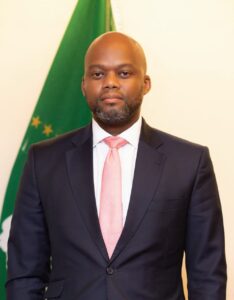
Agriculture cabinet secretary Mutahi Kagwe.(Photo By Mbungu Harrison)
By Mbungu Harrison
Email, thecoastnewspaper@gmail.com
Agriculture cabinet secretary Mutahi Kagwe has called for policies that lower the cost of doing business and ease the tax burden on farmers and other players in the agricultural value chain to accelerate investment, create jobs, and improve food security.
Kagwe said the country must rethink its approach to agriculture by adopting policies that promote productivity, innovation, and commercial farming while ensuring that investments generate meaningful returns for citizens.
Speaking in Mombasa on Tuesday, August 18, 2026 during a consultative meeting between the national and county governments, and the World Bank, the CS said the government must make deliberate decisions to improve livelihoods and living standards amid rising demands for accountability and employment opportunities.
He said Kenya’s growing youthful population requires policies capable of creating sustainable jobs adding that agriculture remains one of the key sectors that can drive economic growth and social development.
“The role of agriculture as the key driver of Kenya’s economic growth and social development, cannot be overemphasized,” he said.
His remarks come as the Government seeks to transform agriculture from subsistence production into a modern, commercially oriented, and globally competitive sector.
The CS said such transformation requires innovation, re-engineering of systems, adoption of new technologies, increased productivity, and reduced wastage.
“Transformation requires innovation and re-engineering of processes and systems to make them effective; adopting new technologies, increasing productivity and reducing wastage; modernization and commercialization of farming systems.”
He said reducing the cost of production should be central to efforts to make Kenyan agriculture competitive, with farmers requiring an environment that allows them to invest, expand their enterprises and access profitable markets.
According to him the Government’s Bottom-Up Economic Transformation Agenda (BETA) has placed the agri-food system at the centre of Kenya’s socio-economic advancement with a focus on inclusivity, productivity, and enterprise.
The CS spoke during a meeting convened to review the implementation of the National Agricultural Value Chain Development Project (NAVCDP), and the Food Systems Resilience Project (FSRP) both supported by the World Bank.
He said the two programmes should be aligned with the National Agri-food Systems Investment Plan (NASIP 2026-2030) which provides a framework for coordinated investment in the sector.
The CS said the plan would help align national priorities, county government actions and private-sector initiatives to strengthen food security, resilience, and inclusive economic growth.
He also highlighted the importance of creating an enabling environment for young people to participate in agriculture saying the sector has the potential to absorb a growing youthful population if properly commercialised.
“We must ensure our policies and investment decisions lead to enhanced food and nutrition security; and better livelihoods and living standards.”
He challenged national and county officials to focus on investments that offer value for money while creating employment and improving the incomes of farmers.
The CS said more than two million farmers have been reached through NAVCDP and FSRP with technologies aimed at improving productivity, while more than one million farmers are accessing government services, financial services and market linkages through digital platforms.

He added that 7.3 million farmers had been registered through the Kenya Integrated Agricultural Management Information System (KIAMIS) enabling them to access agricultural advisories covering agronomy, weather and markets through mobile phones.
The government has also deployed 9,770 young agripreneurs, dubbed the “Green Army”, at sub-location level to provide extension services.
According to him the young professionals are conducting farm visits, offering soil testing, and soil health services, linking farmers to markets, and financial services and providing livestock vaccination services.
The CS said such interventions should be accompanied by policies that reduce the financial burden facing farmers and businesses if agriculture is to become a profitable enterprise.
He said the government had already subsidised the vaccination of more than 20 million livestock at a cost of Ksh429 million helping reduce disease incidences and strengthen the country’s livestock economy.
Kagwe urged counties to increase investment in livestock feed reserves to cushion farmers against drought and reduce losses caused by climate shocks.
He said unpredictable rains, drought, pests and diseases continued to threaten agricultural production and livelihoods, making investment in resilient food systems critical.
The two projects are also supporting investments in markets, financial services, irrigation, and sustainable land management, initiatives the CS said would increase the commercialisation of smallholder agriculture while strengthening food security.
Kagwe said Kenya could not afford to maintain systems that make farming expensive while expecting farmers to remain competitive locally and internationally.
He challenged leaders to become agents of change and ensure government investments translate into tangible benefits for citizens.
“Leadership is not tested in comfort, it is proven in crisis. The real measure of our influence is how we respond when the path ahead is unclear, the pressure is high, and the stakes are real,” he said.
The CS said the country needed to think beyond traditional approaches and create an agricultural system capable of generating jobs, improving incomes and attracting investment.
“I encourage you to leverage the investment opportunities available to unlock the productive potential of your counties, to generate positive returns, create employment opportunities and achieve food security goals,” he said.
Flanked by COG Agriculture committee chair Ken Lusaka the CS added: “We must get the best value-for-project investments and bring meaningful change.”
Kagwe said lowering the cost of production, improving access to markets and finance and embracing technology would be critical in making agriculture attractive to young people while improving the country’s food security.
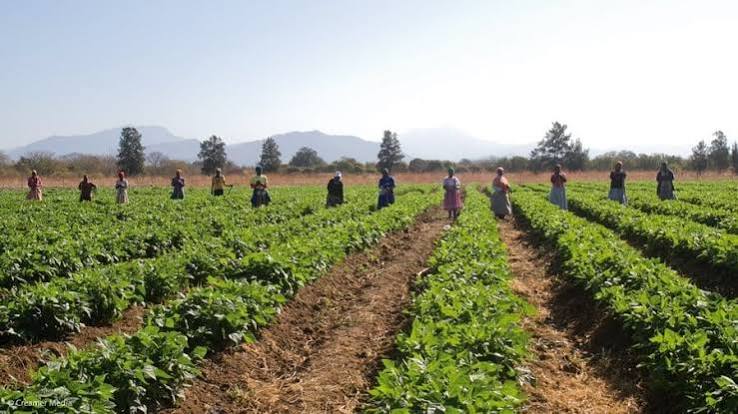
At the same time Lusaka urged stakeholders to consolidate the gains made through NAVCDP and FSRP and use the consultative meeting to identify new ways of improving service delivery to farmers.
“I continue to remind you that ‘there is no dignity in a hungry citizen and nation’; and a desperate and unfulfilled, poor farmer,” he said.
About The Author