How Survivors are Rewriting Labour Migration
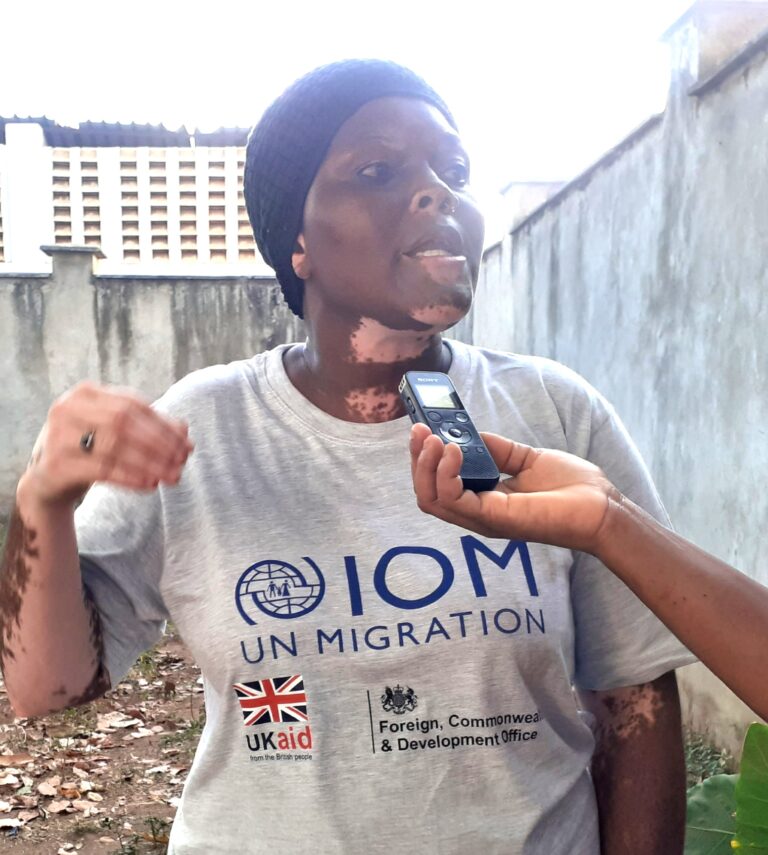
Halima Abbas labor migrant educator. (Photo By Caroline Katana)
By Caroline Katana
Email, thecoastnewspaper@gmail.com
For thousands of Kenyans, labour migration represents hope for a better future, yet exploitation by rogue recruiters threatens that promise.
Survivors, labour unions, government agencies and community organisations are demonstrating that safer migration begins long before departure, with accurate information, ethical recruitment, and the courage of returnees to share their lived experiences.
The first thing Halima Abbas from Likoni lost when she arrived in Saudi Arabia was not her salary, but her passport.
In that moment, the promise of a better life slipped beyond her control. Like thousands of Kenyans seeking employment abroad, the divorced mother had left home believing overseas work would provide the financial stability she needed to educate her children and rebuild her life.
Instead, she found herself trapped in a foreign country where her employer confiscated her passport, delayed her wages and left her struggling to communicate or seek help.
“My employer took my passport. Sometimes I went without food. My salary was delayed, and even sending money home became difficult. Eventually, I sought help from the labour office and returned to Kenya,” she recalls.
Returning home did not erase the financial hardship that had driven her to migrate in the first place, but determined to secure a better future for her family, she accepted another opportunity, this time in Egypt.
She believed her previous experience had made her wiser, instead she found herself abandoned.
“When I arrived at the airport, the recruitment agent stopped answering my calls. I had nowhere to go and no one to receive me. Again, I had to seek help before returning home,” she said.
For many migrant workers, such experiences would have marked the end of a painful journey. However, for Halima, they (experiences) became the beginning of a different mission.
Today, she travels across communities along Kenya’s Coast region sharing lessons drawn from her own painful experiences.
Rather than discouraging young people from seeking employment abroad, she teaches them how to migrate safely; how to verify recruitment agencies; how to understand employment contracts; how to protect their travel documents; and how to know where to seek help before leaving Kenya.
“I don’t tell people not to travel. I tell them to travel prepared,” she said.
Her transformation from survivor to community educator reflects a quiet, but significant shift in Kenya’s approach to labour migration.
For years, conversations about migration were dominated by stories of abuse, deaths, disappearances, and exploitation.
Today, a different story is emerging; one that asks not only why migrant workers are exploited, but also what is being done to prevent that exploitation before it happens. The question has never been more urgent.
According to Kenya’s first National Labour Migration Statistics Report, jointly produced by the Ministry of Labour and Social Protection, the Kenya National Bureau of Statistics (KNBS) and the International Labour Organization (ILO), more than 103,800 Kenyans secured jobs abroad during the 2024/2025 financial year.
At the same time, the Central Bank of Kenya reported that Kenyans living and working abroad sent home approximately US$4.9 billion in remittances in 2024 making labour migration one of the country’s largest sources of foreign exchange.
These figures underscore why labour migration is no longer simply an employment issue. It has become an economic lifeline for thousands of households and an increasingly important contributor to Kenya’s development. Yet every opportunity comes with risks.
For instance, unscrupulous recruitment agents continue to lure desperate job seekers with promises of lucrative salaries and attractive working conditions only to end up disappointed.
For many migrants, however, the reality they encounter after arrival bears little resemblance to what they were promised and one returnee from Mombasa knows that reality all too well.
The young man, who requested anonymity to protect his current employment, resigned from a stable research job after a recruitment agent promised him a firefighting position in Qatar with a monthly salary of nearly Ksh80,000.
The promise never materialised and instead of fighting fires, he spent years carrying water pipes under harsh conditions while earning far less than he had expected.
“The work I was promised did not exist. After deductions made by the recruitment agent, I was left with very little. Supporting my family became almost impossible, and my wife eventually left me,” he recalls.
His experience illustrates one of the most common forms of labour exploitation faced by migrant workers, contract substitution where the job promised before departure is replaced with entirely different work upon arrival.
For years, stories like his have shaped public perceptions of labour migration that revealed only one side of the picture.
However, behind the headlines, survivors, labour unions, government agencies and community organisations are working together to build systems that reduce these risks before workers leave Kenya.
Among those leading that effort is Alfred Sigo, chairperson of the Coastal Civil Society Organisations Migrant Network.
Working alongside the International Organization for Migration (IOM), the National Employment Authority (NEA) and community-based organisations, the network has trained more than 5,000 young people across Kenya’s coastal region on ethical recruitment, workers’ rights, and safe migration pathways.
“We realised people trust those who have lived through these experiences. When returnees explain what happened to them, young people listen differently. That lived experience has become one of our strongest awareness tools,” he said.
According to him those awareness campaigns are already changing behaviour in many communities.
But before such outreach programmes began, many young people fell victim to fraudulent recruitment agents operating outside Kenya’s legal recruitment system.
Today, the chairman says, more prospective migrant workers are verifying recruitment agencies through the National Employment Authority before paying recruitment fees, thus assisting in reducing cases of fraud across the region.
For Roy Odhiambo, of the International Organization for Migration (IOM), that shift represents one of the most effective forms of migrant protection.
“Many people leave Kenya without understanding the labour laws of the countries they are travelling to, the location of Kenyan embassies or where they can seek help if they encounter difficulties. Providing accurate information before departure enables migrants to make informed decisions and reduces their vulnerability,” he said.
Recognising that knowledge can be as important as policy, IOM and the NEA are developing a Pre-departure Information Handbook to guide Kenyans seeking employment abroad.
The handbook will provide practical information on destination-country labour laws, workers’ rights, emergency contacts, complaint mechanisms and the location of Kenyan embassies, information that many returnees say they wish they had before boarding their flights.
If such guidance and counselling was there for Halima Abbas, it would have changed the course of her own journey and life as a migrant worker.
“If someone had explained my rights before I travelled, perhaps I would have made different decisions. Today, I share my story so that others don’t repeat my mistakes,” she said.
Her testimony has become more than a personal account of survival. It is now part of a growing movement that places prevention at the centre of labour migration.
But labour rights advocates caution that awareness campaigns alone cannot eliminate exploitation. They argue that lasting protection depends on stronger institutions, ethical recruitment practices and effective enforcement of laws governing labour migration.
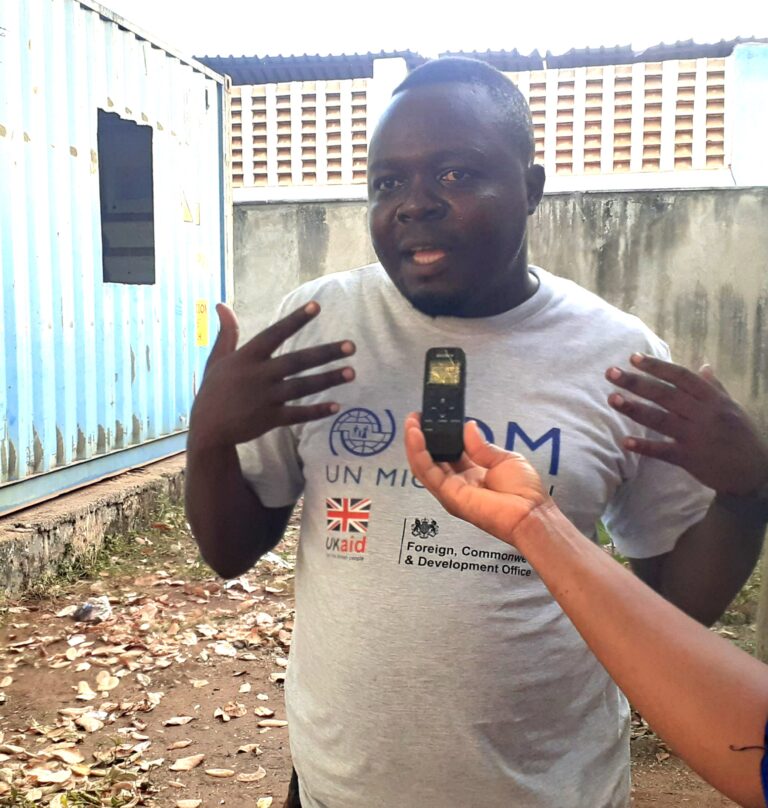
Among those pushing for these reforms is Teresa Wabuko, first assistant secretary-general of the Kenya Union of Domestic, Hotels, Educational Institutions, Hospitals and Allied Workers (KUDHEIHA) and the Central Organization of Trade Unions (COTU-Kenya).
She says many of the abuses reported by Kenyan migrant workers begin long before they board a plane.
“Workers must know who they are going to work for, the nature of the job, the salary they will receive, who will provide medical care if they fall sick and who will facilitate their return home once their contracts end.
Many of the problems we continue to witness arise because workers leave without complete information or are recruited through illegal agents,” she added.
She urges job seekers to verify every recruitment agency through the NEA rather than relying on brokers or social media advertisements promising quick overseas employment.
“Verification is the first line of protection. A few minutes spent confirming whether an agency is licensed can prevent months.or even years.of suffering,” she said.
That message is increasingly reflected in Kenya’s labour migration policies.
The Constitution of Kenya guarantees every worker the right to fair labour practices, while the Employment Act, the Labor Institutions Act and the National Employment Authority Act provide the legal framework for regulating recruitment agencies and promoting ethical labor migration.
Together, these laws are intended to ensure that recruitment is transparent, prospective migrant workers receive accurate information and their rights are protected before departure and throughout their employment abroad.
Kenya’s efforts are also reinforced by regional and international commitments. As a member of the Intergovernmental Authority on Development (IGAD), Kenya is implementing the IGAD Regional Labor Migration Policy Framework, which encourages member states to strengthen labour migration governance, promote ethical recruitment and improve the protection of migrant workers across borders.
Internationally, Kenya has aligned its migration policies with the Global Compact for Safe, Orderly and Regular Migration, the first globally negotiated framework aimed at promoting cooperation on safe migration, expanding access to accurate information, encouraging ethical recruitment and safeguarding migrants’ rights.
The country also works closely with the International Labour Organization (ILO) to promote internationally recognised principles of fair recruitment that discourage deceptive practices, contract substitution and worker exploitation.
These commitments are increasingly being translated into practical action.
In fact, Kenya has signed bilateral labour agreements with several destination countries, including Saudi Arabia, Qatar, Germany, the United Kingdom, Austria and Canada, while negotiations with Kuwait negotiations in progress.
The agreements are intended to improve recruitment standards, clarify workers’ rights and strengthen cooperation between governments when labour disputes arise.
Yet, migration experts caution that laws and bilateral agreements alone cannot protect workers if prospective migrants remain unaware of the protections available to them. That is why organisations working on labour migration are investing heavily in community education.
Across Kenya’s Coast region, awareness sessions encourage prospective migrant workers to verify recruitment agencies through the NEA, attend pre-departure orientation sessions, read employment contracts carefully before signing, keep copies of their travel documents, understand the labour laws of their destination countries and know how to contact Kenyan embassies or labour attachés should problems arise.
The approach is simple, but its impact is becoming increasingly evident. Rather than waiting to rescue workers after exploitation occurs, these initiatives seek to reduce vulnerability before migration even begins.
That preventive approach is already producing encouraging results as many community organisations report that more young people are asking whether recruitment agencies are licensed before paying recruitment fees.
Others are seeking legal advice before signing employment contracts or attending pre-departure awareness sessions to better understand their rights and responsibilities.
Survivors themselves have also become trusted educators, translating complex migration policies into practical advice that communities can easily understand.
In Kenya, there is growing evidence that they are. While labour exploitation has not disappeared, the combination of survivor-led awareness, stronger institutional collaboration, ethical recruitment campaigns and improved access to information is helping prospective migrant workers make safer decisions before they leave home.
The shift is changing labor migration from a journey driven largely by desperation to one increasingly guided by preparation. Even so, significant challenges remain as unscrupulous recruiters continue to prey on desperate jobseekers by promising unrealistic salaries and fast processing.
Cases of passport confiscation, contract substitution, unpaid wages and poor working conditions continue to be reported in some destination countries.
Labour rights advocates say stronger enforcement against rogue recruitment agencies, wider public awareness and effective implementation of bilateral labor agreements will be critical to sustaining the progress already being made.
For Halima Abbas’ story, the conversation is no longer about policy documents or statistics. It is about people.
Every time she stands before a group of young men and women preparing to seek employment abroad, she remembers the fear she felt when her passport was taken away.
She remembers arriving alone at a foreign airport with no one waiting to receive her. She remembers wondering whether she would ever return home.
Today, those memories no longer define her as a victim. They define her as a mentor.
“I tell every young person the same thing: Don’t rush. Verify the agency. Read your contract. Know your rights before you travel. Preparation can save your life,” she said.
Years ago, she left Kenya believing migration alone would change her destiny only to harvest misery and bleak future.
Today, she believes something else change lives first. Knowledge. Having prior information helps one to prepare for any eventuality in foreign lands.
In villages, churches, youth forums, and community meetings along Kenya’s coastal region that knowledge is quietly spreading and reshaping the future of labour migration – one conversation at a time.
Every worker who verifies a recruitment agency. Every contract that is read before it is signed. Every family now knows where to seek help.
These may seem like small steps, but together they represent a profound shift in how Kenya is responding to labour migration.
The country’s experience offers an important lesson for the wider IGAD region, where growing labor mobility presents both opportunities and risks. Protecting migrant workers requires more than emergency interventions after abuse has occurred.
It requires informed communities, accountable institutions, ethical recruiters and survivors willing to transform painful experiences into practical guidance for others.

Halima cannot recover the years she lost or erase the hardships she endured abroad, but each time another Kenyan leaves home equipped with the information she never had, she sees proof that her experience has gained a new purpose.
“I cannot change my past, but if my story helps another Kenyan travel safely, work with dignity and return home safely, then my suffering was not in vain,” she said with a distant look on her face.
About The Author