Murkomen: Kenya Ready to Counter Maritime Crime Threats
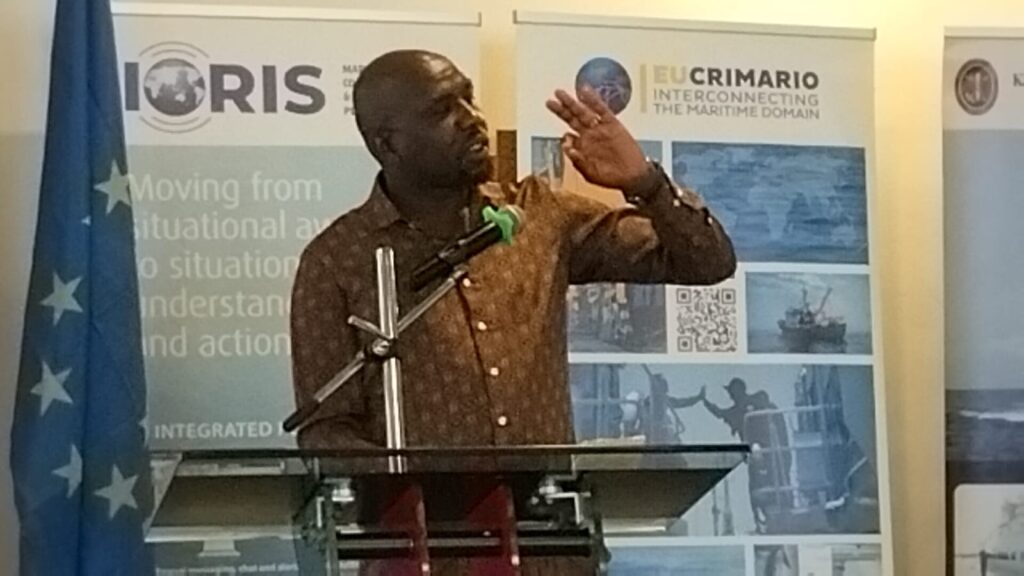
Interior cabinet secretary Kipchumba Murkomen (Photo By Mwakwaya Raymond)
By Mbungu Harrison
Email, thecoastnewspaper@gmail.com
Interior cabinet secretary Kipchumba Murkomen has said Kenya has built sufficient capacity and infrastructure to counter maritime crime threats.
The CS stated that there was “no room for piracy, terrorism, or illegal activity” in the country’s waters.
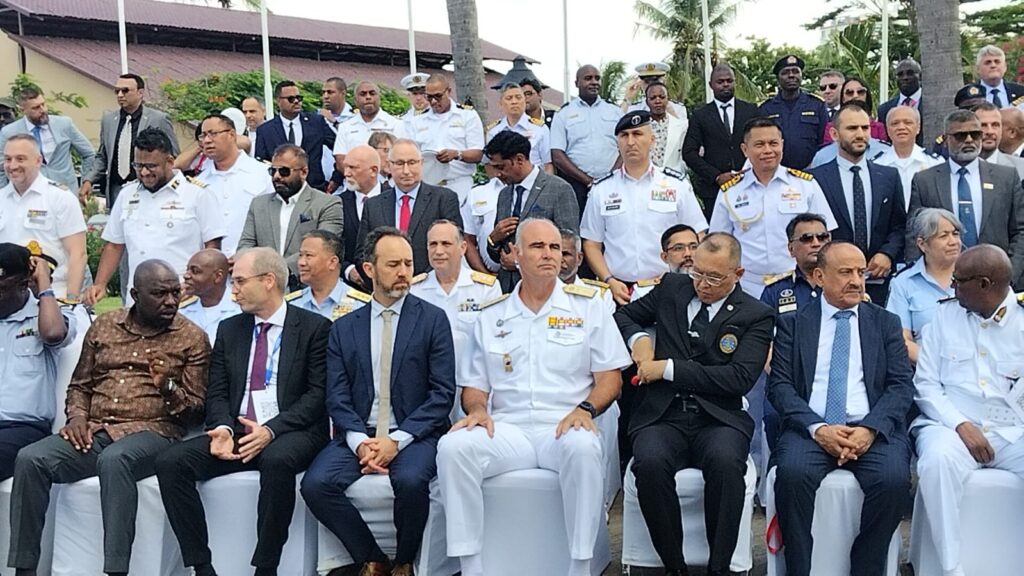
Speaking during the official opening of the 4th Indo-Pacific Regional Information Sharing Platform Steering Committee High-Level Meeting in Mombasa, Murkomen said the government’s strategy now rested on partnerships and technology-driven enforcement.
“Maritime threats must stop. Kenya has built the requisite capacity and infrastructure for tackling maritime threats through partnerships,” he told delegates drawn from 30 countries across the Indo-Pacific region.
He said collaboration between the Kenya Maritime Authority, Kenya Ports Authority, and Kenya Coast Guard Service has positioned the country to respond swiftly to security risks at sea.
The CS singled out _Usalama Baharini_, a digital coordination platform developed by the Kenya Coast Guard Service, as a game-changer.
The system integrates real-time data sharing, vessel tracking, and interagency communication to enable timely enforcement.
“The problem in the sea affects economies on land. Therefore, the conversation about maritime transport is very important,” he said, linking maritime insecurity to rising food prices.
“We are suffering immense challenges from wars we have no role in, and it has caused food products to rise,” he added citing disruptions to global shipping lanes.
He listed illegal, unregulated and unreported fishing, dumping of hazardous materials, piracy, and terrorism as the main threats undermining blue economy growth.
Kenya’s Exclusive Economic Zone spans 230,000 sq km and supports over 2 million livelihoods, but loses an estimated Sh10 billion annually to IUU fishing, according to the State Department for Blue Economy.
The CS cautioned politicians against using the Red Sea, and Strait of Hormuz crises to stoke domestic political and economic tensions terming it as global security problem beyond Kenya’s control.
Ondrej Simek, deputy gead of delegation of the European Union to Kenya, said the 27-member bloc remains committed to collective action on maritime security in Africa through the IORIS platform.
“Security is built on partnerships and trust. We as the EU are committed to continue supporting IORIS, to ensure the security of the region stays safe,” he said.
IORIS, funded by the European Commission under the CRIMARIO II project, is a neutral web-based system that allows navies, coast guards, and maritime agencies to share information on vessel movements, piracy alerts, marine accidents, and other security threats in real time. The platform is already used by over 53 agencies across the Indo-Pacific.
Kenya Coast Guard Service director general Bruno Shioso said the Mombasa meeting was significant in steering a unified direction for regional maritime security.
Martin Cauchi Inglott, CRIMARIO II Project Director, said the continued use of IORIS will bolster cooperation and response capacity against transnational crimes.
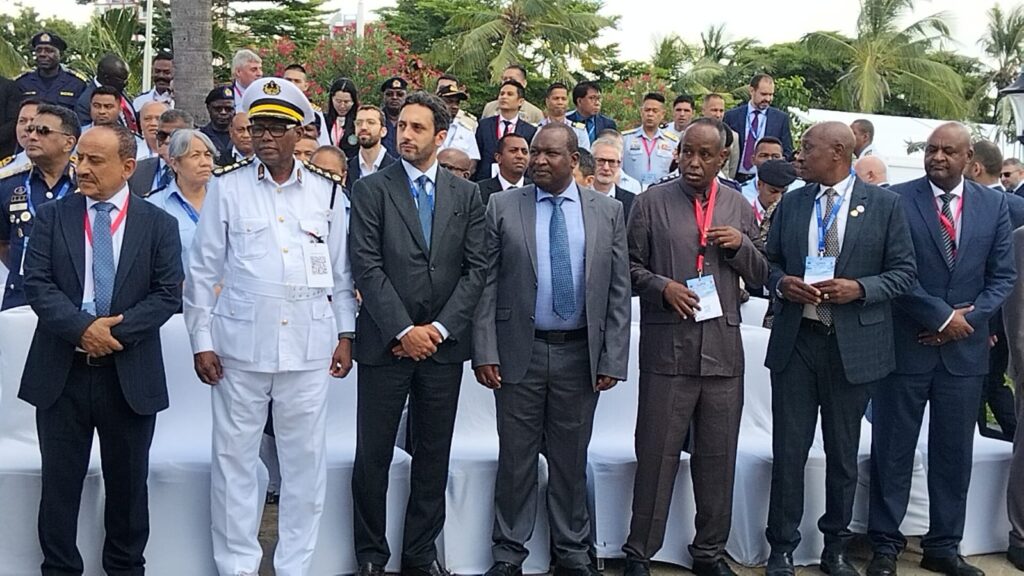
The 4th IORIS Steering Committee brings together senior officials from government agencies and international partners to review governance, technology upgrades, and partnership agreements aimed at securing maritime trade routes.
Delegates agreed that sustained information-sharing and interagency trust remain critical to protecting trade, tourism, and coastal livelihoods amid persistent threats from terrorism, piracy, and illegal fishing
About The Author