China’s Port Strategy in Africa: The Architecture of a New World Order
By Andrew Mwangura
Email, thecoastnewspaper@gmail.com
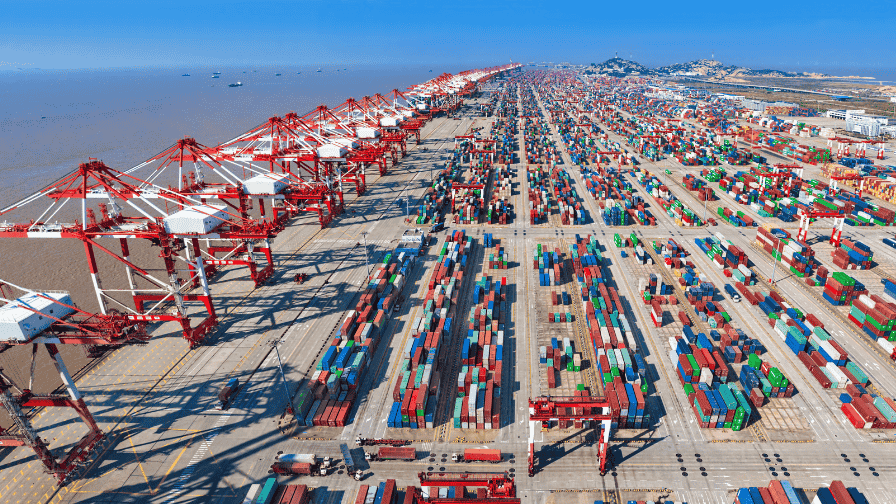
A profound shift in the scaffolding of global power is underway, not through overt military confrontation but through the steady pour of concrete and the silent arc of container cranes.
China now finances, builds, or operates over forty ports across Africa’s coastline, from the Atlantic shores of Mauritania to the Indian Ocean islands of the Seychelles. This is not random commercial sprawl.
It is the meticulous physical blueprint of a long-term strategic vision, one that places Beijing at the critical junctures controlling the world’s essential trade flows.
When mapped, the pattern reveals a system of unparalleled scale. Chinese firms have stakes in 78 ports across 32 African nations, effectively commanding over one-third of the continent’s major maritime gateways.
The narrative sold is one of mutual benefit—and the benefits are tangible. African nations receive modern infrastructure otherwise unaffordable; China gains commercial nodes for its Belt and Road Initiative (BRI), with an estimated $13 in trade revenue returning for every $1 invested.
But to view this only through an economic lens is to miss the deeper calculus. Ports are the valves of the modern world; 90% of global trade moves by sea. Whoever controls these valves doesn’t just facilitate commerce—they can, if needed, gently redirect or decisively throttle it.
The strategic playbook is already visible in Djibouti, home to China’s first and only overseas military base, established in 2017, nestled adjacent to Chinese-operated port facilities. This is the dual-use model in action: a commercial project becomes operationally essential, then morphs into a potential platform for power projection.

The People’s Liberation Army Navy (PLAN) is no longer a coastal force; it is a blue-water navy requiring global logistics nodes. Ports like Walvis Bay (Namibia), Lekki (Nigeria), and Hambantota (Sri Lanka)—with their deep drafts, strategic locations, and Chinese operational control—are not merely trade hubs. They are potential future waypoints in a globe-spanning security network.
This creates a form of leverage more subtle and durable than 19th-century colonization. When a foreign power owns the debt, controls the software, and operates the cranes at your nation’s primary economic lifeline, explicit political control is redundant. The dependency is structural.
For African nations increasingly reliant on these ports for critical fuel and food imports, this outsourced sovereignty creates profound vulnerability. In a crisis—a regional famine or a geopolitical clash over Taiwan—the ability to prioritize, delay, or deny shipments translates into immense political pressure.
The global response has been fragmented. The United States, while maintaining its own base in Djibouti, finds its influence challenged by China’s overwhelming economic presence there.
India, wary of strategic encirclement in the Indian Ocean, is pursuing a partnership-driven model of naval diplomacy and infrastructure aid. Yet, these counter-efforts are piecemeal against China’s centrally planned, state-funded, and systematically executed port strategy.
The most unsettling aspect is the permanence of the bet. The infrastructure being built today will define trade and security geography for 50 years or more.

The debt obligations, technical dependencies, and operational relationships forged now will constrain African policy choices for generations. China is not invading; it is intertwining. By the time the full strategic implications are undeniable, disentanglement will be economically catastrophic.
The world is witnessing a patient, long-game re-engineering of global connectivity. One day, during a future crisis we cannot yet imagine, the true cost of this infrastructure will become clear. That is when control over concrete and cranes will reveal itself unequivocally as a new form of control over destiny.
Mr Mwangura, an independent maritime consultant, is former SUK Secretary General
About The Author