Mombasa Port Stakeholders Meeting: A Step Forward, But the Journey Continues
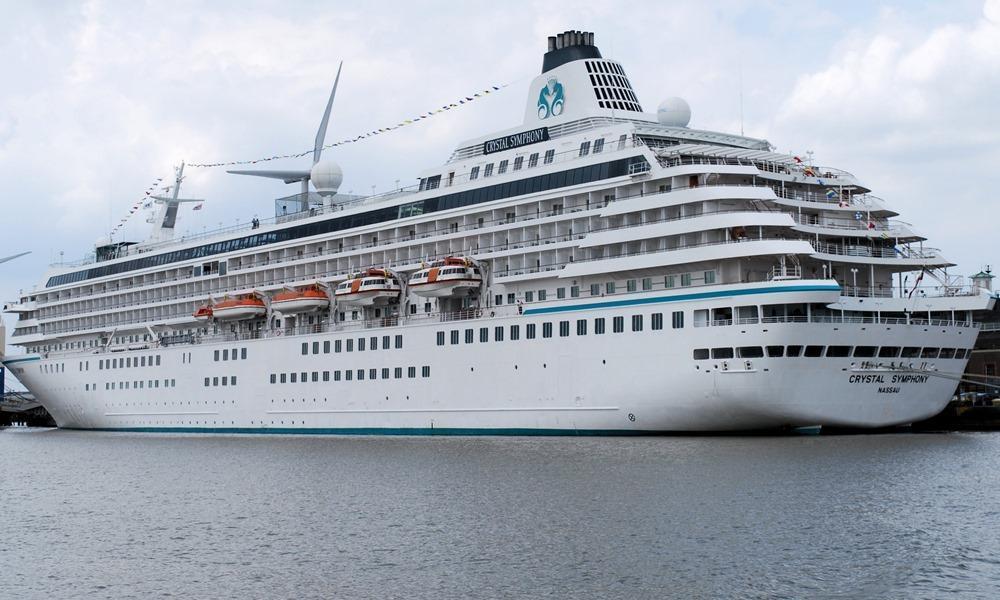
Symphony cruise ship at the port of Mombasa.
By Andrew Mwangura
Email, thecoastnewspaper@gmail.com
Friday’s consultative meeting at Mombasa Port marks a watershed moment in Kenya’s drive to enhance trade facilitation and supply chain efficiency.
The presence of the Commissioner General of the Kenya Revenue Authority (KRA), the Commissioner of Customs, and the Kenya Ports Authority (KPA) Managing Director signals that senior government leadership is finally acknowledging what the private sector has long declared: our port is challenged by congestion, bureaucratic inertia, and fragmented systems.
The critical question is no longer whether this meeting was necessary—it clearly was—but whether the commitments made will translate into tangible action or simply join the graveyard of well-intentioned promises.
To their credit, the officials demonstrated a commendable willingness to listen. The Commissioner General’s affirmation that KRA’s mandate is to facilitate trade, not merely collect revenue, represents a fundamental philosophical shift worthy of recognition.
Similarly, the KPA Managing Director’s immediate focus on operational efficiency and his appreciation of private sector concerns signals a constructive and welcome openness to reform. Yet, acknowledging problems is only the first step.
The issues raised by the Kenya Ships Agents Association (KSAA), the Kenya International Freight and Warehousing Association (KIFWA), the Kenya Transporters Association (KTA), the Shipping Council of East Africa (SCEA), and the Kenya Maritime Authority (KMA) are not new.
Vessel demurrage, container gridlock, procedural delays, and strained infrastructure have persisted for years. What lends this meeting potential significance is the specificity of the pledges and the attached timelines.
The Commissioner General’s directive to move all containers dwelling beyond 21 days to the Miritini Inland Container Depot by Monday, February 2nd, 2026, is bold and welcome.
So too is the commitment to relocate containers earmarked for destruction to Saafigo on the same date, clearing a perennial bottleneck.
We note the KPA Managing Director’s support for these actions as critical to unlocking port capacity. However, we must temper optimism with realism. Relocating thousands of containers within such a compressed window demands flawless logistics, sufficient transport capacity, and seamless inter-agency coordination.

The industry has seen countless ambitious timelines undone by operational realities. This initiative’s success will be a litmus test for the collective commitment of all agencies involved.
The promise to align Customs and Border Control operations with the port’s 24-hour schedule within a month—contingent on deploying additional staff across three shifts—is equally laudable. But staffing challenges at KRA are structural, not temporary.
Will these roles be filled with properly trained personnel, or will hasty deployment compromise inspection integrity and security? These questions must be answered during implementation.
Perhaps the most glaring shortcoming of the meeting was its inadequate focus on technological modernization. While KSAA’s call for a superior, integrated Port Community System was acknowledged, it received no concrete commitment.
Instead, we heard of upgrades to the existing ICMS and TOS systems—merely incremental improvements to fundamentally limited platforms. Kenya’s regional competitors are investing in integrated digital ecosystems that offer real-time visibility and predictive analytics. Mombasa cannot compete in the 21st century with upgraded 20th-century technology. Without a comprehensive Port Community System, the fragmented and duplicative processes that hinder efficiency will persist. This is a strategic area where KPA’s leadership will be crucial in championing a transformative digital agenda.
The response to concerns over Certificate of Origin requirements—that they are a “policy issue” for Parliament—exemplifies a tendency to deflect operational problems into protracted policy debates. While parliamentary review may be necessary, the implementation of these rules imposes immediate, measurable costs on businesses.
As legislative processes unfold at their own pace, importers face daily delays, extra expenses, and competitive disadvantages. This is where regulatory pragmatism is urgently needed to devise interim measures that balance policy goals with operational fluidity.
The revelation that Authorized Economic Operators (AEOs) are not receiving preferential treatment is deeply alarming. The global premise of AEO programmes is to create fast-track channels that reward compliance and reduce costs for low-risk traders.
If Kenya’s AEO programme is merely a certificate without operational benefits, it represents a profound implementation failure that sabotages the government’s own trade facilitation agenda.
The commitment by KPA and KRA to establish green channels for AEOs is welcome but overdue; this should have been operational from the programme’s inception.
The Kenya Maritime Authority’s candid admission that Mombasa is handling increased volumes with stagnant infrastructure strikes at the core of our maritime challenge.
The KPA Managing Director’s proactive announcement of a plan to create space for an additional 3,000 TEUs within three to four months is a positive step that will offer temporary relief.
However, it underscores a broader, pressing need for sustained investment to address the fundamental capacity constraints that will only intensify as regional trade grows. We cannot expect to maintain a competitive regional gateway without parallel investments in modern, scalable infrastructure.
On a positive note, the meeting rightly placed responsibility on shipping lines to identify alternative drop-off points instead of using the port as a default depot. KPA’s clear and reasonable stance that detention and demurrage charges should not apply when transporters cannot offload due to depot congestion is a fair principle that should be embedded in service agreements.
Furthermore, KSAA’s request for KRA to facilitate cost-effective mother vessel-to-barge bunkering deserves urgent attention, as current regulatory barriers hinder Mombasa’s potential as a regional bunkering hub—a goal that aligns with KPA’s vision for the port.
In summary, this meeting represents progress—not because it solved problems, but because it produced specific, time-bound commitments with assigned accountability.
The KPA Managing Director’s engagement has been pivotal in reaching this point. The true measure of success will emerge in the coming weeks and months: Will the containers move as pledged? Will 24-hour port operations become a reality? Will AEO green channels materialize?

The private sector must now partner with the government, holding it to account while fulfilling its own responsibilities. Kenya’s economic vitality is inextricably linked to the efficiency of Mombasa Port.
Monday, February 2nd, 2026, will reveal whether we are witnessing the dawn of genuine reform or merely another cycle of aspirational rhetoric.
Mr. Mwangura is an independent maritime consultant and former Secretary General of the Seafarers Union of Kenya (SUK).
About The Author