Defining Moment for Bandari Maritime Academy: Leadership, Reform and Test of Execution
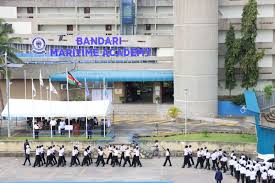
Bandari Maritime Academy. (Photo/ Courtesy)
By Andrew Mwangura
Email, thecoastnewspaper@gmail.com
Bandari Maritime Academy (BMA) today stands at a crossroads that will define not only its institutional future but also Kenya’s broader maritime ambitions.
The call by BMA chief executive officer Dr Eric Katana for staff and trainees to embrace renewed commitment, innovation, and teamwork at the start of the 2025/2026 financial year should therefore be read as more than a routine New Year message.
It is, in substance, a leadership signal issued at a moment when the academy’s relevance, credibility, and performance are under sharper national and international scrutiny than ever before.
As Kenya deepens its engagement with the blue economy and seeks to consolidate its position as a regional maritime hub, the burden placed on national training institutions has intensified.
Maritime Education and Training is no longer judged merely by enrollment numbers or infrastructure, but by outcomes: competence, compliance, employability, and institutional integrity. Dr Katana’s message, delivered at the reopening of the academic and administrative year after the December recess, recognizes this reality by framing the second half of the financial year as a period of execution rather than aspiration.
Strategic plans, however well crafted, only acquire meaning when they translate into better service delivery, stronger systems, and measurable progress.
The emphasis on renewed energy and focus is particularly telling. Public institutions often struggle with inertia, especially after festive breaks and at mid-cycle points in the financial year.
By explicitly calling for commitment and teamwork, the BMA leadership is acknowledging that institutional transformation is not automatic.
It requires discipline, shared purpose, and a clear understanding among staff and trainees that the academy’s performance reflects directly on Kenya’s maritime standing.
At the core of this renewed push is the strengthening of BMA’s mandate as a leading national maritime training institution.
Leadership in this space is not symbolic; it is earned daily through compliance with international standards, responsiveness to industry needs, and consistency in quality assurance.
Dr. Katana’s focus on institutional strengthening and stakeholder collaboration reflects an appreciation that maritime training operates within a complex ecosystem.

Regulators, port authorities, shipping companies, labour organizations, and international partners all shape the environment in which BMA must function. Effective collaboration with these actors is therefore not optional but essential to relevance and sustainability.
Equally important is the renewed commitment to the Citizens Service Delivery Charter. For trainees and the wider public, the quality of an institution is often experienced not in policy documents but in everyday interactions.
Timeliness, transparency, and responsiveness are not abstract public service ideals; they determine whether an academy is trusted or avoided.
By aligning service delivery with national public service values, BMA is situating itself within the broader government reform agenda aimed at improving accountability and restoring confidence in public institutions.
The academy’s continued investment in digital transformation marks another significant shift. The rollout of an integrated Enterprise Resource Planning system has the potential to fundamentally change how BMA manages its academic, financial, human resource, procurement, and administrative functions.
If properly implemented, such a system can reduce inefficiencies, limit opportunities for mismanagement, and enable data-driven decision-making.
In an institution tasked with meeting both national oversight requirements and international maritime benchmarks, digital integration is no longer a modernization exercise but a governance imperative.
Yet systems alone do not define excellence. The heart of Dr Katana’s message lies in the reaffirmation of Maritime Education and Training as BMA’s central mission.
Full compliance with international maritime conventions, particularly the STCW framework, is critical at a time when global scrutiny of certification standards is increasing.
Kenya’s seafarers operate in an international labour market, and the credibility of their training determines not only their employability but also safety at sea and the country’s reputation as a flag and Maritime labour-supplying state.
The emphasis on continuous professional development for trainers and staff, curriculum review, and investment in modern training equipment points to a recognition that maritime training must evolve alongside technological and regulatory changes in the industry.
Practical competence cannot be achieved through outdated syllabi or under-equipped facilities. It requires instructors who are current, curricula that are relevant, and training environments that mirror real-world maritime operations.
Underlying all these priorities is a clear call to uphold national values and principles of governance. Compliance with Presidential Directives, government policy priorities, and national development agendas is framed not as a box-ticking exercise, but as part of a broader commitment to integrity, professionalism, accountability, inclusivity, and service to the public.
In the maritime sector, where lapses in ethics or standards can have serious economic and safety consequences, this values-based approach is not merely desirable; it is essential.
Ultimately, Dr Katana’s address positions the 2025/2026 financial year as a test of leadership and institutional maturity for BMA.

The direction has been articulated, the priorities outlined, and the expectations set. What remains is consistent execution. In maritime affairs, charts and intentions matter little without steady navigation.
For BMA, this defining phase will be judged not by words, but by outcomes that demonstrate the Academy’s readiness to anchor Kenya’s maritime future.
Mr Mwangura an independent maritime consultant, is former SUK Secretary General
About The Author