Charting New Waters: Promise of Maritime Education Partnerships in Kenya’s Blue Economy

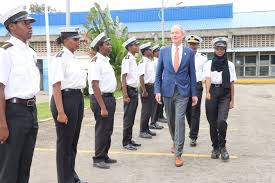
Technical and Vocational Education Center (TVEC) (Photo/ Courtesy)
By Andrew Mwangura
Email, thecoastnewspaper@gmail.com
The recent gathering at the Kenya Maritime Authority, bringing together representatives from the College Institute of Canada, Kenya Blue Economy Skill Training, and the Technical and Vocational Education and Training Authority, represents more than just another diplomatic courtesy or bureaucratic formality.
It signals a critical recognition that Kenya’s aspirations for a thriving blue economy cannot be realized without a fundamental transformation in how we approach maritime education and skills development.
This engagement, focused on capacity building, skills development, and addressing marine sector skill gaps, arrives at a moment when our maritime potential remains largely untapped, and when the global shipping industry faces unprecedented demand for qualified personnel.
Kenya’s maritime sector has long been characterized by a curious paradox. Blessed with a coastline stretching over 500 kilometers, commanding a strategic position along one of the world’s busiest shipping lanes, and harboring the Port of Mombasa as the gateway to East and Central Africa, the country should naturally be a maritime powerhouse.
Yet our contribution to the global maritime workforce remains disproportionately small, and many of our brightest maritime talent find themselves seeking training and opportunities abroad.
The gap between potential and performance in this sector is not merely an economic concern but a strategic vulnerability that affects our national competitiveness and our ability to leverage what should be a natural advantage.
The partnership being forged addresses this challenge at its root. Maritime education is not simply about teaching navigation or engineering principles; it requires world-class facilities, internationally certified instructors, continuous curriculum updates to match evolving technologies, and connections to global industry networks.
These are precisely the areas where partnerships with established maritime education providers become invaluable. The College Institute of Canada brings decades of experience in delivering maritime training that meets International Maritime Organization standards, while KBEST and TVETA provide the local knowledge, infrastructure, and institutional frameworks necessary for sustainable implementation.
This combination of international expertise and local capacity creates the foundation for genuine transformation rather than temporary fixes.
What makes this collaboration particularly significant is its focus on skills gap identification. Too often, educational initiatives proceed based on assumptions about what the industry needs rather than rigorous analysis of actual demand.
The result is a workforce trained for yesterday’s challenges or equipped with theoretical knowledge that finds limited practical application. By prioritizing skills gap analysis, these institutions are committing to a evidence-based approach that ensures training programs produce graduates whom employers actually need.
This alignment between education and industry demand is crucial in a sector where technological change, from automation to environmental regulations, constantly reshapes job requirements and competency expectations.

The emphasis on capacity building extends beyond simply training more maritime professionals. It encompasses developing the institutional capability to sustain high-quality maritime education independently over time.
This means training trainers, establishing quality assurance mechanisms, creating pathways for continuous professional development, and building research capacity to drive innovation in maritime practices.
When Kenya can produce not just qualified seafarers but also qualified maritime educators and researchers, the sector gains a self-reinforcing momentum that no single training program, however excellent, could provide.
This institutional strengthening represents the difference between dependency and genuine capability development.
Information exchange, another pillar of this engagement, acknowledges that maritime education cannot occur in isolation from global trends and standards.
The shipping industry is inherently international, with vessels, crews, and cargo constantly crossing borders. Kenyan maritime professionals must not only meet local standards but compete on the global stage.
Access to international best practices, emerging technologies, regulatory changes, and industry innovations ensures that our training institutions remain relevant and that our graduates possess truly competitive skills.
This knowledge transfer works both ways as well, with international partners gaining insights into the unique challenges and opportunities within the East African maritime context.
The timing of this partnership is particularly apt given the expanding scope of the blue economy beyond traditional shipping.
Fisheries management, offshore energy development, marine tourism, port operations, maritime security, and marine environmental protection all require specialized skills and knowledge. A robust maritime education ecosystem supports diversification across all these sectors, creating multiple career pathways and economic opportunities.
The collaboration framework being established can serve as a template for similar partnerships in other blue economy subsectors, multiplying its impact across the entire maritime domain.
However, the success of this initiative will ultimately depend on sustained commitment from all stakeholders. Government support through adequate funding, policy frameworks that facilitate international collaboration, and recognition of maritime careers as attractive professional pathways remains essential.
The private sector must engage actively, providing internship opportunities, offering input on curriculum development, and creating clear career progression for trained professionals.
Educational institutions must maintain rigorous standards while remaining flexible enough to adapt to changing industry needs. And students themselves must recognize the opportunities that maritime careers offer and commit to the demanding preparation they require.
This partnership represents Kenya’s opportunity to finally match maritime ambition with maritime capability. By investing in world-class maritime education today, we position ourselves to claim our rightful place in the global maritime economy tomorrow. The waters ahead hold immense promise for those equipped to navigate them.
Mr. Mwangura , an independent maritime consultant is the former SUK Secretary General
About The Author