Toward Greener Seas: Kenya’s Maritime Institutions Chart a Sustainable Future

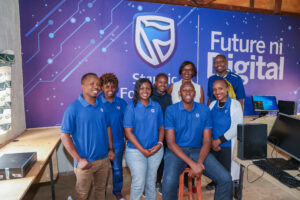
Stakeholders and TUM students at a workshop at the Technical University of Mombasa TUM (Photo/Courtesy)
By Andrew Mwangura
Email, thecoastnewspaper@gmail.com
The recent stakeholders workshop hosted jointly by the Institute of Maritime and Seafaring Studies at the Technical University of Mombasa and the Department of Marine Engineering and Marine Operations at JKUAT marks an important moment for the future of maritime training and sustainability in East Africa.
Convened under the umbrella of the GEMS-TECH (Green Maritime Horizons) Project—an initiative co-funded by the European Union—the gathering brought together industry professionals, academics, and young cadets to confront one of the most pressing questions of our time: how do nations with growing maritime sectors transition into greener, more responsible, and globally competitive shipping environments?
The workshop did not seek simple answers but rather emphasized the power of collaboration, knowledge exchange, and research-driven action. In doing so, it offered an encouraging glimpse of what the maritime future in Kenya, and indeed the wider region, could look like.
At the heart of this conversation were the researchers from the Technical University of Mombasa, Captain Suleiman Bakari and Captain Talib Ibrahim, whose contributions and leadership reflect the growing importance of homegrown expertise in shaping maritime transformation.
Their input, alongside that of other project partners, formed the foundation of discussions that were both practical and visionary. The research presented did more than outline the technical demands of green shipping; it also illuminated the institutional and cultural changes required for sustainable maritime practices to take root.
For a country like Kenya—strategically positioned and economically dependent on maritime commerce—such insights are not merely academic. They are essential.
What made this workshop especially significant is its focus on education—not simply as a pipeline for producing seafarers but as a mechanism for reimagining how the maritime sector functions in the age of climate responsibility.
The GEMS-TECH initiative is explicit about its mission: modernizing maritime education in Egypt and Kenya by embedding sustainability, green technologies, and water resource protection into higher education curricula. This is not a superficial adjustment; it is a profound reorientation of how future maritime professionals will understand their roles.
In an industry historically driven by efficiency and profit, the deliberate inclusion of environmental stewardship may ultimately become the most influential shift of the century.

The workshop provided a space where leaders from industry could articulate the practical realities of transitioning to green maritime operations. Their concerns, often grounded in the challenges of cost, technology access, and regulatory expectations, were met with academic insights on emerging solutions, best practices, and global trends.
Such exchanges are vital because they prevent sustainability discussions from becoming detached from operational realities. Instead, they encourage a style of problem-solving that is pragmatic, inclusive, and attuned to future demands.
Cadets in attendance, the future workforce of Kenya’s maritime sector, were able to witness firsthand the complexity of these issues and the determination with which stakeholders are approaching them.
What emerges from such engagements is a recognition that green shipping is not a distant ideal but a necessary evolution. The global maritime industry is under increasing pressure to reduce emissions, adopt energy-efficient technologies, and mitigate the environmental impacts of vessel operations.
Nations that move early to align their training systems, port operations, and maritime policies with these expectations will not only protect their ecosystems but also gain economic advantages. Kenya, with its robust port infrastructure and expanding blue economy agenda, stands to benefit enormously from such forward-thinking initiatives.
Through projects like GEMS-TECH, Kenyan institutions demonstrate that they are not content to remain passive observers of global trends—they intend to be participants and shapers of the sustainable maritime future.
Moreover, the collaboration between TUM and JKUAT highlights the strength of inter-institutional partnerships. It sends a powerful message that maritime progress cannot be achieved in isolation. Universities must work with each other, with government bodies, with international partners, and with the private sector.
Knowledge must flow freely across these boundaries if sustainable change is to take hold. In this sense, the workshop served not only as a platform for presenting research but also as a reminder that collaboration is itself a technology—one capable of accelerating innovation more effectively than any single institution could manage alone.
The involvement of the European Union in co-funding the GEMS-TECH project further elevates the significance of these developments. It signals the global relevance of African maritime spaces and the international community’s recognition that sustainability cannot be achieved in silos.
Green shipping is a shared responsibility, and supporting capacity building in regions critical to global trade is part of ensuring that environmental progress is both inclusive and equitable.
Ultimately, the workshop was more than an academic event. It was a quiet but resolute declaration of intent: that Kenya is ready to prepare a new generation of maritime professionals equipped not only with technical skills but also with the environmental consciousness required for the future. It affirmed that institutions like the Technical University of Mombasa, with researchers such as Capt. Suleiman Bakari and Capt. Talib Ibrahim, are actively shaping that future. And it demonstrated that when dialogue, research, and shared ambition converge, the path toward greener maritime horizons becomes not just imaginable but attainable.

In a world increasingly defined by its environmental choices, the initiatives emerging from Kenya’s maritime education sector are timely, necessary, and deeply commendable.
The challenge now is to sustain the momentum, expand the collaboration, and ensure that the principles discussed in the workshop translate into long-term, systemic transformation. If this workshop is any indication, the journey toward green maritime modernity is well underway—and Kenya is determined to sail at the forefront.
Mr. Mwangura, an independent consultant is former SUK Secretary General.
About The Author