Regional Civil Societies Push to End Illegal Fishing in Indian Ocean

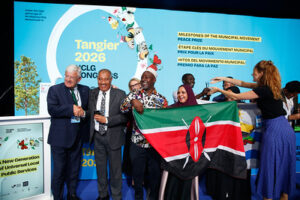
Doreen Nasimiyu Simiyu, coordinator of the South West Indian Ocean Tuna Forum (SWIOTUNA) (Photo By Mbungu Harrison)
By Mbungu Harrison
Email, thecoastnewspaper@gmail.com
Civil society organizations from South West Indian Ocean countries have renewed their call for regional governments to implement existing fisheries policies to curb illegal, unreported, and unregulated (IUU) fishing that is major obstacle to realizing the region’s blue economy potential.
Speaking during a regional workshop in Mombasa, Doreen Nasimiyu Simiyu, coordinator of the South West Indian Ocean Tuna Forum (SWIOTUNA), emphasized that enforcing fisheries policies would not only help protect marine resources, but also uplift coastal communities dependent on the fishing industry.
“We are lobbying our governments to implement specific fishing policies that will help curb IUU fishing. This is one of the major drivers preventing our countries from fully enjoying the benefits of a sustainable blue economy,” she said.
According to her fisheries policies designed to combat illegal fishing use a multi-faceted approach-including vessel tracking, port state controls, market-related measures, and international cooperation.
These strategies aim to enhance supply chain transparency and ensure accountability through licensing, vessel identification, and stricter port access rules.
“If our countries implement the minimum terms and conditions, as well as policies aligned with the Indian Ocean Commission (IOC) agreements, we will enjoy the benefits of a sustainable blue economy empowering fishers and communities to gain more from this vital sector.”
Elija Ngowa, coordinator of the Tuna Fisheries Alliance of Kenya (TUFAK), echoed the call, saying that illegal tuna fishing continues to undermine livelihoods in coastal communities.
“Illegal fishing, especially of tuna species, affects many families in the coastal region. We are urging governments to increase funding to the fisheries sector and take into account the views of all stakeholders to eliminate illegal fishing,” he said.

SWIOTUNA-a network of civil society organizations across the Western Indian Ocean—works to promote sustainable tuna fisheries, marine governance, and community empowerment to ensure fair benefits from marine resources.
The Mombasa workshop brought together representatives from five Indian Ocean countries under a program that has been implemented since July 2021 by the World Wide Fund for Nature (WWF) in partnership with local and regional organizations.
Asma Awadh, WWF colastal Kenya manager, said the four-year initiative has built significant capacity among local civil society organizations on the technical, legal, and international aspects of tuna-related agreements.
“While much has been achieved, the blue economy sector remains vast and costly. One program alone cannot address all the challenges. For example, Kenya has over 100 Beach Management Units (BMUs), and there are still gaps in realizing the full potential of this sector,” he said.
A 2023 WWF study revealed that over 50 percent of blue economy investments in the region went to transport, 27 percent to logistics and ports, while fisheries received less than 1%, underscoring the need for more funding and awareness.
“There is huge untapped potential in the fisheries sector. More investment is needed to support local communities and enable them to benefit meaningfully from the blue economy.”
Naghmana Zafa, WWF South Indian Ocean (SWIO) Regional Technical Officer, commended progress made in establishing regional fisheries policies but noted that stronger enforcement and collaboration are essential to translate these policies into tangible outcomes.
“We have made important strides in policy development, but implementation and enforcement remain key. Continued regional cooperation will ensure a truly sustainable blue economy,” said Zafa.
A recent WWF Tuna report reaffirmed that the Indian Ocean region still holds significant potential for sustainable tuna production.

The report urged regional governments to increase their fisheries budgets and strengthen support for local partners to secure long-term sustainability.
Participants at the Mombasa forum expressed optimism that with sustained regional collaboration, policy enforcement, and increased investment, the Indian Ocean region is well on its way toward realizing a thriving, inclusive, and sustainable blue economy that benefits both people and the planet.
About The Author