Kenya’s Maritime Future Anchored Abroad: A Lesson from the Cadets in Korea
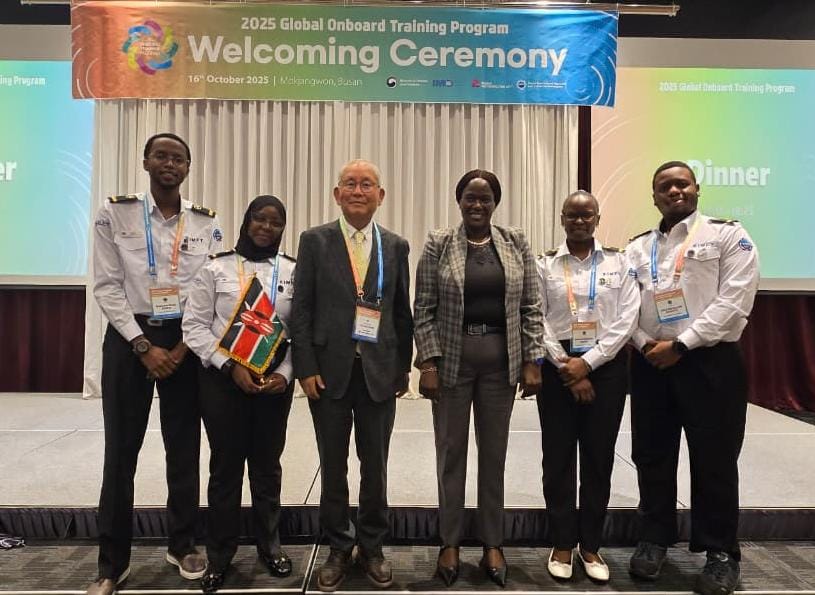
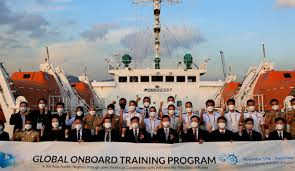
Kenyan Cadets flank Kenyan Ambassador to Korea Prof. Emmy Jerone 9Photo/ courtesy)
By Andrew Mwangura
Email, thecoastnewspaper@gmail.com
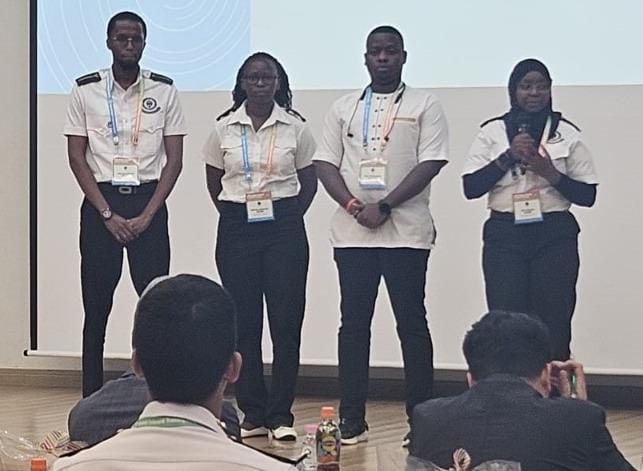
Four young Kenyan cadets from the Bandari Maritime Academy are currently undergoing a 3.5-month Global Onboard Training (GOBT) program in Busan, South Korea — a development that signals a quiet but promising tide turning in Kenya’s maritime journey.
Since mid-September, these cadets have been immersed in a rigorous, hands-on training environment in one of the world’s most advanced maritime nations. Their experience is more than just personal growth; it is a living demonstration of what strategic international cooperation and visionary leadership can achieve for Kenya’s blue economy and maritime human capital.
On October 16, Kenya’s Ambassador to South Korea, Professor Emmy Jerono, visited the cadets, affirming the government’s support and the importance placed on the maritime sector as a driver of national development.
She was accompanied by Professor Elder Bang, the chairman of a Korean initiative that promotes opportunities for Kenyan cadets in Korea — a partnership that underscores the value of global collaboration in capacity building.
Such engagements are not ceremonial gestures; they are statements of intent, affirming that Kenya is ready to compete and cooperate on the global maritime stage.
The presence of Kenyan cadets in Busan, one of the world’s busiest ports and a hub of maritime excellence, is both symbolic and instructive.
For years, Kenya’s maritime education system struggled with limited exposure to international standards, inadequate sea-time placements, and a disconnect between academic training and the realities of life at sea.
The GOBT program in Korea directly addresses these long-standing gaps by immersing cadets in a working environment that demands discipline, technical skill, and cultural adaptability — all essential traits for success in a global maritime career.
This development also highlights the growing importance of the Bandari Maritime Academy (BMA) as Kenya’s flagship institution for maritime education and training.
The academy has long been tasked with the responsibility of producing competent seafarers who meet the International Maritime Organization’s (IMO) standards.
However, as with many maritime institutions in developing countries, it has faced structural and logistical challenges in ensuring that its graduates receive the mandatory sea-time experience required for certification.
The partnership with Korea provides not just training but a pathway — an opportunity for Kenyan cadets to bridge the gap between classroom knowledge and real-world experience aboard modern vessels.
Ambassador Jerono’s visit to Busan carries diplomatic weight as well. It symbolizes a form of maritime diplomacy that Kenya must continue to nurture — one that positions the country as a credible partner in the global shipping community.
Korea, being a maritime superpower with cutting-edge shipbuilding industries and world-class ports, offers a valuable model for Kenya. Strengthening bilateral cooperation in maritime education and technology transfer could help Kenya unlock the vast potential of its 600-kilometer coastline and its strategic location along major global shipping routes.
Moreover, this program embodies the aspirations of Kenya’s blue economy agenda, which seeks to harness ocean-based resources for sustainable development.
For this vision to materialize, Kenya must invest in its people — seafarers, engineers, ship officers, port managers, and maritime safety specialists. The four cadets in Busan represent a small but vital step in this direction. Their experience will not only transform their personal lives but also enrich the nation’s pool of maritime expertise when they return home.
However, for such progress to be sustained, Kenya must institutionalize these international training collaborations. Too often, promising pilot programs end with a few cohorts and fail to evolve into long-term frameworks.
The government, through the Ministry of Mining, Blue Economy, and Maritime Affairs, should ensure that the BMA’s partnership with Korean institutions is expanded, formalized, and adequately funded.
More cadets should be able to benefit, and the selection process must be transparent and merit-based to maintain credibility.
The private sector too must play its part. Shipping companies, both local and international, can offer cadet berths and internship opportunities as part of their corporate social responsibility.
Kenyan ports and maritime agencies can develop mentorship programs for returning cadets to integrate their newly acquired skills into the local maritime ecosystem.
This kind of continuity will ensure that the benefits of international exposure are felt throughout the sector.
As Kenya continues to assert itself in the global maritime arena, stories like that of the four cadets in Korea should inspire both pride and purpose. They remind us that investing in human capital is the surest way to secure a nation’s maritime future.
In a world where the oceans connect economies and cultures, Kenya must not remain a bystander. The journey of these young cadets — guided by educators, supported by diplomats, and facilitated by international cooperation — is a reflection of what can happen when vision meets opportunity.
Their voyage is not just across the seas of East Asia; it is a voyage into Kenya’s maritime future — one defined by knowledge, collaboration, and the courage to learn from the best.
The author is a policy analyst specializing in maritime governance and blue economy development.
About The Author