Sinking Ambitions: Devastating Impact of Dismantling Kenya’s Blue Economy Framework

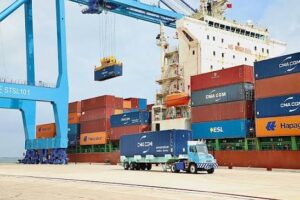
A vessel docked at KPA Mombasa. (Photo/ Courtesy)
By Andrew Mwangura
Email, thecoastnewspaper@gmail.com
Kenya’s blue economy, a vibrant mosaic of economic potential along its 536-kilometer coastline, holds the promise of transforming the nation’s fortunes through sustainable development.
Encompassing at least 10 key subsectors—such as fisheries, aquaculture, maritime transport, coastal tourism, shipbuilding, offshore renewable energy, marine biotechnology, deep-sea mining, port services, and marine conservation—this sector could drive job creation, bolster food security, and significantly boost GDP.
Yet, recent policy decisions, including the dissolution of the Oceans and Blue Economy Office and severe budget cuts to the Kenya National Shipping Line (KNSL), the Kenya Maritime Authority (KMA), and the Bandari Maritime Academy (BMA), threaten to capsize these prospects.
These measures, driven by fiscal austerity amid economic strain, reflect a shortsighted approach that sacrifices long-term prosperity for fleeting savings.
By dismantling specialized governance, crippling operational capacity, and undermining workforce development, they risk plunging the blue economy into crisis, exacerbating unemployment, environmental degradation, and economic dependency.
The Oceans and Blue Economy Office, established to spearhead Kenya’s maritime aspirations, was pivotal in orchestrating policies that harnessed ocean resources sustainably.
As a dedicated entity, it bridged government agencies, private stakeholders, and international partners to integrate blue economy strategies into national development plans. Its role included combating illegal fishing, promoting eco-friendly tourism, advancing aquaculture, and exploring renewable energy like offshore wind.
The office was instrumental in aligning Kenya with global frameworks, such as the FAO Port State Measures, ensuring compliance with international maritime standards and positioning the country as a regional leader in sustainable ocean governance.
It also advocated for coastal communities, safeguarding their livelihoods against climate-induced threats like flooding and ocean grabbing by foreign entities, which degrade marine ecosystems and erode local incomes. Its dissolution—likely absorbed into broader, less-focused ministries—creates a dangerous void.
Without centralised coordination, policies fragment, and critical issues like marine insecurity and environmental protection falter, stunting Kenya’s ability to capitalize on its maritime wealth and leaving coastal regions like Kwale and Lamu vulnerable to poverty and resource exploitation.
The budget cuts to the Kenya National Shipping Line further erode the sector’s potential, undermining efforts to build a competitive national maritime transport system.
KNSL, envisioned as a state-owned carrier to handle cargo and reduce reliance on foreign vessels, is critical to reversing the $3 billion annual loss to foreign shipping companies dominating ports like Mombasa and Lamu.
These losses widen Kenya’s trade deficit and weaken economic sovereignty. Budget slashes cripple KNSL’s ability to modernize its fleet or expand routes, perpetuating dependency on foreign operators and exposing the economy to global disruptions, such as Red Sea shipping crises that inflate import costs and delay exports.
Small and medium enterprises, reliant on affordable logistics, face higher costs, stifling job creation and innovation in subsectors like port services and shipbuilding.
The cuts also weaken national security, as a diminished shipping line limits Kenya’s influence over regional trade routes, forfeiting economic multipliers from ancillary services like ship repair and bunkering.
Coastal youth, already grappling with unemployment, lose opportunities in seafaring, deepening regional inequality.
Equally damaging are the budget reductions to the Kenya Maritime Authority (KMA), which compromise regulatory oversight across the blue economy’s diverse subsectors.
As the custodian of maritime governance, KMA enforces safety standards, conducts search and rescue operations, and monitors environmental impacts from shipping. Funding shortages have already stalled international maritime disputes, delaying resolutions critical to territorial claims.
With further cuts, KMA struggles to combat illegal fishing, which depletes stocks vital to fisheries, or mitigate vessel pollution that destroys mangroves and coral reefs—ecosystems central to tourism and conservation.
Seafarers face delays in certifications, limiting their access to global jobs, while inadequate resources heighten risks of accidents like oil spills or piracy, which could devastate coastal economies.
These cuts weaken Kenya’s capacity to regulate emerging subsectors like marine biotechnology and deep-sea mining, leaving the nation ill-equipped to harness their potential amid climate threats.
The result is a regulatory shortfall that invites exploitation by foreign entities and erodes sovereignty over marine resources.
The slashing of Bandari Maritime Academy(BMA)’s budget delivers another blow, undermining the human capital needed to sustain the blue economy’s 10 subsectors.
As Kenya’s premier institution for training seafarers, BMA delivers IMO-compliant education in navigation, engineering, and safety—skills essential for maritime transport, shipbuilding, and port operations. Yet, funding cuts have sparked protests over high fees, outdated facilities, and delays in practical training like sea-time attachments.
Treasury delays in examination funding create bottlenecks, leaving graduates uncertified and unemployable in a global market. This perpetuates a skills gap, as underfunded programs fail to modernize curricula or acquire simulators, hindering innovation in fields like marine biotechnology.
Poor governance and delays in issuing Seafarer’s Identity Documents further sideline Kenyan youth from lucrative roles, forcing reliance on foreign labor.
Coastal communities, where unemployment fuels unrest, suffer most, as untrained locals are excluded from jobs in fisheries, tourism, and renewable energy, leading to under-expenditure and negative service delivery impacts.
Together, these policy missteps threaten to sink Kenya’s blue economy ambitions.
The dissolution of the Oceans and Blue Economy Office fragments oversight, while budget cuts to KNSL, KMA, and BMA stifle growth across critical subsectors, from fisheries to offshore energy.
This fiscal myopia not only deepens dependency on foreign resources but also exacerbates environmental degradation and unemployment, burdening taxpayers with the costs of lost opportunities and crisis response.
In a nation facing economic shocks from pandemics, conflicts, and climate change, the blue economy offers a lifeline for resilience through diversified revenue. President Ruto’s administration must reverse these cuts, reinstate dedicated governance, and invest in maritime infrastructure to unlock the sector’s potential.
Failure to act betrays coastal communities and squanders Kenya’s oceanic heritage, anchoring the nation in underdevelopment while the world sails toward sustainable prosperity.
A bold course correction is urgent—one that prioritizes the blue economy’s 10 subsectors as engines of inclusive growth.
The author is a policy analyst specializing in maritime governance and blue economy development.
About The Author