Dongo Kundu SEZ: A Beacon of Economic Transformation for Kenya

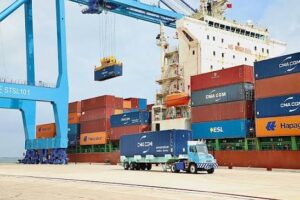
Dongo Kudu Special Economic Zone. (Photo/ Courtesy)
By Andrew Mwangura
Email, thecoastnewspaper@gmail.com
The Dongo Kundu Special Economic Zone (SEZ) in Mombasa is emerging as a cornerstone of Kenya’s ambition to become a regional industrial and logistics hub.
As plans for its development gain momentum, the project is attracting a growing roster of investors eager to capitalize on its strategic advantages.
The latest to join this wave is China’s Ruike Energy Group Limited, which has expressed keen interest in establishing a state-of-the-art oil refinery within the SEZ.
This development signals not only the zone’s rising prominence but also its potential to reshape Kenya’s economic landscape by fostering manufacturing, value addition, and sustainable growth.
The enthusiasm surrounding Dongo Kundu underscores its promise as a catalyst for job creation, regional connectivity, and industrial innovation, aligning seamlessly with Kenya’s Vision 2030 aspirations.
Strategically located along Mombasa’s coastline, the Dongo Kundu SEZ spans 3,000 acres and is designed to be a multi-sectoral hub.
Its proximity to the Port of Mombasa, the Standard Gauge Railway, Moi International Airport, and the Mombasa Southern Bypass positions it as a gateway to East Africa and beyond.
The SEZ’s master plan, developed with support from the Japan International Cooperation Agency (JICA), envisions a dynamic ecosystem comprising a free port, free trade zones, industrial parks, logistics hubs, and facilities for tourism and conferencing.
These features make it an attractive destination for investors seeking to tap into regional and international markets.
The recent interest from Ruike Energy Group Limited, a Chinese energy company, exemplifies the global confidence in Dongo Kundu’s potential.
Their proposal to establish an oil refinery highlights the zone’s appeal for large-scale industrial projects, particularly in sectors like oil and gas, which are critical to Kenya’s energy security and economic diversification.
Ruike Energy’s interest in Dongo Kundu is a testament to the SEZ’s carefully crafted model, which prioritizes transformative investments.
During a recent meeting with Kenya Ports Authority (KPA) officials, the Chinese delegation presented a vision for a modern refinery that would leverage the zone’s offshore facilities and port infrastructure to process crude oil for both local and regional markets.
This aligns with the SEZ’s goal of enhancing value addition, as an oil refinery would not only meet domestic energy needs but also position Kenya as a key player in the regional energy sector.
The delegation’s tour of the Kipevu Oil Terminal and the SEZ site left them impressed by KPA’s ongoing infrastructure developments, further reinforcing the project’s credibility.
Eng Matthews Amuti, KPA’s general manager for infrastructure development, emphasized the authority’s commitment to facilitating such investments, noting that Dongo Kundu is designed to drive economic growth through job creation and sustainable development.

This vision is already materialising, as evidenced by Taifa Gas’s Sh20.8 billion liquefied petroleum gas (LPG) facility, which broke ground in 2023 and is expected to create thousands of jobs.
The broader implications of Dongo Kundu’s development are profound. By attracting investments in sectors like oil and gas, petrochemicals, agro-processing, and green energy, the SEZ is poised to address Kenya’s trade imbalance and reduce reliance on imported industrial goods.
The government’s allocation of Sh39 billion for the project, coupled with a Sh5.23 billion grant from Japan, underscores its strategic importance.
The SEZ’s fiscal incentives, including a 10% corporate tax rate for the first decade, are designed to lure investors like Ruike Energy, whose refinery could transform Kenya into a regional energy hub. Such investments promise to lower energy costs for households and businesses, fostering a more vibrant local economy.
Moreover, by facilitating cleaner energy sources like LPG and potentially refined petroleum products, Dongo Kundu aligns with global sustainability trends, reducing reliance on environmentally harmful fuels like wood and charcoal.
However, the road to realising Dongo Kundu’s full potential is not without challenges. Past delays in SEZ projects, such as those at Naivasha due to funding constraints, highlight the need for sustained financial commitment and efficient execution.
Reports of interference in KPA’s tendering processes also raise concerns about transparency, which could erode investor confidence if not addressed. The government’s recent transfer of the project’s oversight to KPA in August 2024, along with the development of a land policy, signals a renewed focus on overcoming these hurdles.
Deputy President Kithure Kindiki’s call for urgency in resolving operational bottlenecks reflects the project’s critical role in positioning Kenya as a regional economic powerhouse.
The success of Dongo Kundu hinges on harmonizing regulatory frameworks, ensuring robust infrastructure, and maintaining political stability to sustain investor interest. The Dongo Kundu SEZ represents more than just an industrial hub; it is a bold step toward economic self-sufficiency and regional integration.
By fostering industries like oil refining, it can reduce Kenya’s dependence on imported goods, create jobs, and stimulate downstream economic activities.
The interest from global players like Ruike Energy and Taifa Gas underscores the project’s transformative potential. For local communities, the SEZ promises improved livelihoods through employment and access to cleaner energy.
Regionally, it strengthens Kenya’s role as a logistics and manufacturing hub, serving landlocked neighbors like Uganda, Rwanda, and South Sudan.

As the government and KPA work to operationalize the zone, the focus must remain on delivering infrastructure, ensuring transparency, and fostering an enabling environment for investors.
If executed well, Dongo Kundu could emulate the success of global SEZs like Shenzhen, transforming Mombasa into a vibrant economic hub and cementing Kenya’s place in the global economy.
The time to act is now—Dongo Kundu’s success will be a legacy of vision, collaboration, and resilience.
The author is a policy analyst specializing in maritime governance and blue economy development.
About The Author