New Horizon: Bandari Maritime Academy’s Partnership with the World Maritime University

World Maritime University. (Photo/ Courtesy)
By Andrew Mwangura
Email, thecoastnewspaper@gmail.com
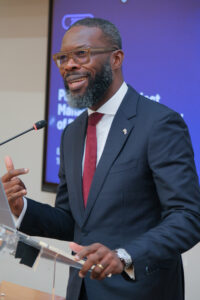
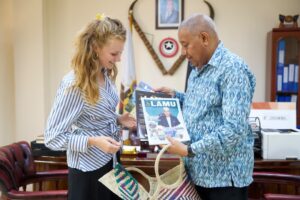
In a landmark moment for Kenya’s maritime education, Bandari Maritime Academy (BMA) recently welcomed Prof. Maximo Mejia Jr., President of the World Maritime University (WMU), and Dr. Jens-Uwe Schroder-Hinrichs, WMU’s Vice President, to its Mombasa campus.
This high-level visit marks a significant milestone in the deepening partnership between the two institutions, a collaboration that promises to reshape the future of maritime education in Kenya and beyond.
Dr. Eric Katana, BMA’s Chief Executive Officer, described the visit as a testament to the shared vision of building maritime capacity, advancing innovation, and preparing the next generation of professionals to lead the global maritime industry.
This partnership is not merely a diplomatic gesture; it is a bold step toward positioning Kenya as a maritime hub in the region and a key player in the global Blue Economy.
Located on the scenic oceanfront of Mombasa, BMA has long been recognized as Kenya’s premier center for maritime education and training.
Established to equip professionals with the skills needed to navigate the complexities of the maritime sector, the academy has evolved into a regional center of excellence. Its curriculum, blending advanced theoretical instruction with cutting-edge simulation technologies and practical onboard training, prepares students for the dynamic demands of the Blue Economy.
However, the challenges facing the maritime industry—digitalization, decarbonization, climate change adaptation, safety, and sustainability—require more than localized efforts.
They demand global collaboration, innovative thinking, and a commitment to fostering talent that can address these issues head-on.
This is where the partnership with WMU, a globally respected institution under the International Maritime Organization (IMO), becomes transformative.
Dr. Katana’s remarks during the visit underscored the immense value of this collaboration.
By forging ties with WMU, BMA is opening doors to academic exchange programs that will facilitate student and faculty mobility, cross-border learning, and the sharing of best practices.
These initiatives are not just about enhancing BMA’s curriculum; they are about creating a vibrant ecosystem where ideas, skills, and innovations can flow freely between institutions.
Students at BMA will gain exposure to global perspectives, while WMU’s community will benefit from the unique insights and experiences that Kenyan maritime professionals bring to the table. This exchange is a powerful tool for building a workforce that is not only skilled but also globally competitive, capable of meeting the demands of an industry that operates across borders and oceans.
One of the most compelling aspects of this partnership is its focus on capacity building. Dr. Katana emphasized the importance of sponsoring trainers for postgraduate programs at WMU, a move that will ensure BMA’s long-term sustainability.

By investing in the professional development of its faculty, BMA is laying the foundation for a robust educational framework that can adapt to the rapid changes in the maritime sector.
The industry is undergoing a profound transformation, driven by technological advancements and the urgent need to address environmental challenges.
Digital tools are revolutionizing maritime operations, from navigation systems to port logistics, while decarbonization efforts are pushing the industry toward greener practices.
Climate change adaptation and safety protocols are also critical, as rising sea levels and extreme weather events pose new risks to maritime operations.
BMA’s collaboration with WMU positions it to stay ahead of these trends, ensuring that its graduates are equipped to lead in an era of unprecedented change.
Joint research is another cornerstone of this partnership. Dr. Katana highlighted the potential for collaborative studies between BMA and WMU to generate knowledge, develop innovative solutions, and provide policy recommendations.
This is particularly significant in the context of the Blue Economy, which Kenya has identified as a key driver of economic transformation.
The Blue Economy encompasses a wide range of activities, from shipping and port operations to fisheries and marine conservation, all of which require skilled professionals and evidence-based policies.
By working together, BMA and WMU can address pressing global issues, such as sustainable resource management and the reduction of greenhouse gas emissions in maritime transport.
These efforts will not only benefit Kenya but also contribute to global initiatives aimed at creating a more sustainable and equitable maritime industry.
Prof. Mejia’s remarks during the visit echoed Dr. Katana’s enthusiasm, reaffirming WMU’s commitment to collaborative training and capacity building.
WMU’s mission is to close gaps in maritime education and address global training challenges, and its partnership with BMA aligns perfectly with this goal.
By leveraging WMU’s expertise and global network, BMA can enhance its programs and ensure that its graduates meet international standards.
This is particularly important given the global demand for skilled seafarers.
According to the International Chamber of Shipping, the maritime industry will need an additional 89,510 officers by 2026 to operate the world’s merchant fleet.
Kenyan seafarers, trained through BMA’s rigorous programs and enriched by WMU’s global insights, are well-positioned to fill this gap and compete in the international job market.
This partnership also holds profound implications for Kenya’s youth. The maritime sector offers immense opportunities for employment, particularly for young people who are eager to build careers in a dynamic and growing industry.
BMA’s collaborations with global partners like WMU, as well as other institutions such as the Korea Institute for Maritime and Fisheries Technology, Maersk Line, Orion Bulkers, Wilhelmsen Ship Management and CMA CGM, demonstrate its commitment to bridging the gap between education and employment.
By providing sea-time training opportunities and fostering industry connections, BMA is ensuring that its graduates are not only educated but also employable.
This is a critical step in addressing youth unemployment and harnessing the potential of Kenya’s Blue Economy to drive economic growth.
As BMA and WMU deepen their ties, the impact of their collaboration will extend far beyond the shores of Mombasa.
It will contribute to the development of a skilled, innovative, and globally competitive maritime workforce. It will foster research that addresses some of the most pressing challenges facing the industry, from climate change to digital transformation. And it will position Kenya as a leader in maritime education and a key player in the global Blue Economy.

Dr. Katana’s vision of a partnership that builds capacity, advances innovation, and prepares the next generation of professionals is not just aspirational—it is achievable.
The visit from WMU’s leadership is a clear signal that this vision is already taking shape, and the future of maritime education in Kenya has never looked brighter.
The author is a policy analyst specializing in maritime governance and blue economy development.
About The Author