Milestone for Mombasa: New Cranes Signals Bright Future for Kenya’s Premier Port
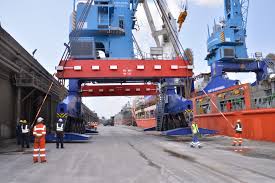
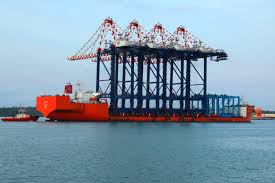
New portal harbor cranes being offloaded at Mombasa Port. (Photo/ Courtesy)
By Andrew Mwangura
Email, thecoastnewspaper@gmail.com
The arrival of ten new rubber-tyred gantry (RTG) cranes at the Port of Mombasa early this morning is more than a logistical triumph; it is a bold statement of intent.
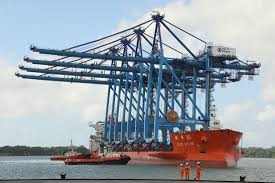
Delivered aboard the specialized cargo vessel MV YU AN, these cranes mark a significant milestone in the Kenya Ports Authority’s (KPA) ambitious modernization program.
This development is not merely about new equipment; it is about reimagining the port’s role as a linchpin of regional trade, a driver of economic growth, and a model of sustainable operations.
As East Africa’s premier trade gateway, the Port of Mombasa is poised to cement its status as a regional powerhouse, and these cranes are a critical piece of that vision.
The Port of Mombasa has long been the heartbeat of Kenya’s economy, serving as the primary conduit for imports and exports not only for Kenya but also for landlocked neighbors like Uganda, Rwanda, and South Sudan.
Handling over 30 million tonnes of cargo annually, the port is a vital artery for regional commerce. Yet, for all its importance, it has faced persistent challenges: congestion, long cargo dwell times, and delays in vessel turnaround.
These issues have, at times, frustrated traders and raised concerns about the port’s competitiveness compared to other regional hubs like Dar es Salaam or Djibouti.
The arrival of the new RTGs is a direct response to these challenges, signaling KPA’s determination to address inefficiencies and elevate the port’s performance to world-class standards.
Each of the ten RTGs is capable of lifting up to 45 tonnes, a capacity that promises to streamline cargo handling at the port’s berths.
By complementing the existing fleet, these cranes will significantly boost productivity, allowing for faster loading and unloading of vessels.
Reduced cargo dwell times mean goods will move more swiftly from ship to shore, benefiting importers, exporters, and ultimately consumers across the region.
Faster vessel turnaround times will also make Mombasa a more attractive destination for shipping lines, potentially drawing more traffic and reinforcing the port’s position as a preferred trade hub.
For businesses that rely on timely deliveries, this upgrade translates to lower costs and greater reliability—a win for the entire supply chain.
Beyond operational efficiency, the new RTGs represent a forward-thinking commitment to sustainability. Fitted with hybrid engines, these cranes are designed to reduce fuel consumption and emissions, aligning with global calls for greener port operations.
Ports are often significant contributors to carbon emissions due to the heavy machinery and constant activity they entail.
By investing in environmentally friendly equipment, KPA is taking a proactive step toward reducing its ecological footprint.
This move is particularly significant in the context of global trade, where sustainability is increasingly a competitive differentiator.
As international shipping lines and traders prioritize partners with strong environmental credentials, Mombasa’s adoption of hybrid technology positions it as a leader in sustainable port management in Africa.
The significance of this upgrade extends beyond the port’s gates.
The Port of Mombasa is a critical driver of Kenya’s economy, directly and indirectly supporting thousands of jobs in logistics, transport, and related industries.
By enhancing efficiency and capacity, the new cranes will create ripple effects, fostering economic activity far beyond the coast. For instance, faster cargo clearance means reduced delays for manufacturers and retailers, enabling them to meet market demands more effectively.
For landlocked countries reliant on Mombasa, the improvements promise smoother trade flows, which could translate to lower prices for goods and greater economic stability.
In essence, the benefits of this modernization effort will be felt across East Africa, reinforcing the port’s role as a regional economic engine.
However, the arrival of the cranes is only one piece of a larger puzzle. Modernizing a port is not just about acquiring new equipment; it requires a holistic approach that includes infrastructure upgrades, workforce training, and streamlined processes.
KPA must ensure that the integration of these cranes is accompanied by investments in complementary systems, such as digital cargo tracking and improved road and rail connectivity to the hinterland.
The Standard Gauge Railway, for instance, has already improved cargo evacuation from Mombasa, but further enhancements are needed to fully capitalize on the port’s potential.
Additionally, KPA must prioritize training for its workforce to operate and maintain the new hybrid RTGs effectively, ensuring their longevity and optimal performance.
The timing of this upgrade is also noteworthy. As global trade patterns shift and competition among African ports intensifies, Mombasa cannot afford to rest on its laurels.
Ports like Djibouti and Dar es Salaam are investing heavily in their own infrastructure, vying for a larger share of East Africa’s trade.
By modernizing its equipment, Mombasa is sending a clear message: it intends to stay ahead of the curve.
The port’s strategic location, coupled with these investments, positions it to capture growing trade volumes, particularly as Africa’s population and consumer markets expand.
Moreover, with initiatives like the African Continental Free Trade Area (AfCFTA) gaining momentum, Mombasa is well-placed to serve as a gateway for intra-African trade, provided it continues to innovate and improve.
The arrival of the ten RTG cranes is a moment to celebrate, but it is also a call to action.
KPA must sustain the momentum of its modernization program, ensuring that the port remains competitive, efficient, and sustainable.
Stakeholders, from government agencies to private sector partners, must work together to address bottlenecks and unlock the port’s full potential.
For Mombasa, the stakes are high: it is not just a port but a symbol of Kenya’s ambition to lead in regional and global trade.
These cranes are more than machinery; they are a testament to what is possible when vision, investment, and commitment converge.
As they begin their work at the berths, they carry the promise of a more efficient, sustainable, and prosperous future for Mombasa and the region it serves.
The author is a policy analyst specializing in maritime governance and blue economy development.
About The Author