Urgent Call for Reform: Why Joho’s Planned Leadership Changes at KMFRI Necessary
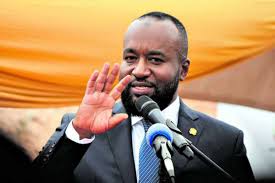
Hassan Ali Joho, cabinet secretary for mining, blue economy. Photo/ Courtesy)
By Andrew Mwangura
Email, thecoastnewspaper@gmail.com
Hassan Ali Joho, Kenya’s cabinet secretary for mining, blue economy, and Maritime Affairs, has signaled a significant overhaul of the Kenya Marine and Fisheries Research Institute (KMFRI), hinting at new leadership to steer the institution toward greater effectiveness.
This bold move, announced shortly after his appointment in August 2024, comes at a critical juncture for Kenya’s blue economy, a sector brimming with potential yet hampered by inefficiencies, outdated practices, and systemic challenges.
Joho’s push for change at KMFRI is not merely a bureaucratic reshuffle but a necessary step to unlock the vast economic opportunities of Kenya’s marine and fisheries resources.
There is an urgent need for a total overhaul at the State Department for Blue Economy and Fisheries, and Joho’s focus on KMFRI’s leadership is a promising start, provided it is executed with vision, transparency, and accountability.
Kenya’s Blue Economy, encompassing fisheries, aquaculture, maritime transport, and marine tourism, holds immense promise.
With a 536-kilometer coastline and an Exclusive Economic Zone (EEZ) spanning 245,000 square kilometers, the sector could contribute up to 10% of Kenya’s GDP by 2030, up from its current 2.5%.
Yet, despite this potential, the sector remains underdeveloped, contributing a fraction of its capacity due to inadequate research, poor policy implementation, and leadership inertia.
KMFRI, as the premier institution tasked with marine and fisheries research, is central to addressing these gaps. It is responsible for providing scientific data to guide sustainable resource use, inform policy, and attract investment.
However, its current trajectory suggests it is falling short of these mandates, necessitating Joho’s intervention.
The urgency for reform at KMFRI and the broader State Department for Blue Economy and Fisheries stems from several critical issues.
First, the institute has struggled to deliver actionable research that translates into tangible economic benefits.
For instance, the Sh1.6 billion spent on fish stock assessments in the Indian Ocean during the 2023/2024 financial year raised eyebrows among MPs, who questioned the value for money and the lack of concrete outcomes.
Joho himself faced tough questions from the National Assembly’s Departmental Committee on Blue Economy, Water, and Irrigation, highlighting a disconnect between KMFRI’s research efforts and practical impact.
If Kenya is to compete in global forums like the Indian Ocean Tuna Commission or attract investors, KMFRI must produce reliable, accessible data on fish stocks, marine ecosystems, and aquaculture potential.
The current leadership has not adequately met this demand, underscoring the need for a shake-up.
Moreover, KMFRI’s role in supporting sustainable fisheries and aquaculture is critical, but underperforming.
Artisanal fishing
System: fishing communities rely on rudimentary infrastructure, leading to significant post-harvest losses that reduce their income.
The Kenya Marine Fisheries and Socio-Economic Development (KEMFSED) project, which Joho has actively supported through initiatives like the Kipini Landing Site upgrade, aims to address this, but KMFRI’s research must guide such interventions.
Current leadership has been slow to integrate cutting-edge technologies or innovative practices like mariculture, which could revolutionise coastal economies.

Joho’s visit to KMFRI in August 2024 emphasized the need for the institute to do more to unlock aquaculture’s potential, signaling his frustration with its pace of progress.
New leadership with a forward-thinking approach could bridge this gap, ensuring research aligns with practical needs.
The broader State Department for Blue Economy and Fisheries also demands an overhaul.
Bureaucratic inefficiencies, overlapping mandates, and a lack of coordination with other sectors like tourism and mining have stifled progress.
Joho’s nomination as Vice President of the Third United Nations Ocean Conference in 2025 offers Kenya a global platform to advocate for its Blue Economy, but this requires a cohesive strategy that the current departmental structure struggles to deliver.
Illegal fishing, costing Africa $11.5 billion annually, and marine pollution threatening food security for millions, highlight the urgency of reform.
A revitalized KMFRI leadership could spearhead initiatives like the proposed African Blue Economy Alliance or the Kenya Ocean Innovation Hub, positioning Kenya as a regional leader in sustainable ocean governance.
Joho’s track record as Mombasa’s former governor suggests he understands the coastal region’s needs.
His commitment to job creation and reducing reliance on the exchequer aligns with the Blue Economy’s potential to generate revenue and employment. However, his plan to change KMFRI’s leadership must avoid the pitfalls of political appointments.
The new leadership must be merit-based, with expertise in marine science, innovation, and stakeholder engagement.
Transparency in the selection process is crucial to avoid perceptions of cronyism, a persistent issue in Kenyan governance.
Furthermore, Joho must ensure KMFRI’s research is accessible to policymakers and communities, addressing the current gap where scientific findings often remain academic exercises.
Critics might argue that Joho’s focus on leadership changes is a distraction from deeper structural issues, such as underfunding or policy misalignment.
While these concerns are valid, leadership sets the tone for institutional performance.
A dynamic, accountable leadership at KMFRI could drive the institute to prioritize high-impact research, foster public-private partnerships, and integrate traditional knowledge with modern science, as seen in Kenya’s successful marine protected areas.
Joho’s international engagements, like the MoU with Oman signed in February 2025, show his intent to globalize Kenya’s Blue Economy, but this vision requires a robust KMFRI to provide the scientific backbone.
In conclusion, Hassan Joho’s plan to overhaul KMFRI’s leadership is a critical step toward revitalising Kenya’s Blue Economy.
The urgent need for reform in the State Department for Blue Economy and Fisheries demands bold action, and KMFRI is the linchpin for delivering the research and innovation needed to unlock the sector’s potential.

By appointing competent, visionary leaders, Joho can ensure KMFRI drives sustainable growth, supports coastal communities, and positions Kenya as a global leader in ocean governance.The stakes are high, but so is the opportunity.
Joho’s leadership must now translate rhetoric into results, ensuring the Blue Economy becomes a cornerstone of Kenya’s economic transformation.
The author is a policy analyst specializing in maritime governance and blue economy development.
About The Author