Vital Role of the Journal of the Association of Maritime Practitioners – Kenya

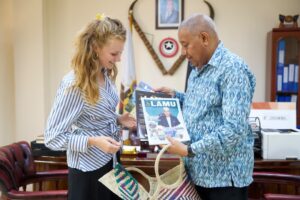
Cabinet Secretary Hassan Joho Presiding over this year's Association of Maritime Practitioners. (Photo/ Courtesy)
By Andrew Mwangura
Email, thecoastnewspaper@gmail.com
The second issue of the Journal of the Association of Maritime Practitioners – Kenya (AMP-K), published in June 2025, stands as a testament to Kenya’s growing influence in the maritime sector and its commitment to fostering professionalism, collaboration, and innovation.
This publication, under the stewardship of the Association of Maritime Practitioners – Kenya (AMP-K), is more than a collection of articles; it is a clarion call for stakeholders to engage in meaningful dialogue, research, and action to advance Kenya’s maritime ambitions.
By addressing critical themes such as marine pilotage, cognitive fitness, seafarers’ welfare, and the concept of ships as communities of practice, the journal illuminates the complexities of the maritime industry while offering actionable insights for its sustainable growth.
At its core, the journal reflects AMP-K’s mission to bridge the gap between global maritime standards and local realities. As Captain Suleiman S. Bakari, AMP-K President, notes in his message, the publication underscores the importance of nurturing a skilled maritime workforce capable of tackling the unique challenges facing Kenya and the Eastern African region.
This vision aligns with regional frameworks like the African Union’s Revised African Maritime Transport Charter 2010 and Africa’s Integrated Maritime Strategy (AIMS) 2050, which emphasize professionalism, compliance, and continuous education.
By providing a platform for thought leaders, practitioners, and young professionals, the journal fosters a culture of knowledge-sharing that is essential for Kenya’s maritime sector to thrive in a competitive global landscape.
One of the journal’s standout contributions is its in-depth exploration of marine pilotage, a profession often overlooked yet indispensable to global trade. Captain Bakari’s article on “Marine Pilotage – Role, Regulation and Practice” underscores the critical role pilots play in navigating ships through hazardous waters, ensuring the safety of life, infrastructure, and the environment.
The piece highlights the legal and operational nuances of compulsory pilotage, where pilots assume navigational control, a practice rooted in centuries-old traditions and modernized by technological advancements.
The article also addresses the complex pilot-shipmaster relationship, clarifying that pilots are not mere advisors but temporary masters with statutory authority.
This insight is particularly relevant for Kenya, where the Kenya Ports Authority (KPA) mandates compulsory pilotage under the KPA Act 1979.
As maritime trade grows, the journal’s focus on pilotage underscores the need for robust training and regulatory frameworks to manage risks effectively.
Equally compelling is the journal’s examination of cognitive fitness in seafarer qualifications, as discussed by Captain Twalib Khamis.

The article reveals a critical gap in the International Convention on Standards of Training, Certification, and Watchkeeping for Seafarers (STCW), which prioritizes physical and sensory fitness but overlooks cognitive capabilities. In high-stakes maritime operations, cognitive skills like spatial awareness, reaction time, and decision-making are vital.
The paper draws lessons from aviation, where cognitive assessments are integral, and proposes tailored tests and continuous monitoring to enhance safety and inclusivity.
This forward-thinking approach is particularly relevant for Kenya, where a young and diverse maritime workforce must be equipped to handle modern operational demands.
By advocating for cognitive assessments, the journal pushes for a more holistic approach to seafarer training, ensuring resilience in high-pressure environments.
The journal also tackles the welfare of Kenyan seafarers through Talib Ibrahim Mohammed’s critical analysis of the Seafarers’ Wages Council. The establishment of this council, following the domestication of the Maritime Labour Convention (MLC) 2006, marks a significant step toward ensuring fair wages and decent working conditions.
However, the article raises concerns about the council’s composition, noting that many appointees lack the requisite maritime expertise. This critique highlights a broader challenge: the need for stakeholder consultation and qualified representation to effectively address seafarers’ needs.
The journal’s candid assessment serves as a call to action for policymakers to prioritize expertise and inclusivity in such bodies, ensuring they serve the interests of Kenya’s maritime workforce.
Another thought-provoking contribution is Josephine Nthia and Captain Quentin Cox’s exploration of ships as communities of practice. This article examines how young seafarers learn through social interactions onboard, drawing on theories of social learning and communities of practice.
It underscores the importance of mentorship and collaboration in shaping professional behaviour, a concept that resonates deeply in Kenya’s efforts to mentor young maritime professionals.
By framing ships as learning environments, the journal highlights the need for supportive onboard cultures to nurture the next generation of maritime leaders.
The AMP-K is more than an academic exercise; it is a catalyst for change. Its diverse content—from pilotage and cognitive fitness to seafarers’ welfare and social learning—reflects the multifaceted challenges and opportunities in Kenya’s maritime sector.
The journal’s call for stakeholder engagement, as emphasized by Chief Editor Josephine Nthia, invites readers to contribute to shaping the industry’s future.

As Kenya positions itself as a maritime hub in Eastern Africa, publications like this are crucial for fostering innovation, ensuring safety, and promoting inclusivity.
The AMP-K’s commitment to excellence, evident in the journal’s rigorous editorial process and expert contributions, sets a high standard for maritime discourse. It is a beacon for practitioners, policymakers, and academics to collaborate in navigating the uncharted waters of Kenya’s maritime future.
The writer is a policy analyst specializing in maritime governance and blue economy development.
About The Author