KWS: Park Fee Review to Bridge Ksh12 Billion Conservation Deficit

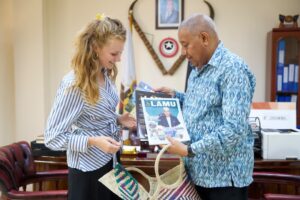
Rachael Omolo,KWS Board Director address media during public participation exercise event held in Mombasa. (Photo By Mbungu Harrison)
By Mbungu Harrison
Email, thecoastnewspaper@gmail.com
The Kenya Wildlife Service is projecting to generate Ksh19.7 billion in revenue once proposed conservation fee adjustments are enacted by Parliament.
This comes amid a nationwide public participation exercise launched on 29th July, and running through to 8th August, 2025 across 20 counties.
The initiative seeks feedback on the draft Wildlife Conservation and Management (access and conservation fee) Regulations, 2025, which propose significant revisions to park entry and conservation fees.
If enacted, this will mark the first comprehensive review of conservation fees in 18 years with he last revision being in 2007 despite steep inflation and increased operational costs.
“Since that time, everything else has gone up fuel, food, patrol vehicles, salaries, and human-wildlife conflict response but park fees have remained stagnant,” says Rachael Omolo, KWS Board director.
The proposed fees are based on findings from an independent pricing study by tourism and conservation experts.
The study noted that Kenya offers world-class wildlife experiences at globally competitive rates, but risks falling behind due to underfunding.
In the 2024/2025 financial year, KWS generated Ksh7.92 billion far short of the Ksh19.79 billion required to effectively carry out its conservation mandate.
This Ksh12 billion annual deficit has severely limited KWS’ ability to protect endangered species like rhinos and elephants, restore habitats, and address human-wildlife conflict.

“As the Swahili saying goes, ‘Usipoziba ufa, utajenga ukuta’. if we don’t fix the crack, we’ll soon face a collapse,” warned Prof Erustus Kanga, KWS director general (DG).
The DG emphasised that over 90 percentof KWS revenue comes from tourism which supports more than one million jobs in Kenya’s wildlife economy including community scouts, rangers, tour operators, hoteliers, and artisans.
“These consultation forums underscore our commitment to inclusive decision-making. Every voice matters whether from communities near parks, conservationists, or tour operators.”
The draft regulations aim to channel new revenue into: restoring degraded ecosystems, enhancing anti-poaching and wildlife security, expanding conservation education, modernizing park infrastructure, improving human-wildlife conflict response.
With the revised fees, park revenue is projected to grow to Ksh16.58 billion by 2028 based on conservative trends in tourism spending and visitation.
The proposal, published in the Kenya Gazette Vol. CXXVII-No. 148 (July 9, 2025), aligns with global best practices that promote transparency, regular reviews, and stakeholder participation.
The fee review also underpins KWS’ 2024–2028 Strategic Plan which depends on adequate and predictable funding to keep Kenya a globally competitive, high-value conservation destination.
Despite broad support for the review, some tourism stakeholders are urging caution on specific fee hikes.
Veteran hotelier Mohamed Hersi warned that some increases could render Kenya less competitive.
“Marine park fees jumping from 17 percent to 40 percent is too steep. In Zanzibar, rates are between 10 percent and 15 percent. We risk losing tourists to our regional competitors,” he said. “For Tsavo, jumping fees to 80 percent is excessive. We hope there will be some downward adjustment.”

He also urged the government not to leave KWS to fend for itself.
“We expect the government to support KWS. We also encourage KWS to consider creating a conservation trust to attract philanthropic funding and support long-term sustainability.”
About The Author