Kenya Seeks to Boost Revenue through Lamu Port Cargo Transshipment
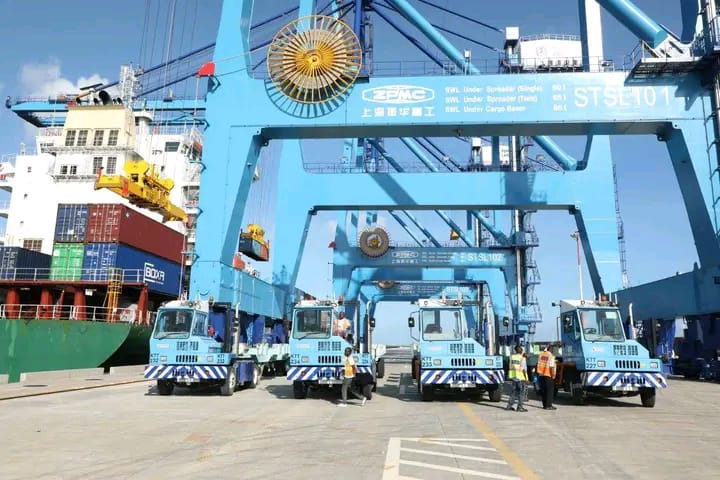
Gantry Cranes at KPA Mombasa. (Photo By Harrison Kivisu)
By Harrison Kivisu
Email, thecoastnewspaper@gmail.com
Kenya is set to significantly boost its revenue generation as the Lamu Port gears up to receive daily cargo vessel calls starting from August 25, 2025.
The port, which is being developed as part of the multi-billion-dollar Lamu Port-South Sudan-Ethiopia Transport (LAPSSET) Corridor project, is positioning itself to become the largest regional transshipment hub in Africa.
According to Kenya Ports Authority (KPA) managing director Captain William Ruto, the port will soon be a hub of activity, with major shipping lines reworking their schedules to include Lamu in their routes.
This development is expected to increase Kenya’s earnings from port activities while also generating significant employment opportunities, which will contribute to the country’s economic growth.
Capt Ruto, while speaking on the progress of the project, confirmed that the port’s strategic location and upgraded facilities have attracted more shipping lines, eager to make Lamu their transshipment port of choice.
He stated: “One of the shipping lines has reorganized their schedule, and as of August 24, 2025, the Port of Lamu will be fully operational. We will be having three scheduled calls per week, and by then, we will be receiving daily ship calls in Lamu.
That alone is a testament that the Port of Lamu is viable and is able to transform this country.”
With the incoming vessels, the Lamu Port will soon prove its capability in handling large vessels.
The facility is already equipped to accommodate some of the biggest ships in the world — capable of docking vessels up to 400 meters in length and handling ships with a draft depth of up to 17 meters.
These specifications place Lamu Port in a prime position to handle both large transshipment cargo and regional imports and exports, solidifying its place as a global shipping hub.
“The biggest port in Africa that is able to handle ships of minus 17 meters of depth and up to 400 meters in length, so we are also demonstrating to the world that Kenya has the capacity to handle the biggest ships in the world in terms of containers, and we are also inviting shipping lines to use the Lamu Port as a transshipment hub,” he added during the official take-over ceremony of the Shimoni fish port.
The port’s capacity is already being tested, with significant improvements in cargo handling since the beginning of the year.
Between May 16 and June 8, 2025, four vessels docked at Lamu Port, bringing the total number of ship arrivals in the first half of the year to 34.
This is a marked improvement over previous years, showcasing the port’s ability and potential to handle increased traffic efficiently.
The port’s growing popularity as a transshipment hub is evidenced by its recent welcoming of the MV Zhong GU Beijing on May 16, 2025.
The vessel, which made its maiden voyage to Lamu, carried 222 Twenty-Foot Equivalent Units (TEUs) of transshipment cargo destined for the Port of Dar es Salaam.
This shipment was significant as it marked the port’s fourth maiden ship call this year. The port’s potential for international trade is undeniable, and it continues to attract global shipping lines eager to take advantage of its world-class infrastructure.
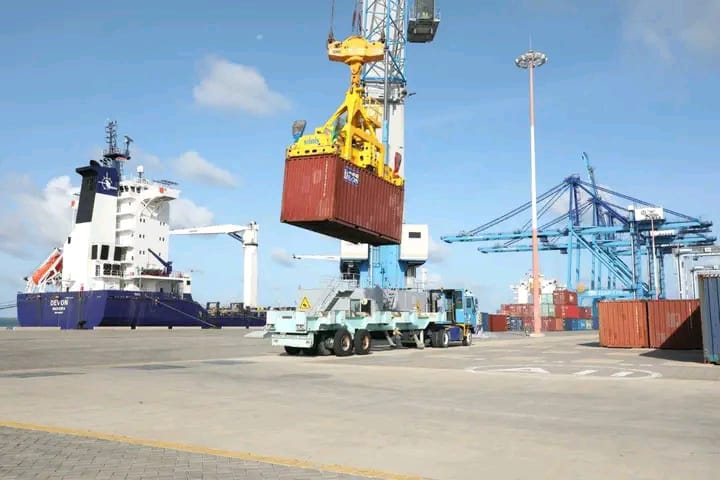
The port has also hosted vessels like the MV Hong Kong Bridge, which brought cargo destined for Dar es Salaam, demonstrating Lamu’s emerging role as a critical player in regional shipping
The development of Lamu Port is part of Kenya’s broader ambition to become a regional maritime powerhouse, offering enhanced connectivity to East Africa, the Middle East, and beyond.
Its strategic location along the Indian Ocean coastline makes it an attractive transshipment point for cargo traveling to and from other global ports.
The development of Lamu as a transshipment hub also aligns with the region’s increasing demand for efficient cargo handling and transport solutions.
Lamu Port’s growing status is a direct result of the deliberate infrastructural investments made by the Kenyan government, and it’s not just the maritime facilities that are being expanded.
The port is expected to benefit from an upgrade in road and rail infrastructure, making it even more competitive.
This includes the much-anticipated completion of the Lamu-Ijara-Garissa road, which is vital to improving cargo movement from the port to the rest of the country and neighboring regions.
However, despite the strong positive outlook, there have been delays in the completion of some infrastructure projects, particularly the Lamu-Ijara-Garissa road.
These setbacks have, to some extent, impacted the timely movement of cargo.
Nonetheless, officials at the KPA remain optimistic that these challenges will be overcome once key road projects are finalized. Even with the current infrastructure delays, the KPA is confident in Lamu’s potential.
The completion of the LAPSSET road network, including the vital link to Garissa, will significantly improve the efficiency of cargo movement, ensuring that the port’s capacity to handle increased traffic is fully realized.
Once the LAPSSET Corridor is fully operational, it is expected to drastically reduce the time it takes to transport goods from Lamu Port to other parts of Kenya and East Africa, providing much-needed relief for both local businesses and international importers.
“The Port of Lamu is well-positioned to become the major transshipment hub for East Africa. Once the road infrastructure is complete, we expect to see greater efficiency in cargo movement, which will enhance our competitiveness in the region,” said Capt Ruto.
Lamu’s increasing traffic, coupled with the ongoing infrastructural developments, will have far-reaching economic impacts on Kenya. In addition to increasing port revenues, the project is expected to create thousands of jobs both directly and indirectly, contributing to improved livelihoods in the coastal region and beyond.
The overall aim is for Lamu to serve as a transshipment port not only for East African countries like Kenya, Tanzania, Uganda, and South Sudan but also for landlocked countries in the region such as Ethiopia and Uganda. Once fully operational, Lamu is poised to be one of Africa’s most important maritime gateways.
The Port of Lamu’s development is just one part of a larger vision for the region’s future in international trade and logistics. As the LAPSSET Corridor progresses, more investments in infrastructure, industrialization, and regional trade facilitation will follow.
The rise of Lamu as a key player in regional transshipment represents Kenya’s commitment to becoming a global maritime leader and establishing its presence in a competitive international shipping market.
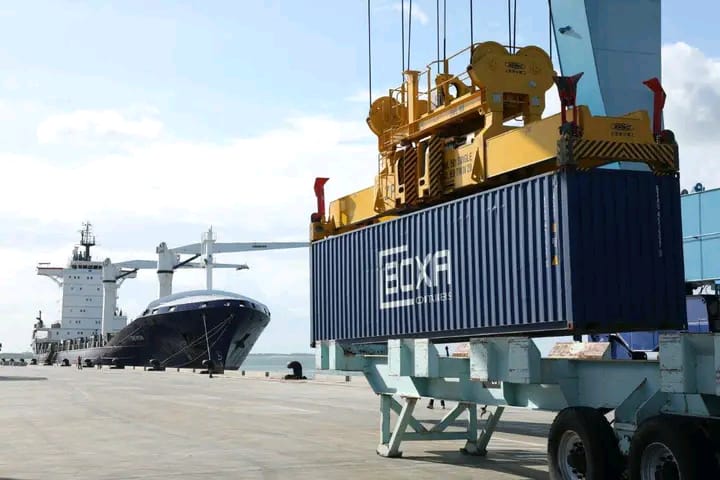
As Kenya prepares for the Lamu Port’s daily cargo vessel calls from August 2025, the nation is poised for a new chapter of economic growth driven by improved infrastructure, expanded shipping routes, and greater international partnerships.
With continued strategic investment and collaboration with global shipping lines, Lamu is on track to become not only Kenya’s flagship port but a key maritime hub in Africa. The future of Lamu Port looks incredibly promising, and Kenya’s revenue potential will only grow as it cements its position in the global shipping industry.
About The Author