Shimoni Fish Port – Kenya’s Gateway to Blue Economy Success

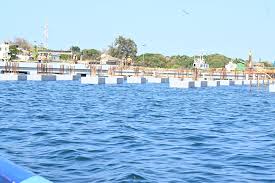
Shimoni Fish Port Ready. (Photo/ Courtesy)
By Andrew Mwangura
Email, thecoastnewspaper@gmail.com
The handover of the Shimoni Fish Port facility to Kenya Ports Authority marks a pivotal moment in the nation’s blue economy journey.
This Ksh2.6 billion investment, completed by Southern Engineering Company after two years of construction, represents far more than infrastructure development—it signals Kenya’s strategic commitment to unlocking the vast potential of its marine resources.
Captain William Ruto’s vision of diversifying beyond traditional cargo handling to specialized fisheries infrastructure positions Kenya within a global trend of successful blue economy initiatives.
The integration of modern vessel landing facilities, fish processing capabilities, and cold storage systems creates a comprehensive value chain that addresses the critical gaps that have long hampered Kenya’s fishing industry.
Learning from international best practices, the Shimoni facility echoes the success stories witnessed across both developed and developing nations.
Iceland’s achievements in reducing fish waste from 40-45% to minimal levels through innovation and maximizing value from fishery by-products demonstrates how proper infrastructure can transform an entire industry.
Iceland’s blue bioeconomy has created 700 jobs and generated a market value of about $500 million through strategic utilization of fish by-products, illustrating the economic multiplier effects that well-designed fish port facilities can generate.
Similarly, Norway’s transition from petroleum-dependent economy to blue economy leadership offers valuable lessons for Kenya’s coastal development strategy.
Norway’s Arctic leadership has evolved from ‘green’ petroleum extraction to developing a ‘blue economy’, showcasing how nations can successfully pivot their economic focus toward sustainable marine resource utilization.
The timing of Shimoni’s completion aligns perfectly with global trends in south-south trade expansion.
Developing countries accounted for 46% of global seafood exports in 2022, up from 42% in 2012, indicating growing opportunities for countries like Kenya to capture larger shares of international fish markets.
The facility’s modern processing capabilities position Kenya to compete effectively in these expanding markets.
The project’s genesis, with feasibility studies dating back to 2017, reflects the careful planning necessary for such transformative infrastructure.
The seven-year journey from concept to completion demonstrates the complexity of blue economy projects but also underscores the importance of sustained commitment to long-term development goals.
Capt Ruto’s emphasis on employment generation and local economic growth resonates with global evidence of fisheries infrastructure impact.
The facility’s strategic location in Shimoni, with its proximity to rich fishing grounds and existing fishing communities, creates natural synergies between traditional fishing practices and modern processing capabilities.
The involvement of Southern Engineering Company, a Mombasa-based marine engineering firm staffed by Kenyan marine engineers, in delivering this project represents a crucial element often missing in infrastructure development across Africa.
This local capacity building ensures knowledge transfer and creates a foundation for future similar projects while demonstrating that African technical expertise can successfully execute complex marine infrastructure projects.
The authority’s diversification strategy beyond traditional cargo handling reflects an understanding that modern port authorities must evolve to capture emerging opportunities.
This approach mirrors successful port authorities globally that have expanded their mandate to include specialized facilities serving specific economic sectors.
However, the success of Shimoni Fish Port will ultimately depend on effective integration with existing value chains, robust cold chain maintenance, and sustainable fishing practices.
The facility must become a catalyst for broader fisheries sector development, supporting both small-scale and commercial fishing operations while ensuring environmental sustainability.
As Kenya officially commissions this facility, it joins a growing number of nations recognizing that blue economy success requires more than just access to marine resources—it demands world-class infrastructure, strategic planning, and sustained investment in specialized facilities that can transform raw potential into economic prosperity.
The author is a policy analyst specializing in maritime governance and blue economy development.
About The Author