New Dawn for Seafarers: The 2025 MLC Amendments

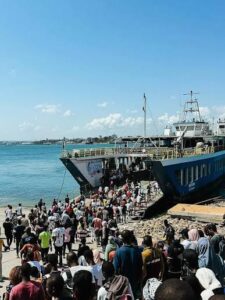
Seafarers vessel (Photo/ Courtesy)
By Andrew Mwangura
Email, thecoastnewspaper@gmail.com
The maritime industry stands at a pivotal moment following the recent adoption of key amendments to the Maritime Labour Convention (MLC) during the Special Tripartite Committee’s week-long meeting at the International Labour Organization headquarters in Geneva held from April 7 to April 11, 2025.
As these amendments await final approval at the 113th session of the International Labour Conference in June, it’s worth reflecting on their significance and potential impact on the lives of the 1.89 million seafarers who form the backbone of global trade.
The MLC, often called the “Seafarers’ Bill of Rights,” was a landmark achievement when it came into force in 2013.
Yet, despite its comprehensive framework, implementation gaps and emerging challenges have persisted.
The newly adopted amendments represent the most substantial revisions to the convention in recent years and signal a renewed commitment to addressing these shortcomings.
What makes these amendments particularly noteworthy is the process through which they were developed.
The Special Tripartite Committee’s collaborative approach—bringing together governments, shipowners, and seafarers’ unions—ensured that the perspectives of all stakeholders were considered.
This inclusive process increases the likelihood that the amendments will not only address real needs but also gain the widespread support necessary for effective implementation.
The maritime sector has undergone significant transformation in recent years. The COVID-19 pandemic exposed critical vulnerabilities in crew welfare systems, with hundreds of thousands of seafarers stranded at sea far beyond their contract periods.
Climate change has introduced new operational challenges, while technological advancements are rapidly changing the nature of work at sea.
Against this backdrop, these amendments represent a timely recalibration of international standards.
However, the true test of these amendments will lie in their implementation. With their effective date set for December 2027, there is a substantial window for preparation.
This timeline provides an opportunity for flag states and shipowners to develop robust compliance mechanisms, but it also risks creating a prolonged period during which seafarers continue to face existing challenges.
The maritime industry has historically struggled with uneven enforcement of regulations. Some flag states and shipowners have demonstrated exemplary commitment to seafarer welfare, while others have sought competitive advantage through minimal compliance or outright evasion.
The effectiveness of these amendments will depend on closing these implementation gaps and establishing consistent standards across the global fleet.
Technology could play a crucial role in this regard. Digital reporting mechanisms, remote inspection capabilities, and blockchain-based verification systems offer promising avenues for enhancing transparency and accountability.
The next meeting of the ILO Special Tripartite Committee, scheduled for April 2028, will provide a crucial opportunity to assess early implementation efforts and make necessary adjustments.
Looking ahead, stakeholders across the maritime ecosystem must recognize that seafarer welfare is not merely a matter of regulatory compliance but a fundamental ethical obligation.
The ships operated by these essential workers transport approximately 90% of world trade. Their well-being is inextricably linked to the resilience and sustainability of global supply chains.
As these amendments move toward final approval, implementation planning, and eventual enforcement, we must maintain focus on their ultimate purpose: creating a maritime industry that values its human element as much as its economic contribution.
The 2025 MLC amendments represent progress, but they are just one step in an ongoing journey toward truly fair and decent work at sea.
The ocean remains a challenging workplace, often invisible to those who benefit from maritime trade.
These amendments shine a necessary light on that workplace and set higher standards for how we treat those who spend their lives connecting our world. For that alone, they deserve both our attention and our support.
What Kenya Must Do
For Kenya, a nation with growing maritime ambitions and a strategic position along the East African coast, proactive engagement with these MLC amendments represents both a moral imperative and an economic opportunity.
To fast-track ratification and effective implementation, Kenya’s maritime stakeholders must take coordinated action.

The Government of Kenya should immediately establish a dedicated MLC Implementation Task Force comprising representatives from relevant ministries, particularly Blue Economy and Maritime Affairs and Ministry of Labor.
This task force should develop a comprehensive gap analysis between current Kenyan maritime labor regulations and the new amendments, creating a clear roadmap for legislative alignment.
Additionally, the government should allocate specific budget resources for implementation, particularly for port state control mechanisms and inspector training.
The Kenya Seafarers Wages Council must play a pivotal role in this process. As the body responsible for fair wage determination and monitoring, the Council should immediately undertake a thorough review of how the new amendments impact wage structures and compensation requirements for Kenyan seafarers.
They should develop updated wage guidelines that not only meet the minimum requirements of the amended MLC but aspire to set regional benchmarks for fair compensation. The Council should also expand its monitoring mechanisms to track compliance with the new standards, publishing regular transparency reports to build accountability.
Furthermore, the Wages Council should establish specialized subcommittees focused on different vessel categories, recognizing that implementation challenges may vary significantly between sectors.
By leveraging their unique position at the intersection of labor, government and industry, the Wages Council can serve as a crucial bridge between technical requirements and practical implementation, ensuring that fair compensation becomes a cornerstone of Kenya’s approach to the amended convention.
The Seafarers Union of Kenya bears a crucial responsibility to educate its members about their rights under the amended convention.
The union should develop accessible educational materials explaining the amendments in straightforward terms and establish dedicated support channels for seafarers to report non-compliance.
Simultaneously, they must strengthen their capacity to effectively represent seafarers in disputes arising during the implementation period.
The Central Organization of Trade Unions in Kenya should position maritime labor rights within the broader national labor agenda, creating solidarity between seafarers and other worker groups.
COTU can leverage its political influence to advocate for swift parliamentary approval of the necessary legislative changes and ensure maritime issues receive appropriate attention in national labor dialogues.
For the Association of Maritime Practitioners in Kenya, the focus should be on professional development.
They should organize specialized training sessions on the new amendments for maritime lawyers, consultants, and administrators, developing local expertise that can support compliance efforts across the sector.
The Kenya Shipowners Association faces perhaps the most substantial implementation burden. They should proactively audit their current practices against the new requirements, identifying areas requiring investment or operational changes.
By adopting the amendments ahead of the mandatory implementation date, Kenyan shipowners could position themselves as regional leaders in maritime labor standards.
Members of the National Assembly must prioritize the legislative review process necessary for ratification.
Parliamentary committees should schedule hearings to gather stakeholder input, expedite the drafting of enabling legislation, and ensure adequate oversight mechanisms are established to monitor implementation progress.
Policy makers at all levels should integrate the MLC amendments into Kenya’s broader maritime development strategy, recognizing that high labor standards can enhance the competitiveness of Kenya’s maritime sector by improving recruitment, retention, and productivity.
They should also explore regional harmonization opportunities within the East African Community to create consistent standards across neighboring maritime nations.
Crucially, these stakeholders must establish a collaborative implementation platform that meets quarterly to share progress, address challenges, and maintain momentum.

By treating the December 2027 effective date not as a distant deadline but as an urgent target, Kenya can demonstrate leadership in maritime labor standards and create meaningful improvements for its seafaring workforce.
The amendments represent an opportunity for Kenya to strengthen its maritime sector’s reputation and performance.
With coordinated, proactive engagement from all stakeholders, Kenya can not only meet international obligations but exceed them, setting new regional benchmarks for seafarer welfare and maritime excellence.
Author is a Maritime Affairs Analyst.
About The Author