Ruto Defends Fuel Subsidies as Government Spends Ksh28bn to Cushion Consumers
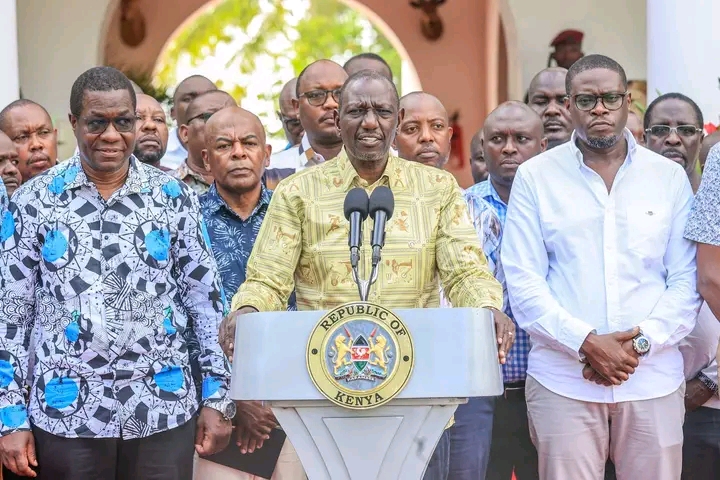
President William Ruto addressing Journalists in Mombasa. (Pho By The COAST Photographer)
By Mbungu Harrison
Email, thecoastnewspaper@gmail.com
President William Ruto has defended the Government’s fuel stabilisation programme saying his administration has spent more than Ksh28 billion in subsidies and tax relief measures to cushion consumers from the impact of the global fuel crisis triggered by the Middle East conflict.
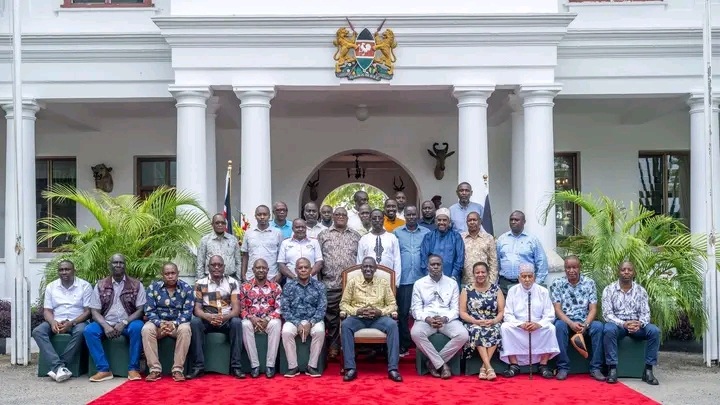
Speaking at State House in Mombasa on Friday (May 22, 2026) after meeting transport sector stakeholders, the president said the government had intervened aggressively to prevent the crisis from escalating into severe economic hardship for millions of Kenyans.
He attributed the sharp rise in fuel prices to disruptions along the Strait of Hormuz following the escalation involving Iran and United States in February this year. This crisis has adversely affected countries across the world.
“Kenya is facing the effects of a global fuel crisis caused by the ongoing conflict in the Middle East. This is not a crisis affecting Kenya alone,” he said.
According to him global fuel prices have risen sharply in recent weeks, with super petrol increasing by 54.4 per cent, diesel by 118.5 per cent and kerosene by 126.4 per cent.
To cushion consumers, Mr Ruto said the government used the petroleum development fund (PDF) to stabilise prices and reduced VAT on petroleum products from 16 to eight per cent.
“In the last two pricing cycles alone, the government used Ksh13.74 billion to cushion consumers.”
The government, he added, has also foregone Ksh14.43 billion in VAT revenue to ease pressure on households and businesses.
He noted that in the April-May pricing cycle, the State spent Ksh12.45 billion on fuel stabilisation and tax relief while another Ksh15.72 billion was spent during the May-June cycle.
As a result of the intervention, he claimed, the pump prices had reduced significantly in the country.
“Super petrol prices were reduced by Ksh19.67 per litre, diesel by Ksh40.25 per litre, and kerosene by Ksh115.03 per litre.”
The President explained that without the intervention super petrol would be retailing at Ksh230.12 per litre instead of Sh214.25 while diesel would sell at Ksh277.75 instead of Sh232.86 currently.
He announced that diesel prices would be reduced by an additional Ksh10 per litre in the June-July pricing cycle to cushion transporters and consumers.
The head of state defended the government-to-government fuel importation framework introduced in 2023 saying it had guaranteed uninterrupted fuel supply and protected the Kenya shilling from further depreciation.
“Without it, the country’s situation would be far worse than it’s today,” he claimed.
At the same time, the President ruled out calls to abolish fuel taxes entirely arguing that such a move would cripple essential public services including road construction, healthcare, education and security operations.
The government would continue engaging transport operators, farmers and businesses to develop practical interventions aimed at reducing the burden of rising fuel costs, he said.
As part of long-term measures, Mr Ruto announced that Kenya would accelerate investments in renewable energy and electric mobility to reduce dependence on imported fuel.
He disclosed that the government had already ordered 3,000 electric vehicles for security and administration officers and declared that the first 100,000 electric vehicles imported into Kenya would be duty-free.
The chief executive officer assured Kenyans that there was no fuel shortage in the country and urged citizens to remain calm and avoid panic.
“This crisis was not created by Kenya, but together, we shall overcome it,” he said.
About The Author