Will for Peace 2026: BRICS, Maritime Power and the Rewriting of Global Security
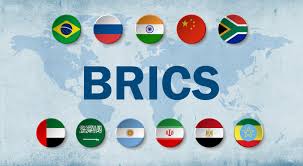
BRICS, (Photo/ Courtesy)
By Andrew Mwangura
Email, thecoastnewspaper@gmail.com
The recent BRICS naval exercise, dubbed “Will for Peace 2026”, is more than a routine display of naval cooperation. It is a strategic signal unfolding at a moment when the global order is under visible strain.
Conducted with the participation of China, Russia, Iran and South Africa, the exercise reflects the growing confidence of emerging powers to act collectively in the maritime domain, a space long dominated by Western alliances.
Its implications stretch well beyond the waters where the drills were held, touching on global geopolitics, regional security in Southern Africa, and the fragile balance of power along critical shipping corridors in the Gulf of Guinea and the Western Indian Ocean.
At the global level, Will for Peace 2026 underscores the increasing military coordination among BRICS countries at a time of intensifying rivalry between major powers. The inclusion of Russia and Iran, both under varying degrees of Western sanctions and political pressure, has drawn sharp reactions from the United States and its allies.
For critics, the exercise represents a deliberate challenge to Western naval primacy and an attempt to normalize security cooperation outside US- and NATO-led frameworks.
For BRICS members, however, it is framed as a legitimate assertion of strategic autonomy and a contribution to a more balanced international system. This tension between interpretation and intent lies at the heart of the controversy surrounding the exercise.
South Africa’s participation is particularly significant. As Africa’s most industrialized economy and a key maritime state, its role highlights the country’s strategic geography astride major sea lanes linking the Atlantic and Indian Oceans.
By hosting and actively engaging in the exercise, South Africa reinforces its long-held position of pursuing an independent foreign policy, one that seeks engagement across ideological and geopolitical divides. This stance, however, is not without cost.
Relations with the United States and some European partners have become more strained, with accusations that Pretoria is aligning itself with “anti-American” positions. Yet from a Southern African perspective, the exercise can also be read as a pragmatic effort to diversify security partnerships in a region facing real maritime threats.
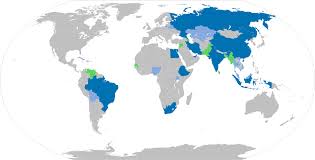
For Southern Africa, Will for Peace 2026 places renewed emphasis on maritime security, an area often overshadowed by land-based political and security concerns. The region’s waters are vital for global trade, energy flows and food security, yet they are increasingly exposed to risks such as illegal fishing, trafficking, and the spillover of instability from other regions.
The exercise signals recognition that safeguarding shipping routes and coastal economies requires cooperation that goes beyond traditional alliances. It also elevates South Africa’s role as a regional maritime anchor, capable of convening and coordinating with both African and extra-regional powers.
The implications are equally profound for the Gulf of Guinea and the Western Indian Ocean, two regions that have become central to discussions on global maritime security.
The Gulf of Guinea has long struggled with piracy and maritime crime, while the Western Indian Ocean faces challenges ranging from piracy resurgence to great-power competition. By involving China, Russia and Iran in naval cooperation linked to these waters, the exercise points to a shifting security architecture in which multiple powers claim a stake in protecting sea lanes.
This could bring practical benefits, such as enhanced information sharing and coordinated patrols, but it also raises concerns about overlapping interests and the risk of militarization.
Beyond specific regions, Will for Peace 2026 carries broader implications for the global maritime security landscape. It reflects a gradual move toward a more multipolar order at sea, where no single power or alliance can unilaterally define security norms.
As emerging powers expand their naval reach and operational cooperation, traditional maritime governance structures may come under pressure to adapt. This could lead to more inclusive approaches to securing global commons, but it could also deepen fragmentation if cooperation hardens into rival blocs.
Crucially, the exercise challenges the assumption that maritime security is best guaranteed through dominance rather than balance.
For countries of the Global South, particularly those dependent on open and secure sea lanes, the rise of alternative security partnerships may offer both opportunity and risk.
Opportunity lies in greater attention to their security concerns and reduced dependence on a single external guarantor. Risk lies in being caught between competing power centers, with their waters becoming arenas for strategic signaling rather than genuine cooperation.
In the final analysis, Will for Peace 2026 is a mirror of the world’s current trajectory. It reveals a global system in transition, where maritime power is being redistributed and contested. Whether this leads to greater stability or heightened tension will depend less on the exercise itself and more on how states choose to engage afterward.
If cooperation remains focused on shared challenges such as safe navigation and maritime crime, it could strengthen global security.
If it hardens into confrontation, the seas may become yet another frontline in an increasingly divided world.
Mr. Mwangura an, independent maritime consultant, is former SUK Secretary General
About The Author