Unclogging Mombasa: A Practical Path Forward
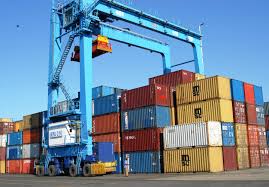
One of the container Terminals at Port of Mombasa. (Photo/ Courtesy)
By Andrew Mwangura
Email, thecoastnewspaper@gmail.com
The Port of Mombasa stands as the economic heartbeat of East Africa, yet it struggles under the weight of its own success.
Ships wait at anchorage for days before docking. Containers pile up in yards meant to facilitate quick turnaround. Trucks snake through Mombasa’s streets in endless queues, while goods destined for Kampala, Kigali, and Juba sit immobile, accumulating costs that ultimately burden consumers across the region.
This congestion is not merely an operational inconvenience but a silent tax on every economy that depends on this gateway to global trade.
The root of the problem is deceptively simple: cargo arrives faster than it leaves. While the Kenya Ports Authority (KPA) has made commendable investments in modern equipment and expanded capacity, these improvements cannot overcome the fundamental bottleneck of cargo evacuation.
Containers cleared by customs often remain in the port for weeks, not because of regulatory delays, but because importers lack the incentive to collect them promptly, trucking capacity fluctuates seasonally, and the infrastructure connecting the port to inland destinations cannot absorb peak volumes.
The result is a port operating simultaneously as a handling facility and an unintended warehouse, a dual role that undermines its core mission.
Solving this crisis requires us to shift our thinking from expanding capacity to accelerating throughput. The port does not need to hold more containers; it needs to move them faster. This begins with confronting the uncomfortable truth about storage incentives.
Currently, the port charges storage fees that, while generating revenue, are not punitive enough to discourage extended stays. Importers calculate that paying modest storage fees is often cheaper than maintaining their own warehousing or rushing to collect cargo before they have buyers lined up.
We must flip this equation by making storage prohibitively expensive after a reasonable grace period while simultaneously offering complete waivers for cargo collected within the free days.
This carrot-and-stick approach would create a powerful incentive for rapid evacuation without simply penalising businesses. Equally critical is the strategic use of inland infrastructure that already exists but remains underutilized.
The Standard Gauge Railway (SGR) to Naivasha was built precisely to solve this problem, yet it operates far below capacity because many importers still prefer the flexibility of road transport despite its contribution to congestion.
The solution is not to force cargo onto rail through mandates, which would create their own inefficiencies, but to make rail transport the obviously superior choice through price incentives, guaranteed scheduling, and seamless integration with customs clearance.
If an importer could clear cargo directly at Naivasha with faster processing and lower total costs than clearing at Mombasa, the congestion would ease naturally through market forces rather than regulatory compulsion.
The proliferation of Container Freight Stations (CFSs) around Mombasa presents another underexploited opportunity. These off-dock facilities were designed to decongest the port by moving the labor-intensive work of unpacking and sorting containers away from the waterfront.
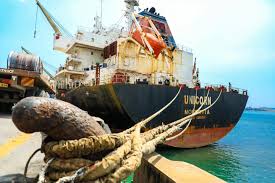
Yet coordination between the port and these stations remains imperfect, with containers sometimes sitting at the port waiting for transfer while CFS yards stand partially empty.
Beyond these existing facilities, there is an urgent need to establish strategically located dry ports at Mariakani, Taveta, Isiolo, Moyale, and Lokichar. These locations represent critical nodes along major trade corridors where cargo naturally consolidates before moving to final destinations.
Mariakani, just forty kilometers from Mombasa, would provide immediate relief by offering customs clearance outside the congested port zone.
Taveta serves the northern Tanzania corridor, Isiolo anchors routes toward Ethiopia, Moyale handles cross-border trade at the Ethiopian frontier, and Lokichar supports the emerging northern economy.
Each would function as a mini-logistics hub where containers could be cleared, unpacked, and redistributed, transforming a single chokepoint into a distributed network of cargo processing centers that creates employment and economic activity across these strategic locations.
Technology offers solutions that seemed impossible a decade ago. A fully integrated Port Community System, where every stakeholder from shipping lines to truckers to customs officers works off the same real-time data, would eliminate the information gaps that cause so much inefficiency.
Imagine a system where a container’s entire journey is visible from the moment it’s loaded onto a ship, where berth assignments optimize vessel size and cargo destination, where trucks receive precise time slots that eliminate the chaos of queue-jumping and waiting, and where predictive analytics anticipate congestion before it occurs. Such systems operate successfully in Singapore, Rotterdam, and other leading ports.
The technology exists; what we need is the institutional will to implement it comprehensively rather than in isolated patches.
Yet we must also acknowledge that Mombasa cannot indefinitely absorb the growing trade volumes of an entire region. The long-term solution involves strategic distribution of cargo across multiple ports.
Lamu Port, despite political controversies surrounding its development, represents a critical pressure valve.
Rather than viewing it as competition, we should see it as part of an integrated national port system where cargo is routed to the most efficient entry point based on final destination. Goods headed to northern Kenya, South Sudan, and Ethiopia could enter through Lamu, while Mombasa focuses on serving Kenya’s heartland and the central corridor to Uganda and Rwanda.
This is not about diminishing Mombasa but about creating a resilient system that serves the region’s growing needs.
The path forward requires coordination that transcends institutional boundaries. The port authority, customs, railways, and private logistics providers must function as parts of a single system rather than separate entities optimizing their own operations.
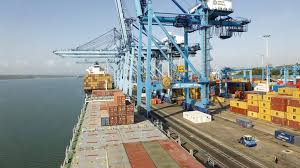
It demands political courage to implement policies that prioritize long-term efficiency over short-term revenue from storage fees. It requires investment in the unglamorous infrastructure of roads, rail connections, and digital systems that rarely make headlines but determine whether cargo flows or stagnates.
Most fundamentally, it requires recognizing that a congested port is not a sign of success but a constraint on the prosperity of the entire region. The solutions exist; what remains is the collective will to implement them decisively and comprehensively.
Mr Mwangura an, independent maritime consultant, is former SUK Secretary General
About The Author