Safety, Sovereignty, and Return of Somali Piracy
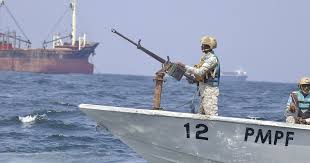
Somali pirates resurface once again. (Photo/ Courtesy)
By Andrew Mwangura
Email, thecoastnewspaper@gmail.com
The recent hijackings of Chinese fishing vessels off the coast of Somalia are a troubling signal that maritime insecurity in the western Indian Ocean is once again re-emerging, not as a carbon copy of the piracy crisis of the late 2000s, but as a more complex and politically charged phenomenon rooted in unresolved grievances, weak governance, and the persistent plunder of Somali marine resources.
These incidents should not be dismissed as isolated criminal acts, nor should they be simplistically romanticized as community resistance.
They are symptoms of a deeper failure to establish a fair, lawful, and enforceable maritime order in Somali waters.
The November 2024 hijacking of a Chinese-owned fishing vessel near Xaafuun in Puntland, later resolved in January 2025, offered early warning signs.
Armed men seized the vessel, reportedly demanding an extraordinary ransom while accusing it of illegal fishing.
Allegations quickly surfaced that the ship operated with an expired license and was engaged in illegal, unreported, and unregulated fishing.
Even more disturbing were claims that onboard security personnel may have colluded with the attackers.
Although all crew members were released unharmed, and diplomatic channels credited coordination with Somali authorities, reports of a multimillion-dollar ransom reinforced the perception that hijacking foreign fishing vessels can still be profitable.
The reported re-hijacking of the same vessel on January 1, 2026, near Bandarbeyla, if confirmed, elevates the matter from concern to alarm. It suggests not only impunity, but repetition, targeting, and normalization.
The possibility of casualties, combined with the absence of immediate verification by international naval forces, exposes the fragility of current maritime surveillance and response mechanisms in the Somali Basin.

Whether this second incident is ultimately verified or not, its plausibility alone demonstrates how far the region has slipped from the relative stability achieved a decade ago.
What distinguishes this resurgence from earlier piracy waves is the narrative that increasingly surrounds it.
Many coastal Somali communities frame such attacks as retaliation against foreign fleets that have, for years, depleted fish stocks, undermined livelihoods, and operated with little regard for Somali sovereignty.
Tuna and other high-value species have been systematically extracted by distant-water fishing nations, often under opaque licensing arrangements or outright illegality.
In this context, hijacking is locally portrayed not as piracy, but as enforcement by other means. This framing, while politically potent, is legally and morally dangerous. There is no justification for violence at sea, hostage-taking, or ransom demands.
International law is unequivocal on this point. Yet it is equally dishonest to discuss Somali piracy without confronting the industrial-scale illegal fishing that preceded it and, in many ways, provoked it.
For years, Somali waters have been treated as an open commons, exploited by foreign vessels that would never dare violate the laws of better-policed jurisdictions.
The collapse of the Somali state removed deterrence, and the international community responded selectively, mobilizing warships to protect shipping lanes while leaving coastal communities exposed and unheard.
Chinese fishing vessels now appear increasingly in the crosshairs because they symbolize both scale and permanence. They are often accused, fairly or not, of long-term presence, aggressive fishing practices, and close ties between commercial operators and distant state interests.
When licensing regimes are weak, fragmented between federal and regional authorities, or tainted by corruption, every foreign vessel becomes suspect. In such an environment, criminal groups can easily cloak piracy in the language of resource justice.
The danger is that this blurred line erodes all norms. Pirates become self-styled coast guards, illegal fishers become victims, and genuine Somali efforts to build lawful maritime institutions are undermined.
If hijacking becomes an accepted response to IUU fishing, the door opens to escalating violence, retaliatory force, and the eventual militarization of fishing itself.
That path benefits no one, least of all Somalia. The answer does not lie solely in more naval patrols or heavier security onboard vessels. Those are temporary suppressants, not cures.
The real solution lies in restoring Somali maritime governance, harmonizing federal and regional authority over licensing, transparently managing fishing agreements, and holding foreign operators to the same standards they observe elsewhere.
Coastal communities must see tangible benefits from legal fishing, including jobs, landing rights, and revenue sharing. Without that, resentment will continue to fester.
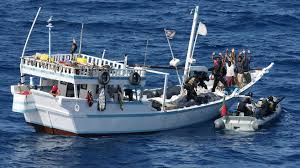
The resurgence of Somali piracy, as illustrated by these Chinese vessel hijackings, is a warning. It tells us that ignoring illegal fishing while policing only its violent consequences is a strategy doomed to fail.
The sea remembers injustice, and it has a way of forcing the world to confront what it would rather overlook.
Mwangura is an independent maritime consultant and former Seafarers Union of Kenya (SUK) secretary general
About The Author