Strengthening Kenya’s Maritime Gateway: A Vision for Tomorrow

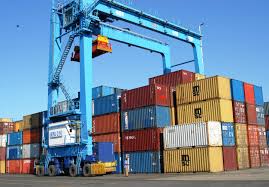
Digital Port Platform by DP World. (Photo/Courtesy)
By Andrew Mwangura
Email, thecoastnewspaper@gmail.com
The meeting held yesterday with a delegation from AP Moller Maersk led by their chief group representative for Africa John Taylor Godfrey, represents more than just another diplomatic courtesy between government and business.
It signifies a critical juncture in Kenya’s journey toward transforming our maritime infrastructure into a truly competitive regional powerhouse that can anchor East Africa’s economic aspirations for decades to come.
Joined by principal secretary Mohammed Daghar and Kenya Ports Authority managing director Captain William Ruto, these discussions reflect the kind of strategic thinking that must define our approach to national development in an increasingly interconnected global economy.
Kenya stands at a geographical and economic crossroads
The Port of Mombasa is not merely a national asset but a lifeline for landlocked neighbors including Uganda, Rwanda, South Sudan, and parts of the Democratic Republic of Congo and Tanzania.
Every container that moves through our port, every improvement in turnaround time, and every enhancement in logistics efficiency ripples across the entire East African region.
When we discuss partnerships with companies like Maersk, which has been a steadfast investor at the Port of Mombasa since the 1990s, we are talking about strengthening the very arteries through which regional commerce flows.
This is why such engagements cannot be viewed as routine business meetings but must be understood as fundamental exercises in economic statecraft.
The global shipping industry has undergone profound transformation over the past three decades, and Maersk’s long presence in Mombasa means they have witnessed and adapted to these changes alongside us.
From the containerization revolution that fundamentally altered how cargo moves across oceans to the digital innovations that now allow real-time tracking of goods from factory floor to final destination, the maritime sector has been at the forefront of globalization.
Kenya’s ability to remain relevant and competitive in this environment depends on our willingness to continuously evolve, to adopt international best practices, and to forge partnerships with industry leaders who bring both capital and expertise.
The discussions around integrated logistics, container shipping efficiencies, and supply chain optimization are not abstract technical matters but concrete pathways to making Kenyan businesses more competitive and our economy more attractive to investors.
What does integrated logistics actually mean for the ordinary Kenyan? It means that the cost of bringing goods into our country decreases, which should translate into lower prices for consumers.
It means that our exporters, whether they are shipping fresh flowers to Europe or textiles to America, can do so more reliably and cost-effectively, making their products more competitive in global markets. It means that the thousands of Kenyans employed in transport, warehousing, customs clearance, and related services can look forward to an industry that is growing rather than stagnating.
When we optimize supply chains, we are not engaging in bureaucratic tinkering but are actively working to improve the livelihoods of citizens across the economic spectrum.

The partnership approach exemplified by yesterday’s meeting reflects a maturation in how government engages with the private sector.
Gone are the days when public institutions operated in isolation, making decisions without input from those who actually move goods across our borders and through our ports.
The presence of both the PS and MD in these discussions demonstrates the kind of coordinated, whole-of-government approach that complex challenges demand.
Infrastructure development, regulatory frameworks, technological adoption, and capacity building all need to be addressed simultaneously and coherently.
Private sector partners like Maersk bring invaluable insights into what works internationally, what emerging technologies promise genuine improvements, and where bottlenecks in our systems create unnecessary costs and delays.
Container shipping efficiency might sound like an arcane concern, but it fundamentally shapes our economic competitiveness. Every day that a ship spends waiting to berth at our port rather than quickly loading or offloading cargo represents money lost and opportunities missed.
International shipping lines make decisions about which ports to prioritize based on efficiency metrics, and if Mombasa falls behind regional competitors, we risk seeing cargo diverted elsewhere, taking with it the jobs, revenue, and economic multiplier effects that port activity generates.
This is why continuous improvement is not optional but essential, and why partnerships with companies that manage some of the world’s largest container fleets provide us with benchmarks against which to measure our progress.
The alignment with national trade priorities mentioned in yesterday’s discussions is particularly significant. Kenya has ambitious economic goals, from increasing manufacturing’s share of GDP to expanding our agricultural exports and positioning ourselves as a regional hub for services and technology.
None of these ambitions can be realized without a transport and logistics ecosystem that enables rather than hinders trade.
Government policy must create the regulatory environment that encourages investment, streamlines processes, and eliminates unnecessary bureaucratic obstacles, while private sector partners must commit to bringing their best innovations and practices to our shores.
This symbiotic relationship, when functioning well, creates a virtuous cycle of improvement that benefits everyone.
Looking ahead, the transport and logistics sector will only grow in strategic importance. As African continental free trade takes root and intra-African commerce expands, Kenya’s position as the gateway to East Africa becomes ever more valuable.
The investments we make today in port infrastructure, in digital systems that speed cargo clearance, in training programs that build local expertise, and in partnerships that connect us to global best practices will determine whether we capitalize on this opportunity or watch it slip away to more aggressive competitors.
The meeting with Maersk should be seen in this context as one conversation within a broader strategy of positioning Kenya not just as a participant in global trade but as a competitive, efficient, and reliable hub that companies choose because we offer genuine advantages.
The journey from where we are to where we need to be requires sustained effort, honest assessment of our shortcomings, willingness to learn from others, and the courage to make difficult decisions when necessary.
It requires government officials who understand that private sector success and public sector goals are not contradictory but complementary. It requires private companies willing to invest not just capital but also their knowledge and commitment to building local capacity.
Most importantly, it requires all of us to recognize that our maritime gateway is a national treasure that demands our attention, our resources, and our determination to make it world-class.
Yesterday’s meeting was another step on that path, and the work continues.
Mr. Mwangura, an Independent Consultant, is former SUK Secretary General
About The Author